
Cobá
"Cobá is what Chichen Itza was before parking lots and ropes and the obligation to be impressed efficiently."
A Maya city lost in Quintana Roo jungle where you pedal between temples on rented bikes and feel the scale of it.

The bikes are available at the entrance for fifty pesos, and renting one is the correct decision. Cobá is not a compact archaeological zone — it is a city, spread across several square kilometers of jungle, connected by white limestone sacbeob (the Maya raised causeways) that cut through the forest in straight lines stretching as far as three kilometers. The longest sacbe at Cobá runs one hundred kilometers to Yaxuná. On a bike, moving along the jungle paths between temple groups, the scale of the place becomes legible in a way that walking simply does not deliver. You pedal, the jungle closes in on both sides, and then a ruin appears through the trees and you realize the city extended here too, further than you assumed, further than you thought possible.
I arrived from Tulum in the morning before the main tourist vans, before nine, and the first twenty minutes in the park I saw more wildlife than visitors. Coatis — the raccoon-relative with the long flexible snout — snuffled through the leaf litter alongside the path in small family groups, utterly uninterested in me. A green iguana the length of my forearm sat on a temple stone in the sun with the patience of something that has all day and knows it. Parrots shot overhead in pairs, their wingbeats sounding like something being torn.

Nohoch Mul, the great pyramid at the site’s heart, stands forty-two meters — the tallest Maya structure on the Yucatán peninsula. It was open to climbing for decades and the views from the top, over an unbroken jungle canopy stretching to the horizon in every direction, were described to me by everyone who made the climb as something that reorganized the way they thought about the Maya world. The pyramid was closed to climbing in 2021 to protect the structure, and this is the correct decision. Standing at its base is still a specific experience: the scale of the thing, the root-cracked stonework, the fact that the jungle approaches the base on every side and that, from below, you can feel the height in your body without yet seeing it. There is a rope on the staircase as a remnant — you see it and understand that people once climbed here, and that the view they found at the top was worth every step.
Cobá also sits beside two lakes — Lago Cobá and Lago Macanxoc — and the morning light on these lakes, surrounded by jungle that has been growing undisturbed for centuries, has a quality that the coastal sites do not offer. The water is still, dark green, and the reflections of the trees hold perfectly until the wind picks up around ten. I sat at the lake edge on a bench that seemed to have been placed there accidentally and ate the tacos I’d packed in foil from Tulum, and a spider monkey watched me from the branch directly above.

The Group of Paintings, a lesser-visited temple complex near the second lake, contains some of the best-preserved original Maya pigment anywhere in the Yucatán — traces of red and blue on the interior walls, still visible under protective shelter. The temple is small, the paintings are fragments rather than complete panels, but the color is genuine and old and worth the fifteen-minute detour from the main path.
When to go: November through March for dry season and manageable heat. Arrive before nine to beat the Tulum day-tripper vans, which descend from about ten and do not thin out until after three. The jungle is alive with birdsong at dawn; if you can arrange an opening-time visit, the forty minutes before the crowd arrives constitute a different experience than whatever follows.
Keep exploring
More from Mayan Heartland
 mayan-heartland
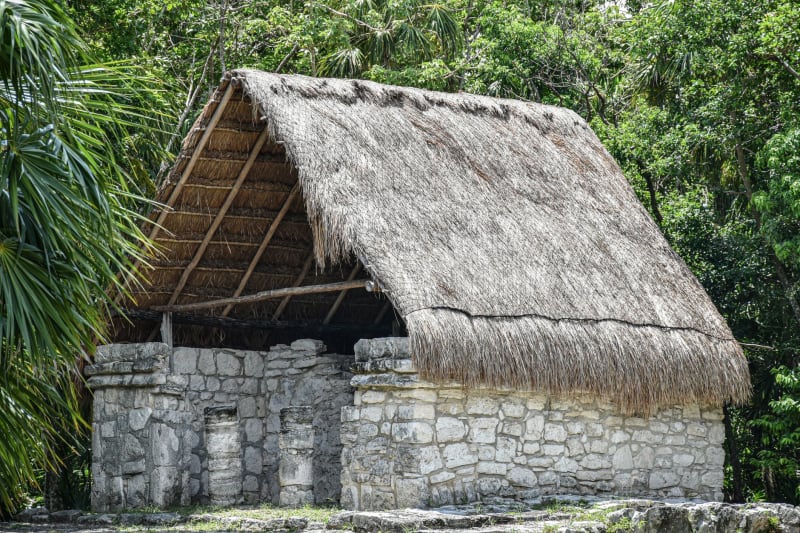
Copán
Where Maya sculptors carved faces so specific and human that you keep expecting them to blink.
Explore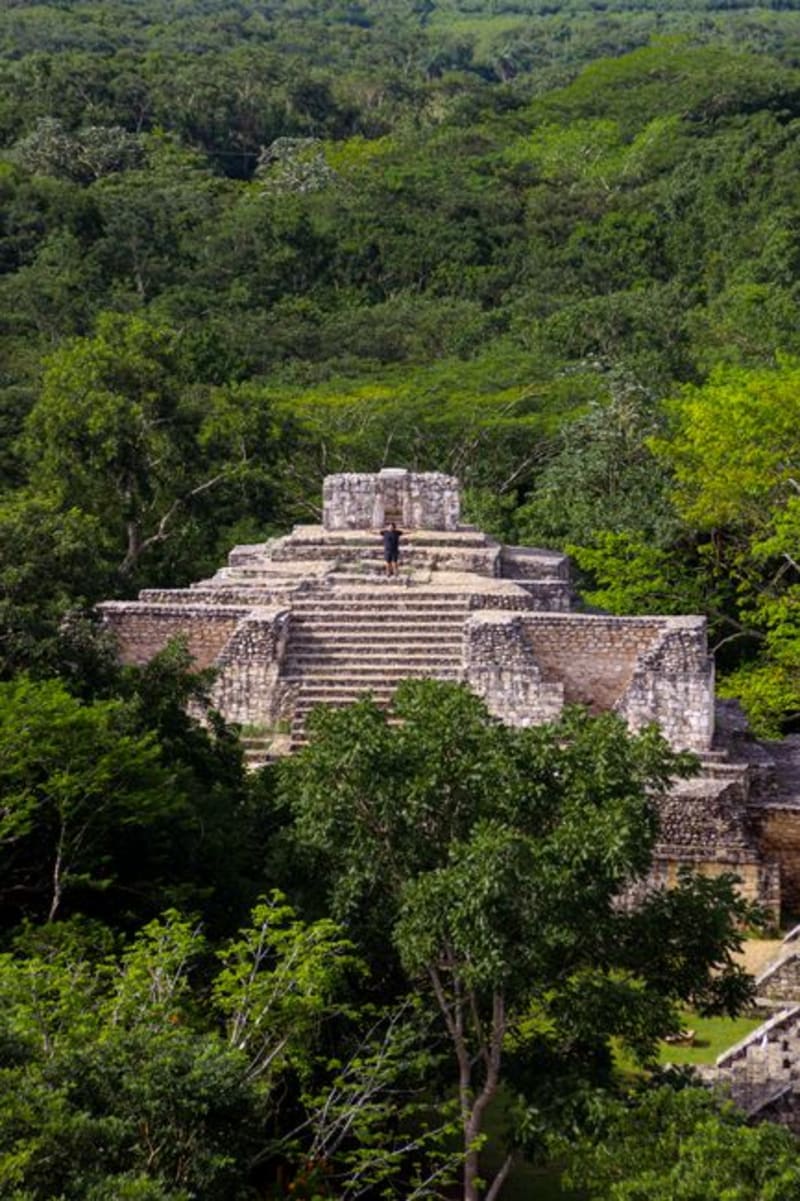 mayan-heartland
Ek Balam
A jungle-swallowed Maya city near Valladolid where you can still climb the pyramid and stand nose to nose with a jaguar-mouth doorway.
Explore mayan-heartland
Flores
A tiny island of pastel houses on a jungle lake where people come for Tikal and stay for the evenings.
Explore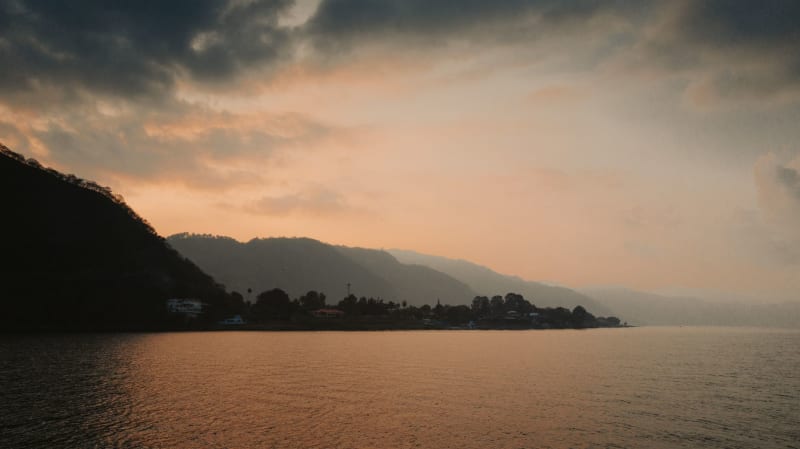 mayan-heartland
Lago Atitlán
A volcanic caldera lake ringed by Maya villages where the volcanoes, the textiles, and the afternoon wind all compete for your attention.
Explore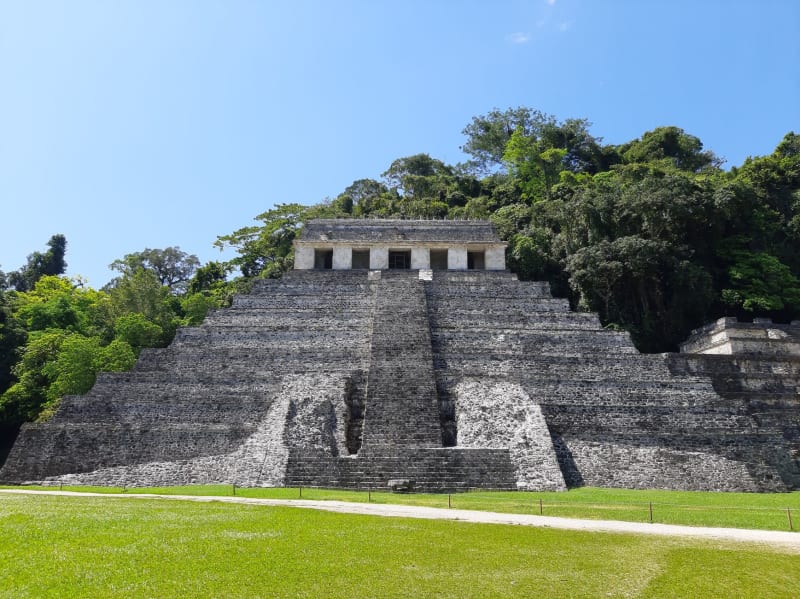 mayan-heartland
Palenque
A palace complex swallowed and slowly released by Chiapas jungle — wet stone, orchids, and something older.
Explore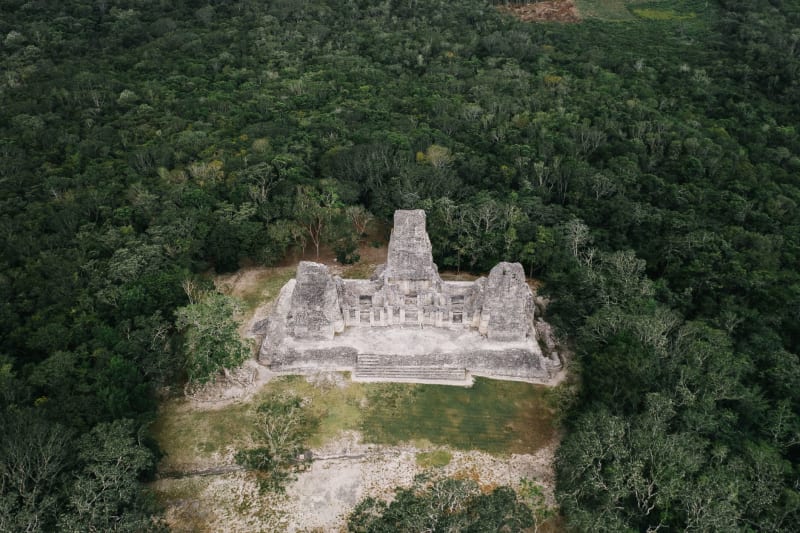 mayan-heartland
Tikal
A hundred thousand Maya lived here once — now the howler monkeys have inherited the pyramids.
Explore