Chichen Itza
"Even overexposed places have their moment. Chichen Itza's is the forty minutes before the tour buses arrive."
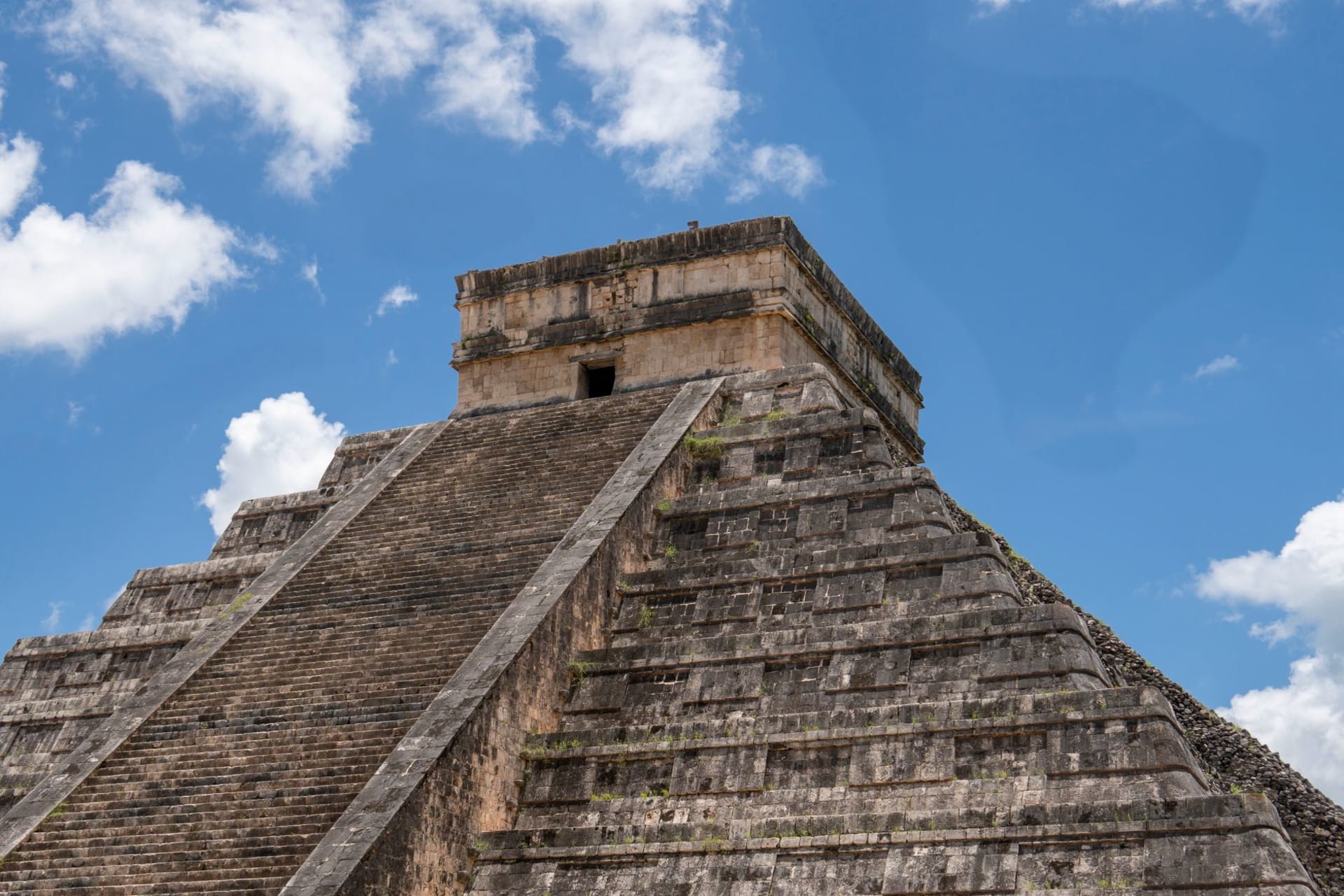
Everyone I know who has been to Chichen Itza has a complaint about Chichen Itza. The vendors are relentless — they appear the moment you exit your car and do not relent until you leave. The crowds by mid-morning are dense and loud and make the site feel like a theme park someone forgot to build rides into. The ropes keeping you back from the monuments breed a sense of alienation that is exactly the opposite of what you came for. I understand all of this. And then I remember what El Castillo looks like in the pale light of seven in the morning, before the first buses arrive, when the geometry of the thing — ninety-one steps on each of four sides, totaling three hundred sixty-five with the top platform, a calendar encoded in stone — becomes briefly visible as the precise intellectual achievement it is.
The trick with Chichen Itza is elemental: arrive at opening, which is eight but can be seven if you stay in one of the nearby hotels, and walk directly to the Cenote Sagrado without stopping. The cenote is at the end of the sacbe, the stone causeway, a deep natural well sixty meters across that served as a site of sacrifice and offering for centuries. The vendors do not follow you this far at seven-thirty in the morning. The water in the cenote is jade-green and still, and the silence up there — the cenote sits in a depression with jungle on all sides — is complete enough to be startling after the noise of the main plaza.

The Temple of the Warriors is the structure I return to most. El Castillo gets all the photographs, all the attention, and it deserves them — the precision of its construction, the way the shadow serpent descends the northern staircase during the equinoxes, the sheer audacity of its design. But the Temple of the Warriors, with its forest of columns stretching east in the Group of a Thousand Columns, gives you something different: a sense of the city’s population. Those columns supported roofs over spaces where people gathered, traded, conducted the business of a political capital. The emptiness between them now is where the city used to be.
The ball court at Chichen Itza is the largest known in Mesoamerica, one hundred sixty-eight meters long, and if you stand at one end and whisper, someone at the other end can hear you clearly. The acoustic engineering was intentional and is still functional. I stood at the south end and said something quietly to a stranger standing at the north, and she turned and said she’d heard me perfectly. We were both slightly rattled by it.

By eleven the site is impossible. This is not a complaint — it is information. Plan your visit as a morning exercise. Leave for lunch at one of the restaurants in the town of Pisté, ten minutes away, where the cochinita pibil is cooked overnight in an actual pit oven and served on handmade tortillas that are thicker and rougher than the Yucatán norm, the kind that remind you that corn has a flavor.
When to go: November through March for dry season. Arrive at opening — before eight if you can manage it. Avoid the spring and autumn equinoxes unless you want to share the shadow serpent phenomenon with forty thousand people. Weekday mornings are dramatically better than weekends.