Flic en Flac
"I have watched sunsets on five continents and Flic en Flac made me feel like I had been doing it wrong."
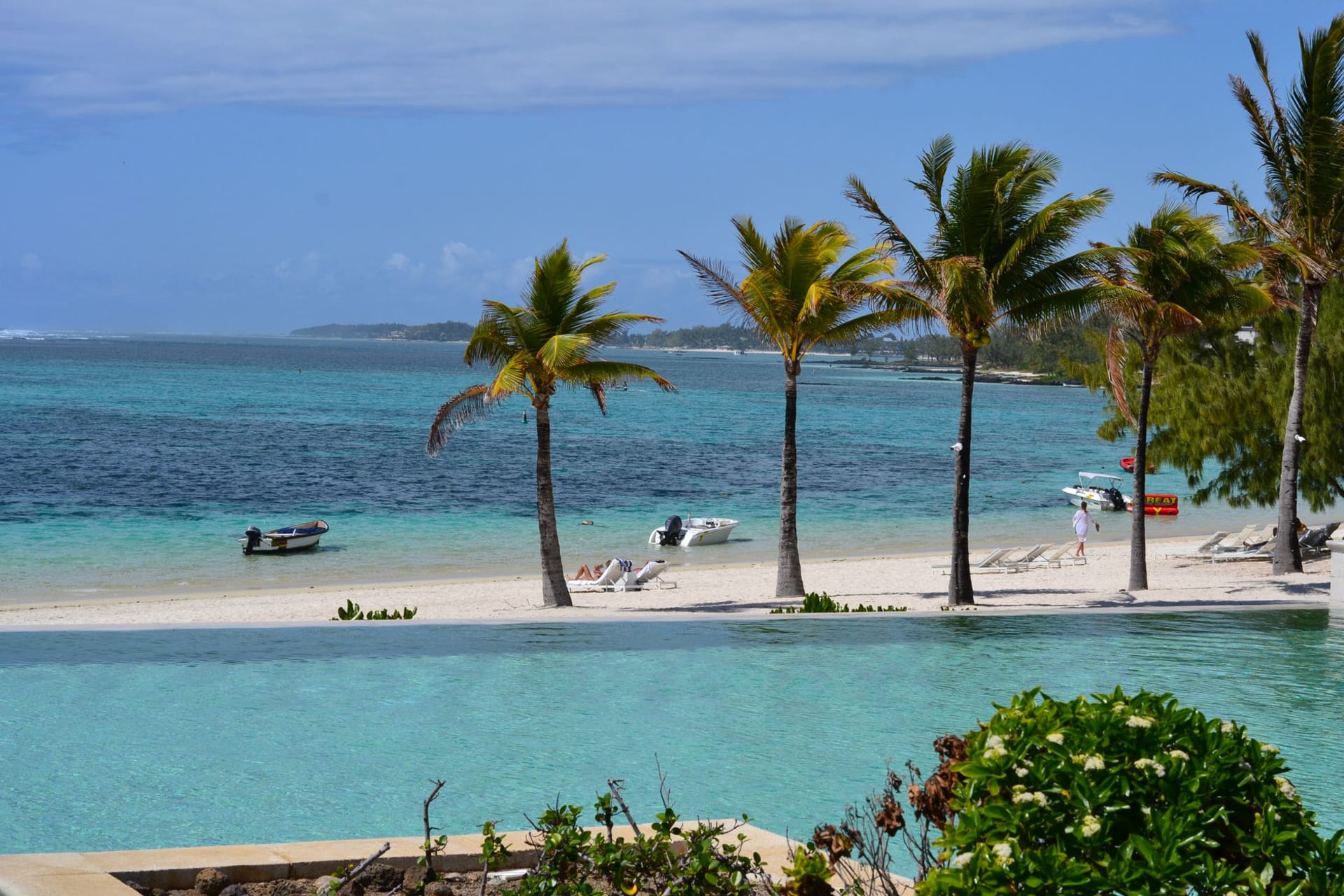
I arrived at Flic en Flac in the late afternoon, purely by accident — I had been driving the west coast road and pulled over when the light through the palms hit the water in a way I needed to see more clearly. The beach stretches for eight kilometres, wide and pale, facing west toward open ocean, and the lagoon in between is protected by a reef that keeps it glassy and warm. At that hour, with the sun already dropping toward the horizon, the water was the colour of shallow jade, and the few people still swimming were just dark shapes moving through something luminous.
This is Mauritius’s most popular west coast beach, and you can feel the accommodation strip behind it — the mid-range hotels, the restaurants competing for the same tourist dollar, the excursion operators along the road. But the beach itself is too large to be overwhelmed, and a ten-minute walk in either direction from the central car park puts you in a quieter version of the same scene. I walked south until the resort infrastructure thinned to almost nothing, found a section of beach where a local family had set up chairs under a casaurina tree, and stayed there for the rest of the afternoon.

The diving here is what serious visitors come for. The reef offshore drops away into wall dives where you drift past groupers, moray eels, lionfish, and — if the timing is right between August and November — pods of spinner dolphins that come into the shallower water at dusk. I went out with a small dive shop early one morning, before the tourist boats, and spent an hour underwater in water so clear I could see the shadow of the boat on the bottom twenty metres below. The reef here has been protected long enough that it feels intact in a way that many dive destinations no longer can claim.
Above water, the west-facing beach means the sunset arrives with theatrical commitment every evening. I watched three of them from different positions — once from a restaurant terrace where the fish curry was excellent and the Mauricien Phoenix beer was cold, once from the beach itself with my feet in the sand, once from a sea kayak thirty metres offshore, which turned out to be the right answer. From the water, with no beach chairs or cocktail menus in your peripheral vision, it is possible to just watch the sky go from yellow to amber to something close to red without feeling like you are consuming a product.

The town behind the beach is useful and unremarkable — a supermarket, several roti shops and Chinese restaurants, a pharmacy. The dholl puri vendors appear in the morning near the market. I ate at a small Creole place where rougaille de saucisses came with a mound of white rice and the television above the counter showed an Indian soap opera with French subtitles. Nobody thought this was strange.
When to go: Flic en Flac is most pleasant from May through October, when the west coast catches the dry season’s calm weather and consistent afternoon light. The water stays warm year-round. July and August are busiest with European visitors — come in May, June, or October if you prefer your beach with room to breathe.