Ruins on the Waterline
There are places that stop you mid-step, and Joanes is one of them. I came around a bend in the red-dirt track — having ridden from Salvaterra on the back of a mototaxi for forty minutes through cattle land and flooded pasture — and the church appeared without warning. The Igreja Nossa Senhora do Rosário, built by Jesuits in the late 17th century, stands on the beach. Not near the beach. On it. The tide line runs within twenty meters of the old stone walls, and at high water the base gets damp.
The roof collapsed long ago. The walls are chest-thick stone, the color of dried blood and lichen, and they’ve held against every Amazon storm for three centuries. Inside — and you can walk inside, nothing bars the entrance — there are no pews, no altar, no signs of anything except the sky above and sand below and the particular feeling of standing inside something that time got to before you did.
The Village Itself
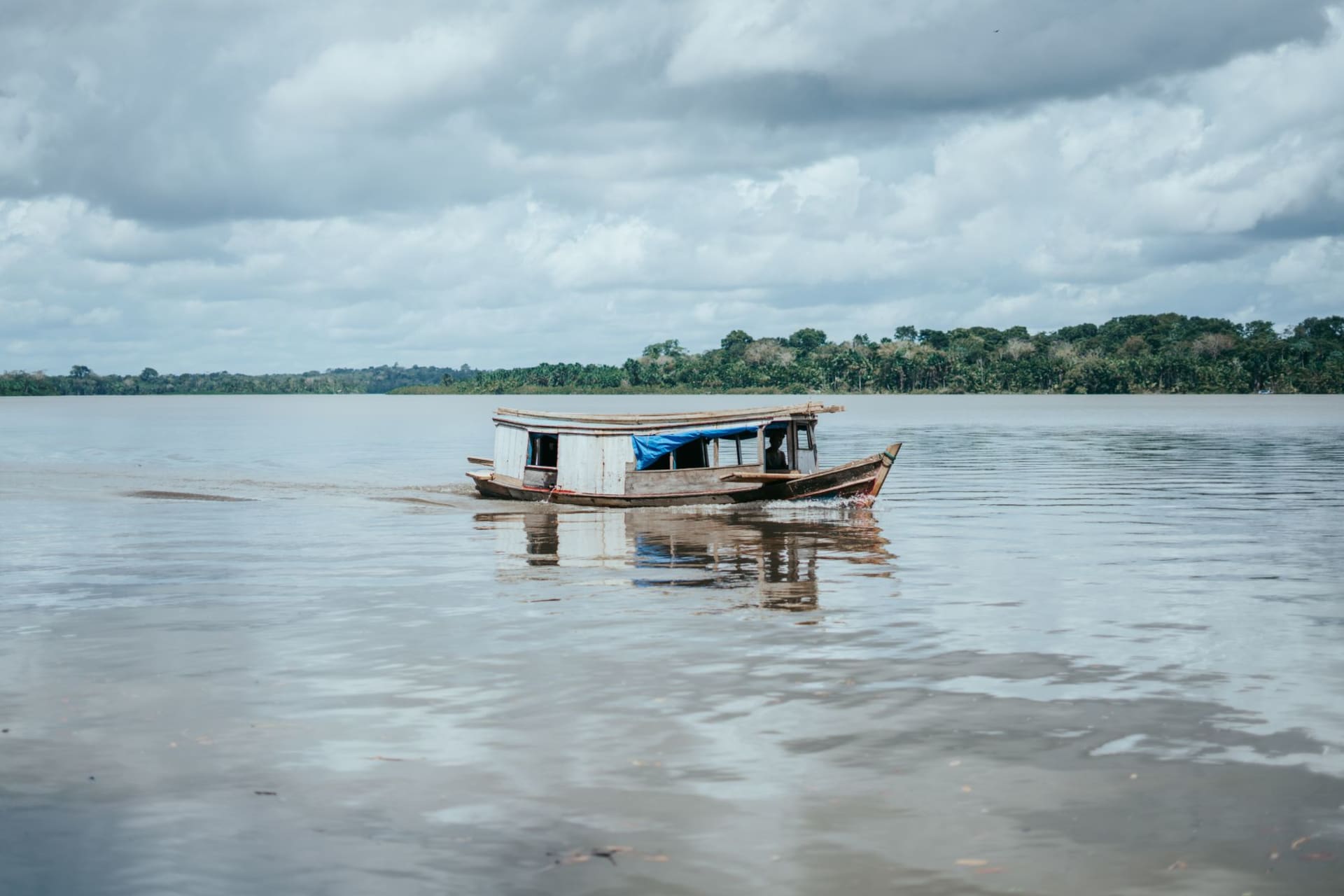
Joanes village is small enough that I met nearly everyone in it by accident over two days. A dozen families, a pousada, a place that sells cold beer from a chest freezer, and the church. The fishing boats are pulled up each morning behind the ruins, which gives the scene a visual logic that feels almost staged — weathered wood beside weathered stone, both the color of centuries. The fishermen aren’t performing this for visitors. It’s just where they park.
The beach at Joanes is different from Salvaterra’s Praia Grande: narrower, rockier in places, with tree roots exposed by erosion at the northern end. Not the beach you’d pick for a swim, but absolutely the beach you’d pick for an hour of sitting and thinking uninterrupted thoughts.
Getting Here
Joanes requires commitment. There’s no direct bus from Soure. The usual route is a boat or car to Salvaterra, then a mototaxi or rental bicycle to Joanes — roughly 12 kilometers on a mostly flat road through open buffalo country. I did it by mototaxi on the way and rented an ancient bicycle for the return. The bicycle had one functional gear and a seat optimized for discomfort, but I’d do it again without hesitation. The road passes through floodplain so flat you can see storm fronts building thirty kilometers away.
What Stays With You
The ruins are not dramatic in the way that Chichen Itzá or Angkor are dramatic. They’re small and incomplete and partly swallowed by vegetation. But their setting — on the actual edge of the Amazon estuary, with no town visible in either direction — gives them a weight that larger monuments sometimes lack. I sat inside for almost an hour watching a pair of fork-tailed flycatchers argue in the ruins of the apse. The light turned amber. The tide came in a little closer. There was nothing else going on and it was enough.
When to go: August to October, when the road to Joanes is dry enough for bicycles and the beach isn’t flooded. Early morning or late afternoon — the light on the ruins at golden hour is worth a rearranged schedule. Avoid rainy-season months (February through April) when the track becomes impassable mud.