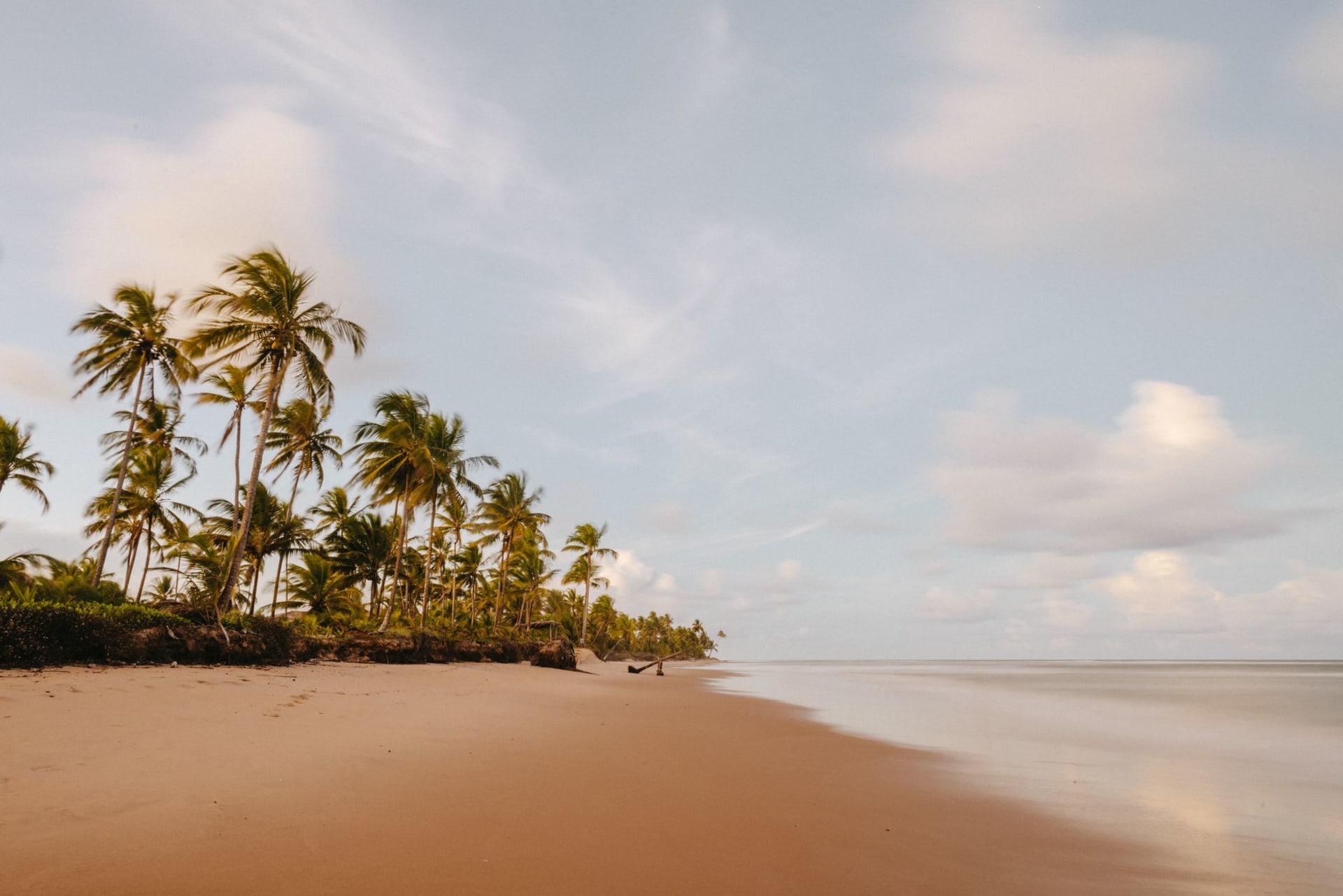
Praia do Pesqueiro
"Thirteen kilometers of beach and I found maybe forty people on it."
Marajó’s Great Stretch
The statistics at Praia do Pesqueiro don’t fully prepare you for the reality. Thirteen kilometers of beach. One cluster of barracas at the access point. Buffalo grazing on the inland edge. The water a warm brown from Amazon sediment, shallow for hundreds of meters at low tide. I’d been traveling for three weeks and was running low on the capacity to be impressed, and then this beach appeared around a corner and recalibrated everything.
Pesqueiro sits about 15 kilometers north of Soure, accessible by a road that’s paved most of the way — an anomaly on Marajó. It’s the island’s most visited natural attraction, which means on a busy Sunday you might share it with a few hundred Brazilians from Belém who’ve made the ferry crossing for a day trip. Come on a weekday in shoulder season and the math changes dramatically. I was there on a Tuesday in August and felt genuinely alone for long stretches.
The Water Situation
Let me be honest about the water at Pesqueiro because the photos never are: it’s not blue. It’s not even close to blue. The Amazon pours billions of liters of sediment-rich freshwater into this estuary every day, and the result is warm, murky, somewhat reddish-brown water that the locals call água doce (sweet water) even though it carries enough salt to qualify as brackish. You can swim in it. It’s warm and calm and the shallows are enormous. You just can’t see your feet when you’re standing knee-deep.
This bothered me for about ten minutes and then stopped mattering. The experience of standing in vast, warm, flat water with an empty horizon is compelling regardless of color.
Low Tide Is the Show
The full drama of Pesqueiro happens at low tide, when the sea retreats 300 to 400 meters and exposes a wide, firm sandbar that extends in both directions as far as you can see. This is when the wading birds arrive in force — egrets, herons, oystercatchers working the tideline in organized patterns. This is also when locals from the barraca clusters walk out into the retreating water with cast nets and catch whatever the tide is leaving behind.
I timed two consecutive visits around the tide table and found the low-tide period (early morning and late afternoon in August) far superior to midday high tide, both for birds and for the general feeling of scale.
Buffalo on the Beach
The image that encapsulates Marajó for most visitors — buffalo on a beach — is most likely to happen at Pesqueiro. The herds graze the campo that runs behind the beach and at low tide they wander onto the sand to cool down in the shallows. They’re entirely indifferent to humans, which is reassuring and slightly unnerving in equal measure when one walks to within five meters. They’re large animals. The proper response is to hold still and not make sudden movements, which I managed on two out of three encounters.
The Barracas
At the northern access point there’s a row of simple beach restaurants serving cold Brahma, grilled fish, fried manioc, and buffalo stew. The buffalo stew at Pesqueiro has a dedicated following — thicker than you’d expect, with chunks of meat that have been simmering since morning. I ate it twice.
When to go: June to November for the best beach conditions and passable road access. July and August have the most pleasant temperatures. Time your visit around low tide — ask at your pousada in Soure for the day’s tide schedule. Weekday mornings are the least crowded. Come prepared with sunscreen; the estuary breeze disguises how strong the equatorial sun is.