Comino
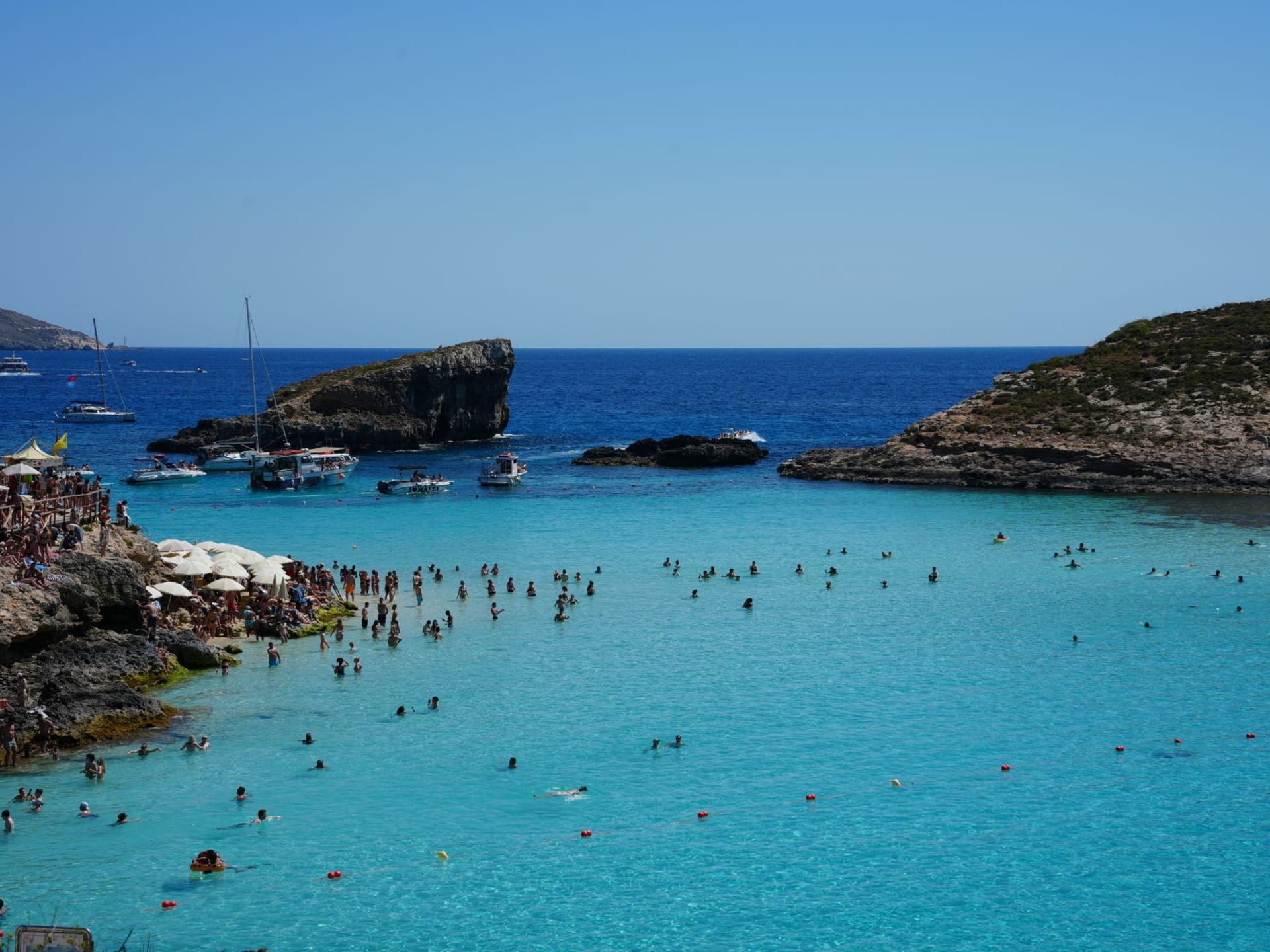
"The Blue Lagoon looks impossible from the boat. It keeps looking impossible when you're in it."
Between Malta and Gozo there’s a small island with a large reputation and a genuinely unlikely secret: in a Mediterranean full of blue water, Comino’s Blue Lagoon is still noticeably, defiantly, incomparably blue. I’d been warned about the summer crowds — every article I read mentioned the summer crowds — and the warnings were correct and it didn’t matter. The lagoon is large enough that once you’re in the water, it’s just you and the color.
Getting There
Ferries to Comino leave from both Malta (Cirkewwa) and Gozo (Mgarr) and the crossing takes about twenty minutes. Several companies run the boats and the return ticket is cheap. The ferries are frequent in summer, less so in shoulder season, and essentially nonexistent in winter when the island goes to its handful of year-round residents, some birds, and rabbits — the word “Comino” comes from cumin, which once grew wild here.
The approach by boat is the right way to understand the island’s size: you see the whole thing in one sweep. It’s flat, scrubby, cream-colored limestone with one old watchtower on the south tip and one former hotel on the eastern bay. No roads. A few dirt tracks between the landing points.
The Blue Lagoon
The lagoon sits between Comino and a smaller, uninhabited islet called Cominotto. The water color comes from white sand on a shallow seabed — the light bounces up through it and turns the whole bay into something that looks digitally enhanced but isn’t. At the edges it’s nearly translucent, running from white to pale green to the blue-turquoise that gives the place its name.
Swimming here is disorienting in the best way: the bottom is visible from the surface at depths where it shouldn’t be, and you find yourself adjusting your estimation of depth constantly as you swim out. I floated on my back for a long time staring at the sky and then at the water and decided I was not going to try to be analytical about it. Sometimes a place is just what it looks like.
The Rest of the Island
Comino rewards the people who don’t immediately swim back to the ferry. There’s a path to the watchtower — Santa Marija Tower, built by the Knights in 1618 — that takes thirty minutes and offers a full view of both Malta and Gozo from the top. The interior of the island is drier and quieter: scrub, limestone, the occasional rabbit, a smell of wild herbs that I couldn’t identify beyond “Mediterranean and old.” St. Mary’s Battery on the south coast is another Knights fortification, later than the tower, positioned to cover the southern approach to the channel.
In the afternoon when the day-trippers have left — they mostly leave by four — the island changes. The lagoon goes quiet. A few people who’ve brought tents set up near the bay. The light turns gold on the limestone and the sound of the channel comes back: wind, water, the distant engine of a ferry heading to Gozo.
Staying Overnight
Camping on Comino is technically possible with permission and occasionally happens. The former hotel has been closed and in varying states of redevelopment for years. For now, overnight access means camping or being on a liveaboard boat anchored in the lagoon — the latter option being exactly as good as it sounds on a warm September evening with the water mirror-flat and the stars very clear.
When to go: May, June, and September for the best combination of blue water and manageable crowds. July and August the lagoon is at full capacity by 10am and stays that way until late afternoon. Avoid winter unless you want the island entirely to yourself, which is a valid but different experience. Go on a weekday over a weekend wherever possible.