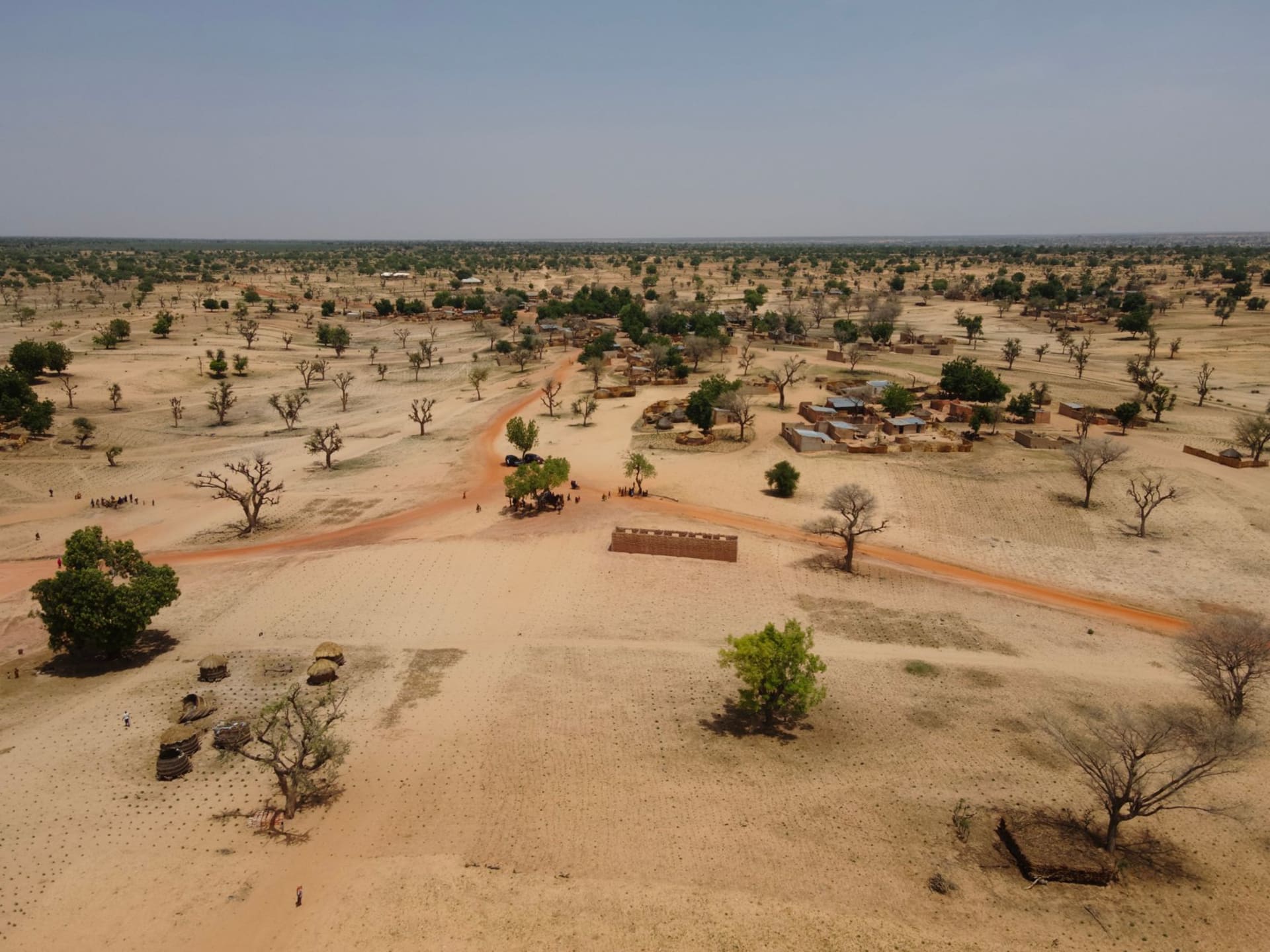
A living mud-brick city where the entire community climbs the mosque walls every spring to replaster them by hand.

I reached Djenné in the dark. The bush taxi from Ségou had run through a series of mishaps — a blown tire, a long stop at a police checkpoint where the officer read our documents with theatrical slowness, a detour around a flooded stretch of laterite road — and by the time we crossed the causeway over the Bani River the town was already sleeping. I found my guesthouse by the sound of a generator and the smell of incense through a courtyard door, and didn’t see the mosque until morning.
What struck me first wasn’t its size, though the Grand Mosque of Djenné — largest mud-brick structure on earth — is genuinely vast. It was the texture. Photographs flatten it, smooth it out, make it look sculptural and deliberate. Standing in front of it at six in the morning, the light still low and golden, I saw that the surface was alive — pitted and organic, studded with the permanent wooden spikes called toron that double as scaffolding during the annual repair festival, the whole wall of it breathing somehow, like the earth itself had decided one day to stand upright and become architecture.

Monday is market day in Djenné, and the market surrounds the mosque like a tide. I arrived on a Sunday evening specifically to be there for the opening, when vendors from across the Inland Delta and beyond establish their positions in the dark. By seven in the morning the plaza was already dense — smoked catfish from the Niger laid out on reed mats, hand-dyed indigo cloth from Ségou in deep navy and pale grey, kola nuts heaped in basins, sorghum, groundnut paste, live chickens tethered by the ankle, a man selling single razor blades from a folded cloth, another with a pyramid of batteries. The babel was in Bambara and Bozo and Fulfulde and French, and I moved through it understanding perhaps one word in thirty, which was fine because the market communicates in textures and smells and the particular urgency of commerce conducted in the first heat of the day.
The town itself is a UNESCO site, and the architecture justifies the designation. The banco buildings lining the narrow streets — residential compounds with turreted facades and wooden door frames, merchant houses with recessed windows — form a streetscape that is coherent and ancient and still inhabited. Children chase each other between the walls. Women hang laundry from iron hooks. A shop selling mobile phone credit operates from a recess in a building whose foundations may be eight hundred years old. This co-existence of the medieval and the contemporary doesn’t feel incongruous here — it feels like the natural state of a city that has always been in use.

The moment I keep returning to, though, was quieter than any of this. I found a tea stall on a side street behind the mosque, run by an elderly man who served attaya — the three-glass Sahelian tea ceremony — from a small brazier. The first glass was bitter, the second sweet, the third sweetest of all. He spoke no French and I spoke no Bambara, but we shared the tea in a silence that felt companionable rather than awkward, the mosque’s minarets visible above the roofline, the morning deepening around us.
When to go: The Monday market runs year-round, but the annual crépissage — the community replastering of the mosque — happens in spring, usually around April or May. The dry season (November to February) offers the most comfortable temperatures and the clearest light for photography.
Keep exploring
More from Mali
 mali
mali Gao
The ancient Songhai capital at the Niger's great bend, where a fifteenth-century pyramid tomb stands at the edge of where West Africa becomes Sahara.
Explore mali
mali Hombori
A small Sahel town beneath a cluster of rock towers so improbable they look like a geological argument that something extraordinary happened here.
Explore mali
mali Kayes
A furnace of a river city where French Sudan once had its capital, and where the heat teaches you humility fast.
Explore mali
mali Mopti
Where the Niger meets the Bani and the whole Inland Delta converges in a port that smells of dried fish and moves to its own river logic.
Explore mali
mali Niafunké
A dusty river town on the Niger where Ali Farka Touré's desert blues still seems to hum in the walls and the water.
Explore mali
mali Ségou
A former empire capital on the Niger where indigo-stained hands still work the cloth and the river festival fills the water with color each February.
Explore