Dhigurah
"I have swum next to a few large things in my life, but nothing prepared me for the moment the whale shark simply decided I was furniture."
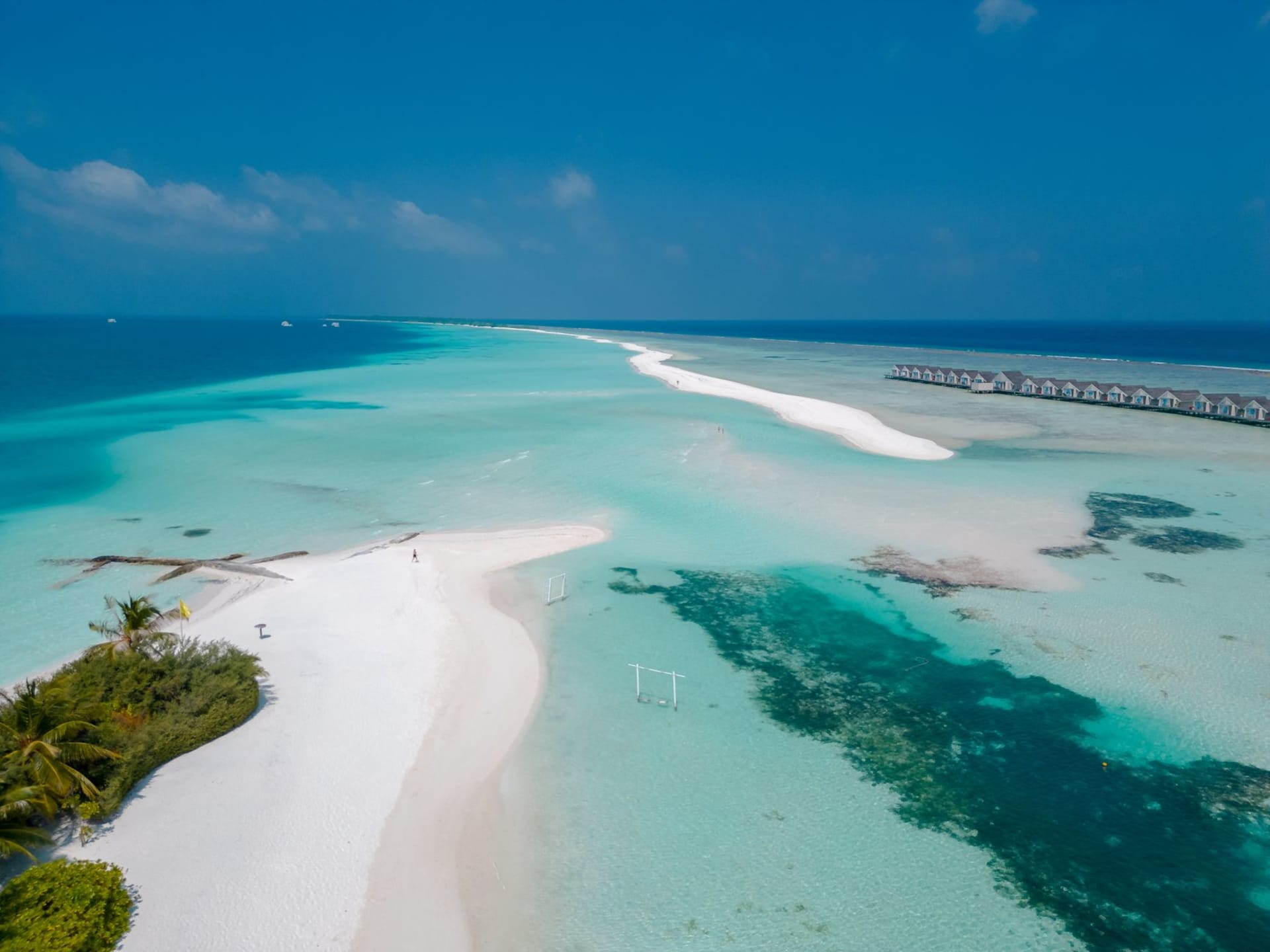
I came to Dhigurah for the whale sharks, like everyone does, and stayed an extra three days for reasons I am still not entirely able to articulate. It is one of the longer inhabited islands in the Maldives — a sliver of sand perhaps three kilometres top to bottom and barely a couple of hundred metres wide at the village end — and the southern half is a single uninterrupted sandbank fringed with takamaka trees that throw real shade, which on a Maldivian island is a luxury you stop taking for granted very quickly. Lia called it the island that forgot to stop being a beach. She was not wrong.
The thing in the channel
The reason Dhigurah exists on any traveller’s map is the deep-water channel just offshore in South Ari Atoll, where whale sharks feed all year rather than seasonally, which makes this one of the few places on earth you can reasonably plan a trip around seeing the largest fish alive. We went out at seven with a guide named Hussain who spotted the first one from the boat by reading a patch of water I genuinely could not distinguish from any other patch of water. He told us to slip in quietly, no splashing, and to never get in front of it.

The first one was maybe six metres, a juvenile, mouth slightly open, moving with the unbothered slowness of something that has never had to hurry in its life. I kept my distance like a good visitor. Then it shifted course, came alongside, and for about forty seconds the two of us were swimming in parallel close enough that I could see the barnacles near its tail and the constellation of white spots that, Hussain explained back on the boat, the marine researchers use like fingerprints to name and track each animal. The one we met was on the database. It had a name. I found this unreasonably moving.
Bikini beach and the long walk south
Dhigurah is a local island, which means the village half observes Maldivian custom — modest dress, no alcohol — and the tourism half has been sensibly fenced off into a designated bikini beach on the southwest shore. I appreciated the honesty of the arrangement; nobody pretends, everybody knows the rules, and the result is a place that feels lived-in rather than staged. We ate grilled reef fish and garudhiya at a guesthouse run by a family who had been fishermen until the snorkellers arrived, and the father still went out most mornings out of what looked like habit rather than need.

The long walk to the southern point is the island’s quiet pleasure, and the one I’d recommend to anyone who thinks the Maldives is only about resorts and infinity pools. At low tide the sandbank extends what feels like forever, the water on either side two different shades of impossible, and you can walk out until the village behind you disappears and there is nothing but sand and reef herons stalking the shallows. Lia and I did it at sunset on the last evening, said almost nothing, and turned back only when the light went. That walk, more than the whale shark, is what I think about when I think about Dhigurah.
When to go
Whale sharks are present year-round here, which is the whole point, but the calmer, clearer water of the northeast monsoon — roughly December through April — gives you the best visibility and the gentlest channel crossings. The southwest monsoon brings more wind and the occasional washed-out afternoon, but also fewer boats and lower guesthouse prices, which is a trade I’d happily make again.