Asia
Maldives
"The ocean here doesn't look real — it looks like someone turned the saturation up."
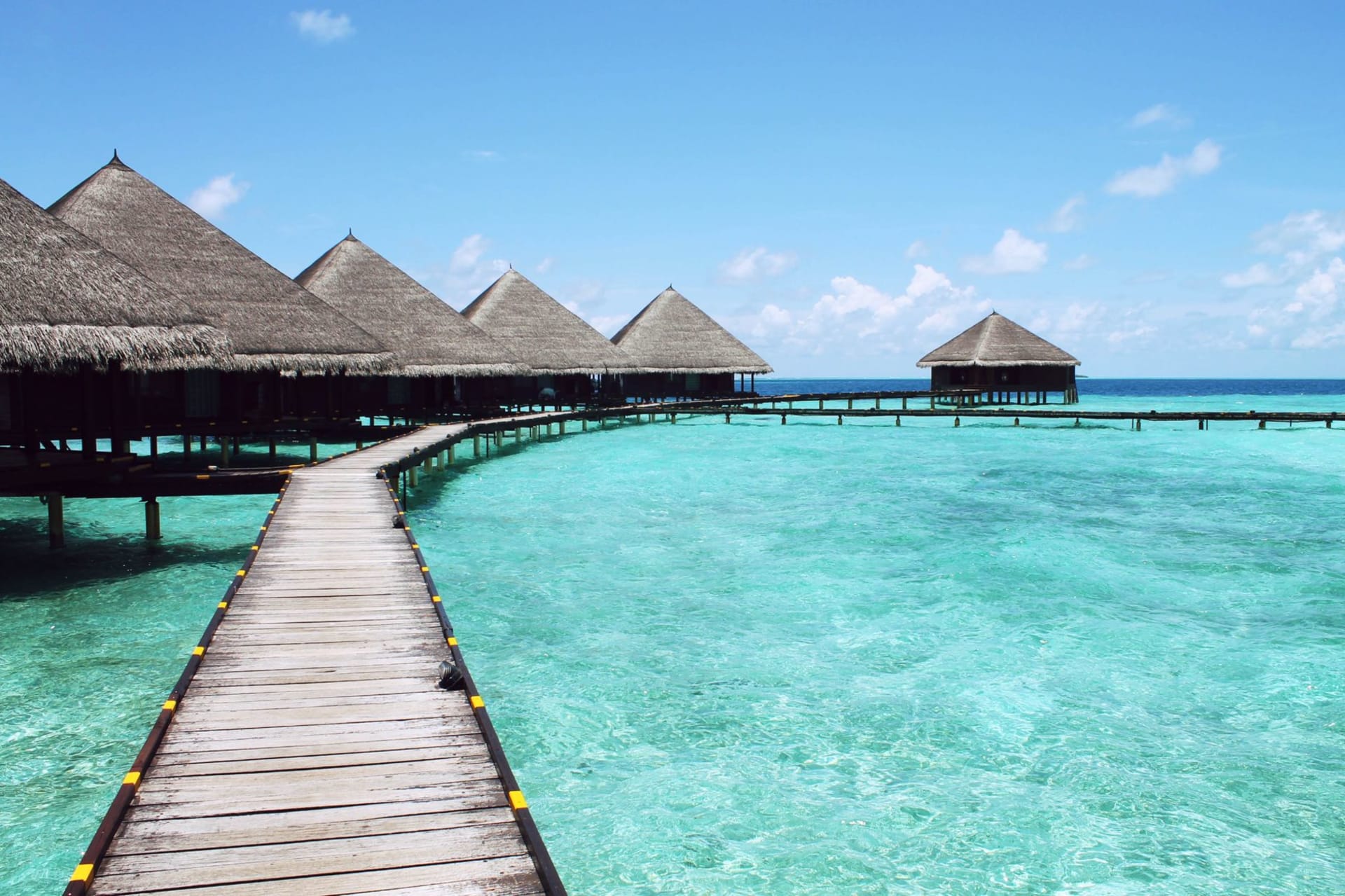
A nation of 1,200 coral islands scattered across the equator, where the water is so clear you can see the fish from the seaplane before you even land.

The seaplane drops low over North Malé Atoll and suddenly the Indian Ocean stops being a single color. It fractures into twenty shades — navy deepening to indigo over the open water, then a violent turquoise over the reef shelf, then something almost white where the sand lies just below the surface. I pressed my face against the scratched oval window like a child and felt, despite everything I thought I knew about managing expectations in travel, genuinely unprepared for what I was seeing.
The Maldives is the kind of place that embarrasses you into wonder. I arrived skeptical — I’d built up a quiet snobbery about it, the destination of honeymoons and Instagram accounts and people who say they’re “disconnecting” while posting four stories a day. And some of that skepticism was earned. The resort model here is genuinely extreme: you are dropped on a sandbank barely larger than a football pitch, surrounded by water in every direction, and asked to pay a small fortune for the privilege of having nowhere to go. The genius of it is that nowhere to go turns out to be exactly what you needed. By the second morning, the lack of options stopped feeling like a limitation and started feeling like an argument. The reef outside my bungalow had more going on in a single hour of snorkeling than a week in most places I’ve been.
What I didn’t expect was how different the atolls can feel from each other. The inhabited islands — the local ones you reach by public ferry from Malé, where actual Maldivians live and fish and run small guesthouses — operate in a completely different register. Maafushi has a high street. Kids ride bicycles after school. Women in headscarves sell fresh tuna near the pier. It costs a fraction of the resort experience and gives you something the resort deliberately withholds: a sense of where you actually are, in a Muslim island nation with its own history and its own relationship to the sea that has nothing to do with your infinity pool.
When to go: November through April is the dry northeast monsoon season — lower humidity, calmer seas, and reliable visibility for diving and snorkeling. December and January are peak, so prices spike accordingly. May to October is the southwest monsoon, wetter and choppier, but dive sites on the eastern atolls stay accessible and rates drop significantly. I went in late March and the light in the late afternoon was extraordinary.
What most guides get wrong: They present the Maldives as a single product — the luxury water villa — and ignore the guesthouse economy entirely. Since 2009, inhabited islands have been allowed to host tourists, and the experience is genuinely interesting and affordable. You can dive the same reefs, eat fresh reef fish for a few dollars, and talk to people whose families have been navigating these atolls for centuries. Go to both: spend a few nights on a local island first, then treat yourself to the overwater fantasy with a clearer sense of what actually surrounds it.
Explore
Places in Maldives
 maldives
 Addu Atoll
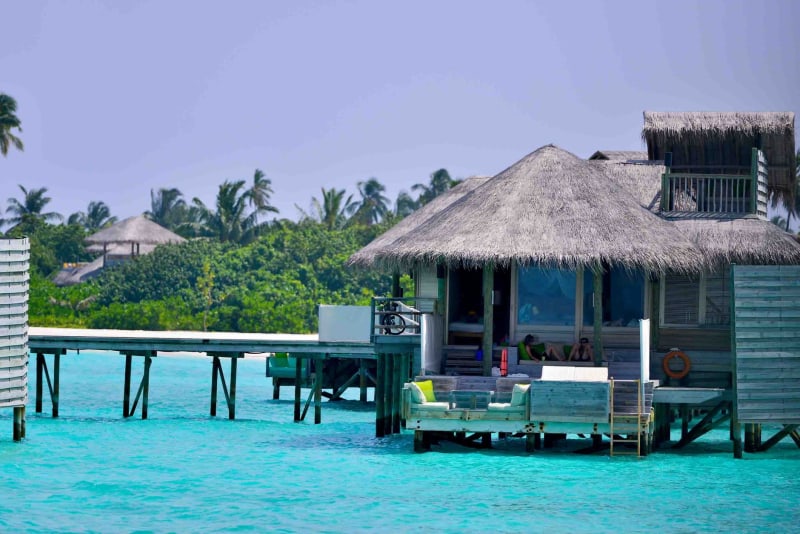
The southernmost atoll in the Maldives, where WWII history, causeways through the lagoon, and a genuinely different landscape rewrite your idea of the country.
Explore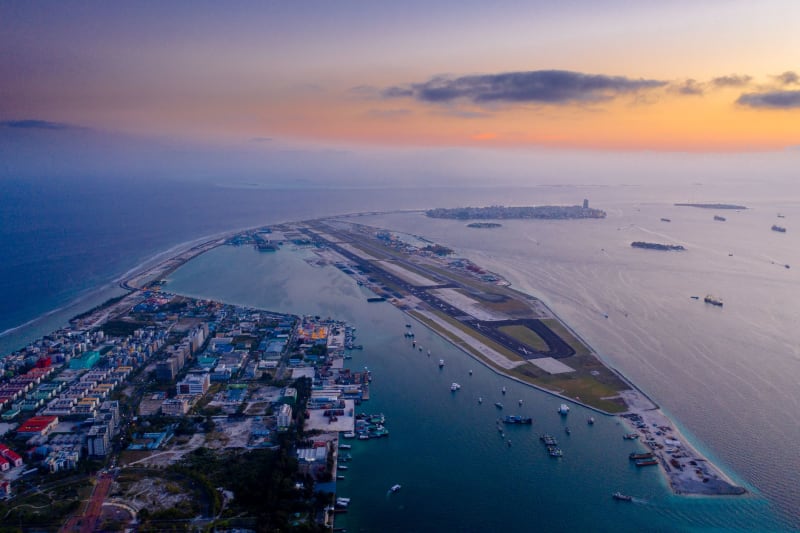 maldives
 Alimatha
A remote island in Vaavu Atoll where the pier after dark becomes a congregation point for nurse sharks and stingrays so reliable it almost breaks the rules of wild nature.
Explore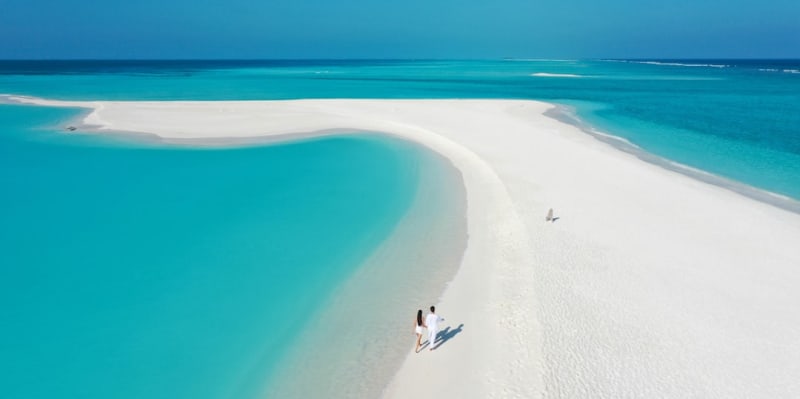 maldives
 Baa Atoll
A UNESCO biosphere reserve of 75 scattered islands where manta rays swirl by the hundreds in a single feeding bay.
Explore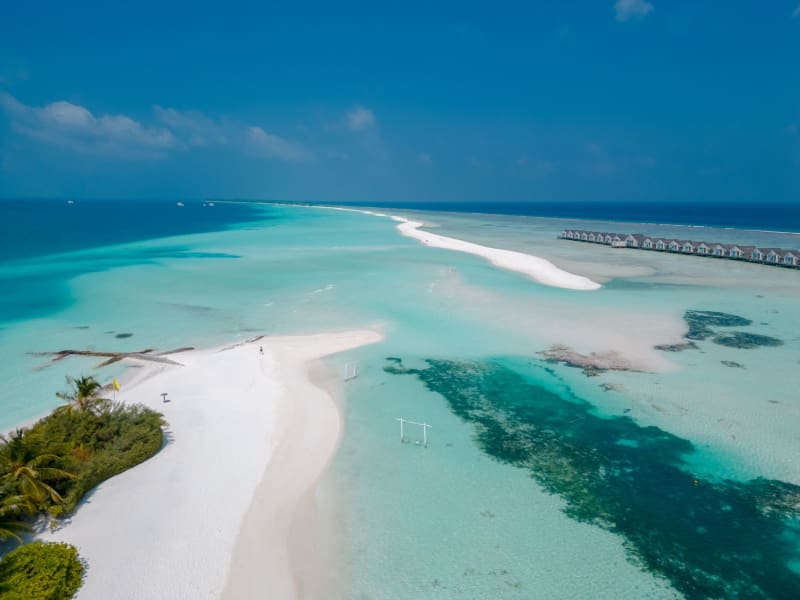 maldives
 Dhigurah
A skinny three-kilometre island in South Ari Atoll where whale sharks cruise the channel year-round and the dhoni captains know each one by its scars.
Explore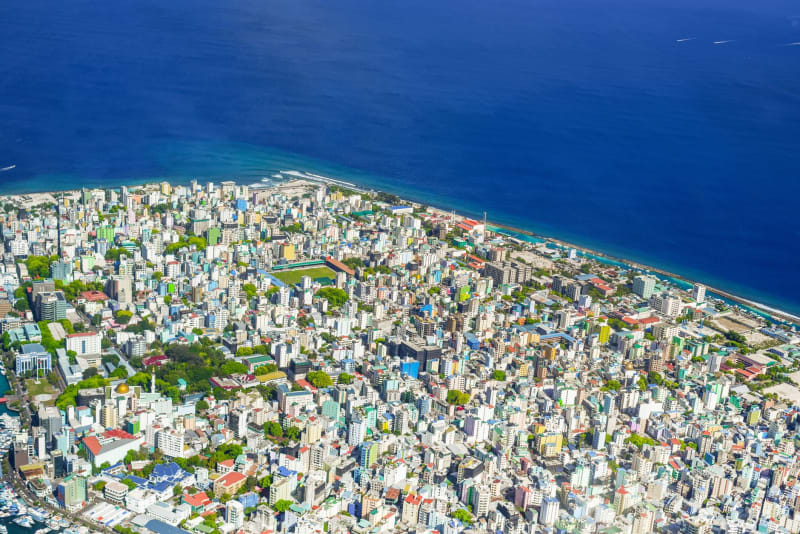 maldives
 Fuvahmulah
The Maldives' strangest island — a single raised atoll in the deep south with freshwater lakes, tiger sharks, and a dialect nobody else speaks.
Explore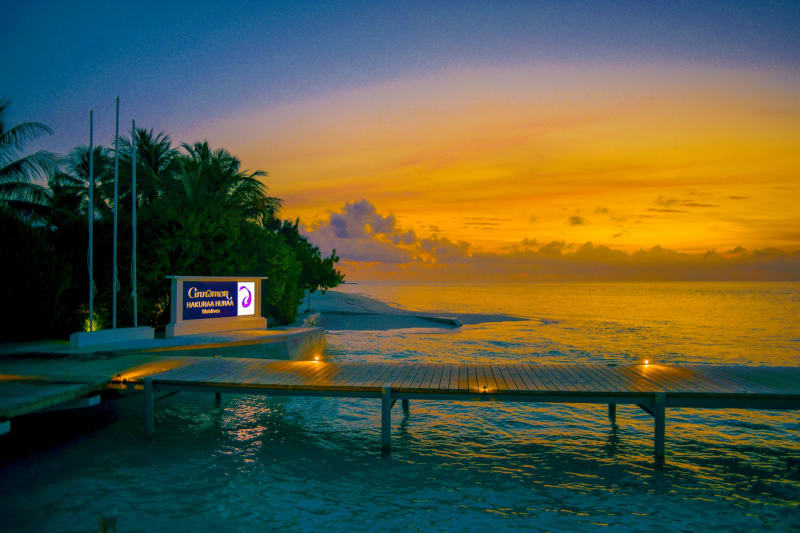 maldives
 Hanifaru Bay
A shallow bay in Baa Atoll where, at peak season, hundreds of manta rays gather to feed in a spectacle that makes the word 'snorkeling' feel completely inadequate.
Explore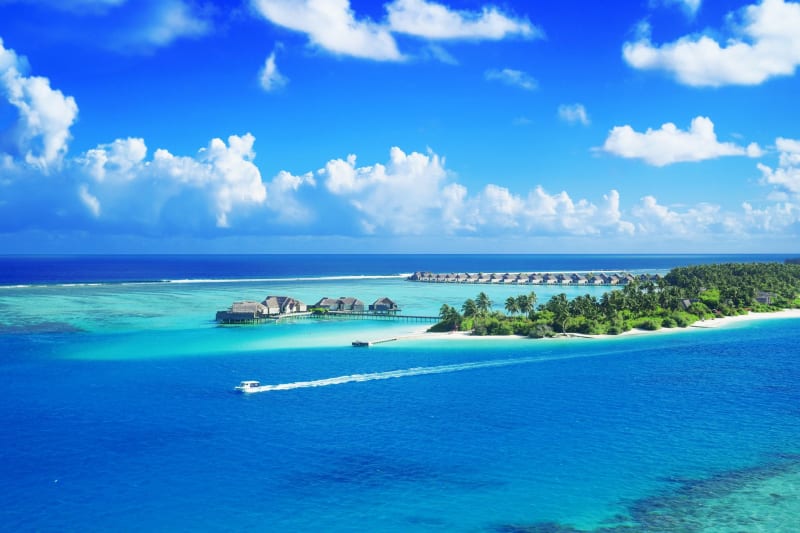 maldives
 Maafushi
The local island that proves the Maldives was always about the reef, not the price tag — if you know where to look.
Explore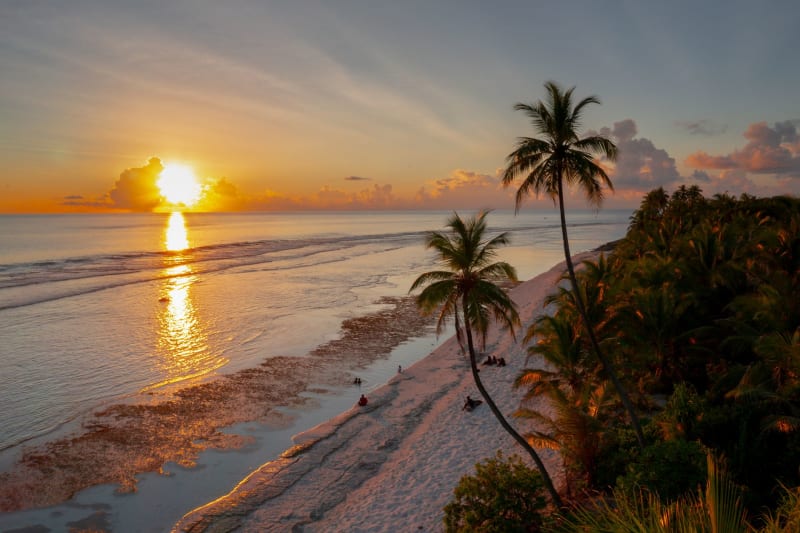 maldives
 Malé
A capital so impossibly dense it feels like someone compressed an entire nation onto a single square kilometre of coral.
Explore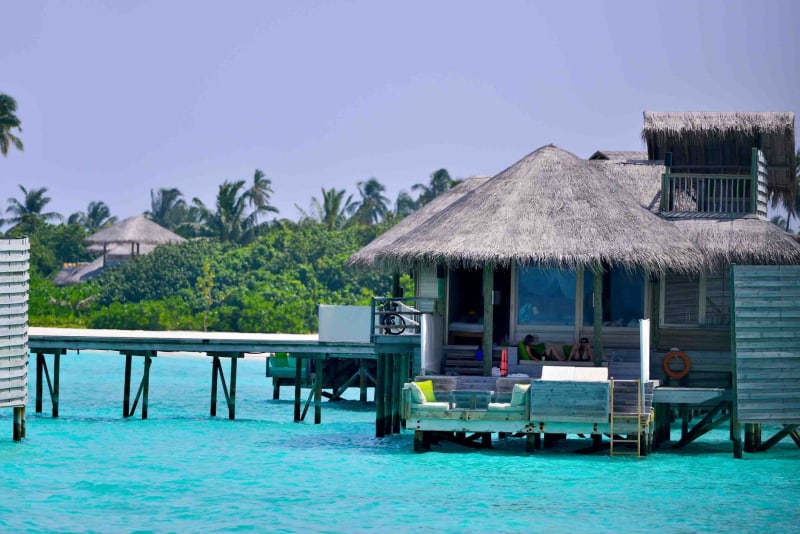 maldives
 Rasdhoo
A tiny atoll south of Ari where waking up at 4am earns you hammerhead sharks circling in the blue just before sunrise.
Explore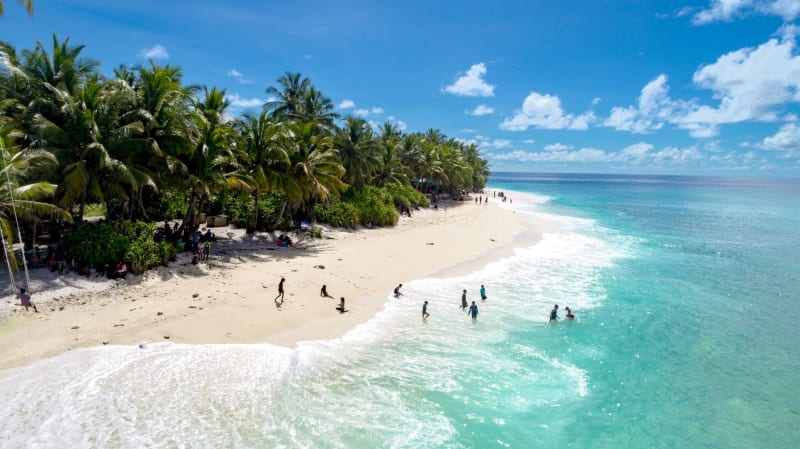 maldives
 Thulusdhoo
A local island in North Malé Atoll where a world-class right-hand reef break coexists with a Coca-Cola factory and a community that was here long before the surfers arrived.
Explore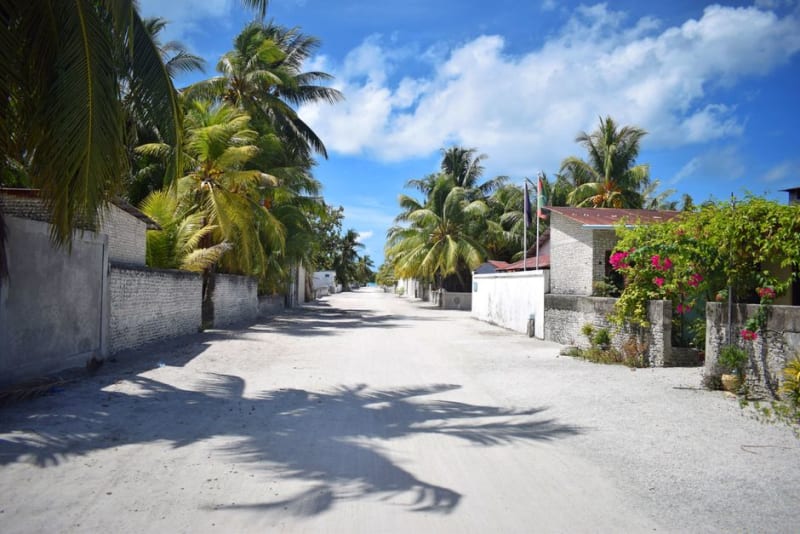 maldives
 Ukulhas
A car-free, coral-lined island where a whole community decided that paradise is worth sweeping clean every single morning.
Explore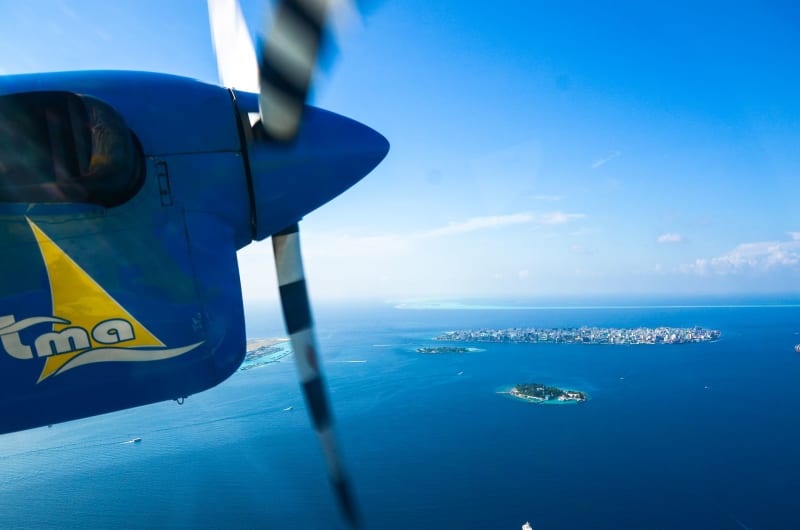 maldives
 Utheemu
A remote northern island where a 16th-century wooden palace marks the birthplace of the man who expelled the Portuguese and unified the Maldives.
Explore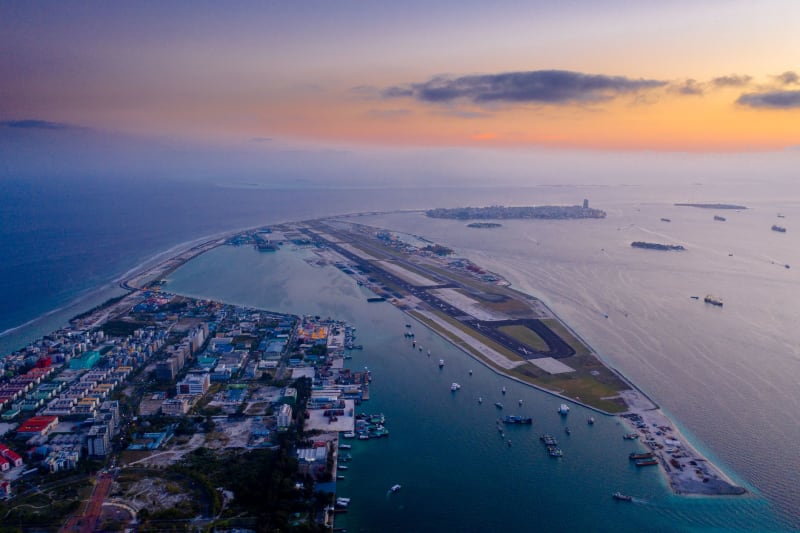 maldives
 Vaadhoo Island
A tiny inhabited island in South Malé Atoll where bioluminescent plankton turns the waterline into something that looks like a spilled galaxy.
Explore