Batu Caves
"A 43-metre golden god, 272 candy-coloured steps, and a monkey trying to steal Lia's sunglasses — Batu Caves does not do subtle."
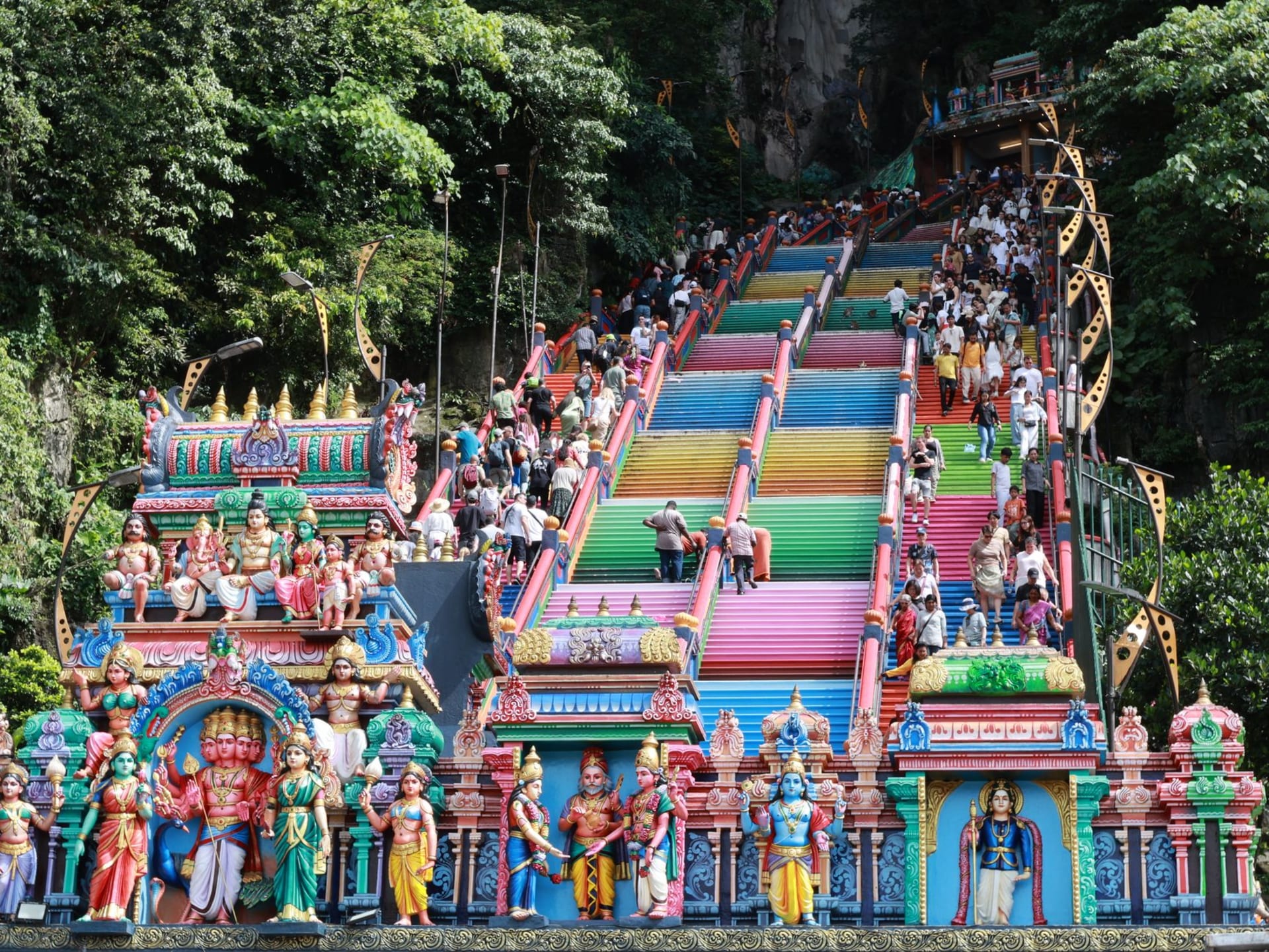
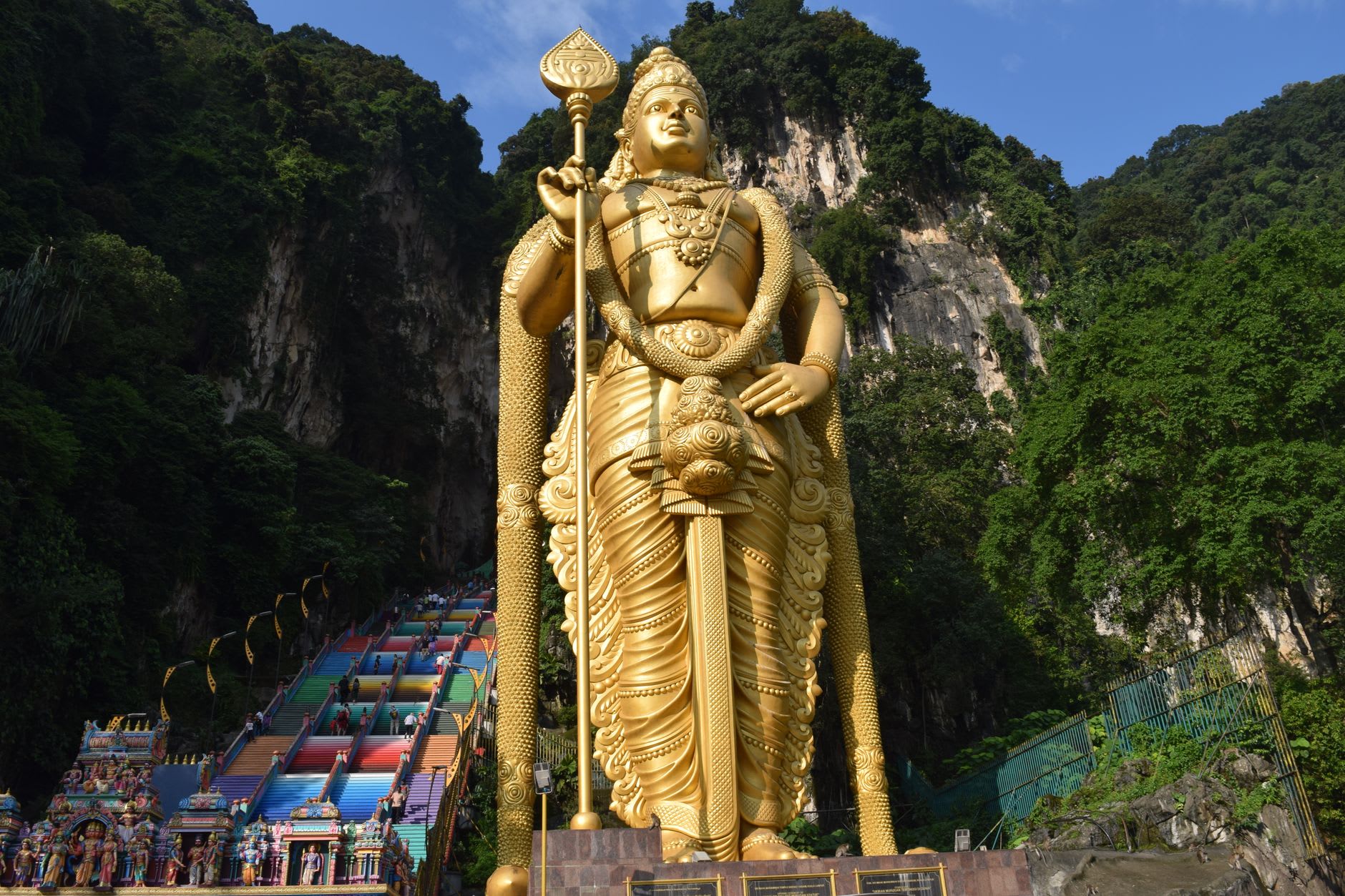
Batu Caves sits about thirteen kilometres north of central Kuala Lumpur, close enough that you can ride the commuter train out from KL Sentral in under half an hour and step off the platform directly into the spectacle. And it is a spectacle. There is a 42.7-metre golden statue of Lord Murugan, the Hindu god of war, standing at the base of a limestone cliff, and behind him a staircase of 272 steps painted in vivid bands of pink, blue, green and yellow climbing into the mouth of an enormous cave. Subtlety is not on the menu here, and I mean that as a compliment.
Up the rainbow steps
The steps are the thing everyone photographs, and the climb is shorter than it looks but steeper than you expect, and Kuala Lumpur’s humidity ensures you arrive at the top with a shirt you’d rather not be wearing. The repainting of the staircase in its current riot of colour was a relatively recent thing, controversial at first with heritage authorities, and undeniably Instagram-ready now — but standing at the bottom looking up at the golden god against the grey cliff and the painted cascade of steps, I understood why they did it. It is gloriously, unapologetically loud.
The macaques are the wild card. Long-tailed macaques line the staircase and the temple grounds in numbers, and they are bold, opportunistic, and entirely unafraid. One of them made a serious attempt on Lia’s sunglasses, perched on her head, and got close enough that she shrieked and I laughed and the monkey retreated up the railing with the wounded dignity of a creature who has done this many times and expected a better outcome. The rule everyone learns within five minutes: carry no visible food, hold your possessions, and do not make eye contact with anything furry that looks like it has a plan.
Inside the Temple Cave
At the top the staircase delivers you into the Temple Cave, also called Cathedral Cave, an enormous limestone cavern with a ceiling that soars perhaps a hundred metres overhead, open in places to the sky so that shafts of daylight fall through onto the Hindu shrines built into the rock. The space is cool after the climb, the air damp and faintly mineral, and the sound changes — footsteps and prayer bells and dripping water echoing off the stone. Smaller shrines are tucked into alcoves, garlanded and smeared with vermilion and turmeric, and pilgrims move between them while tourists like me try to stay out of the way and mostly fail.
I happened to visit in the run-up to Thaipusam, the Tamil Hindu festival for which Batu Caves is the most important site in the country. During the festival, well over a million devotees climb these steps, many carrying ornate kavadi frames pierced into their skin in acts of devotion that I have no frame of reference for and will not pretend to. I missed the festival itself, but the preparations were everywhere, and even on an ordinary day the cave functions as a living place of worship rather than a museum piece, which is precisely what saves it from being merely a photo stop.
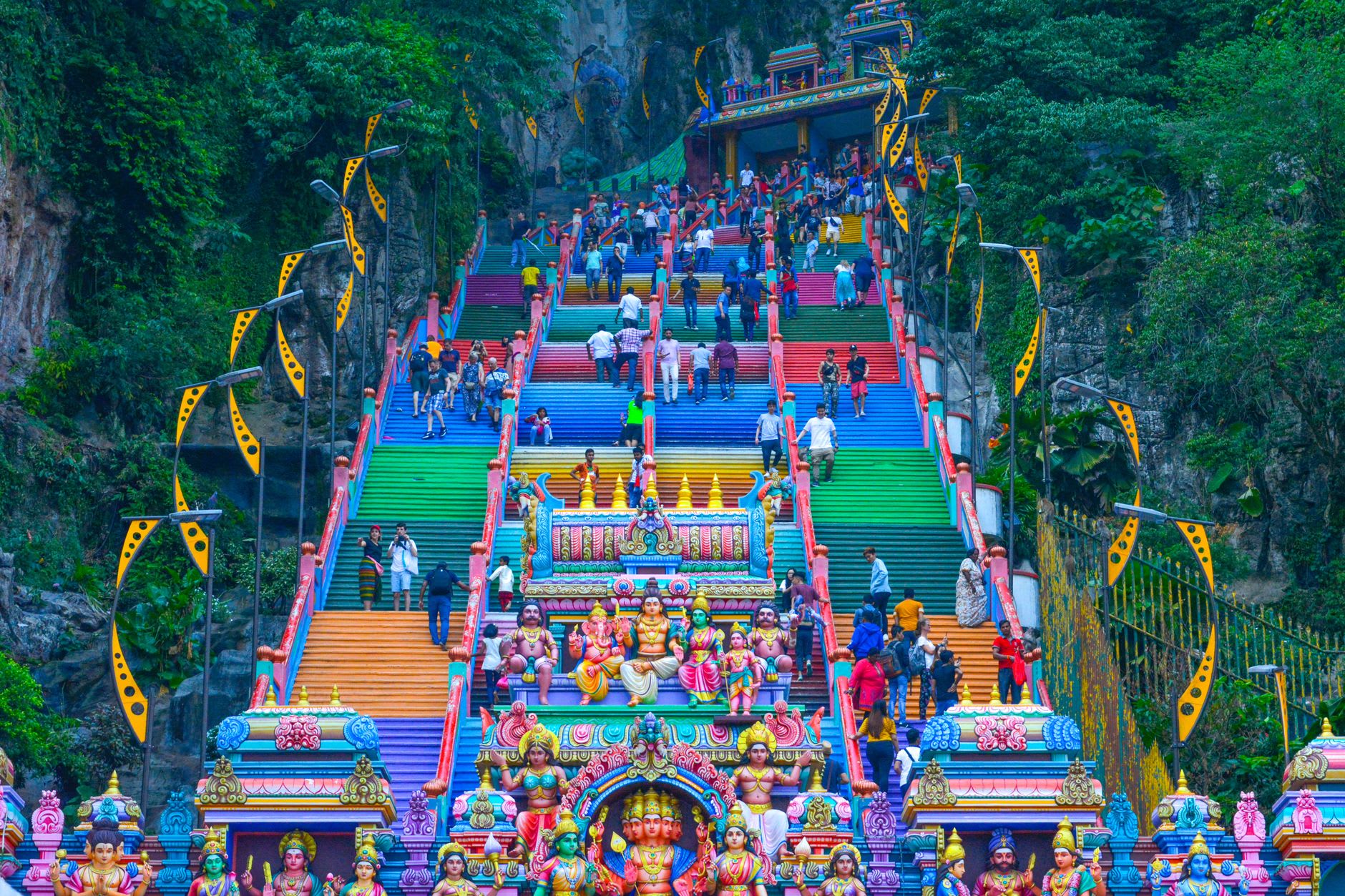
Batu Caves is touristy, crowded, and loud, and none of that diminishes it. It is one of those rare sites that is genuinely sacred and genuinely a circus at the same time, and Malaysia, in its easy plural way, sees no contradiction in that.
When to go: Go early, before 8.30am, to beat both the heat and the tour buses. The site is free to enter the main cave. If you want the spectacle at its most overwhelming, come for Thaipusam in late January or early February — but be ready for vast crowds and limited transport.