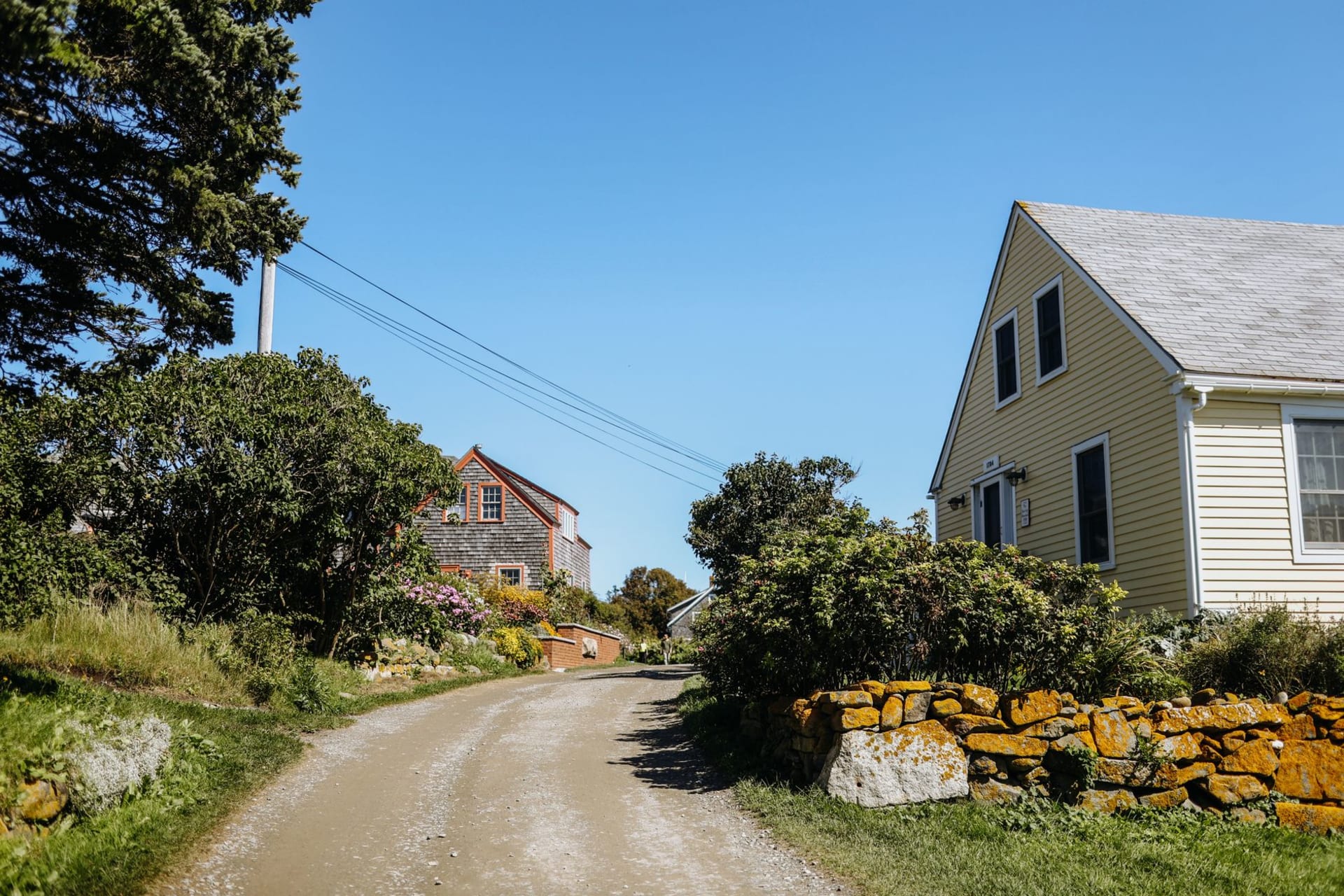
Monhegan Island
"No cars. One dirt road. The Atlantic on three sides and silence so complete I heard my own heartbeat on the headland."
The ferry from Port Clyde runs about an hour, out through the island-dotted waters of the St. George River and then into the open Gulf of Maine, and Monhegan appears as a dark mass on the horizon about halfway out: a long, wooded profile rising seventy feet above the water, with the white speck of the lighthouse visible on the island’s highest point. There are no cars on Monhegan. No paved roads. The island is one mile long by half a mile wide, with a village at the landward end and the wild headlands at the seaward end, and in the summer about two hundred people live there, plus the day visitors who arrive on the morning ferry and leave on the afternoon one. I took a room for two nights, which felt like a different country from being a day tripper.
The village clusters around the ferry landing and contains a general store, a few restaurants, several galleries, and the kind of inn that has been an inn for so long it no longer needs to advertise. Artists have been coming to Monhegan since Rockwell Kent and Robert Henri established the island as a destination for serious painters in the early twentieth century. Jamie Wyeth has a house here. The tradition is ongoing and visible: on any given summer afternoon there are painters set up with their easels at the headlands or in the meadow behind the village, working in the quality of light that rolls in unobstructed off a hundred miles of open ocean.
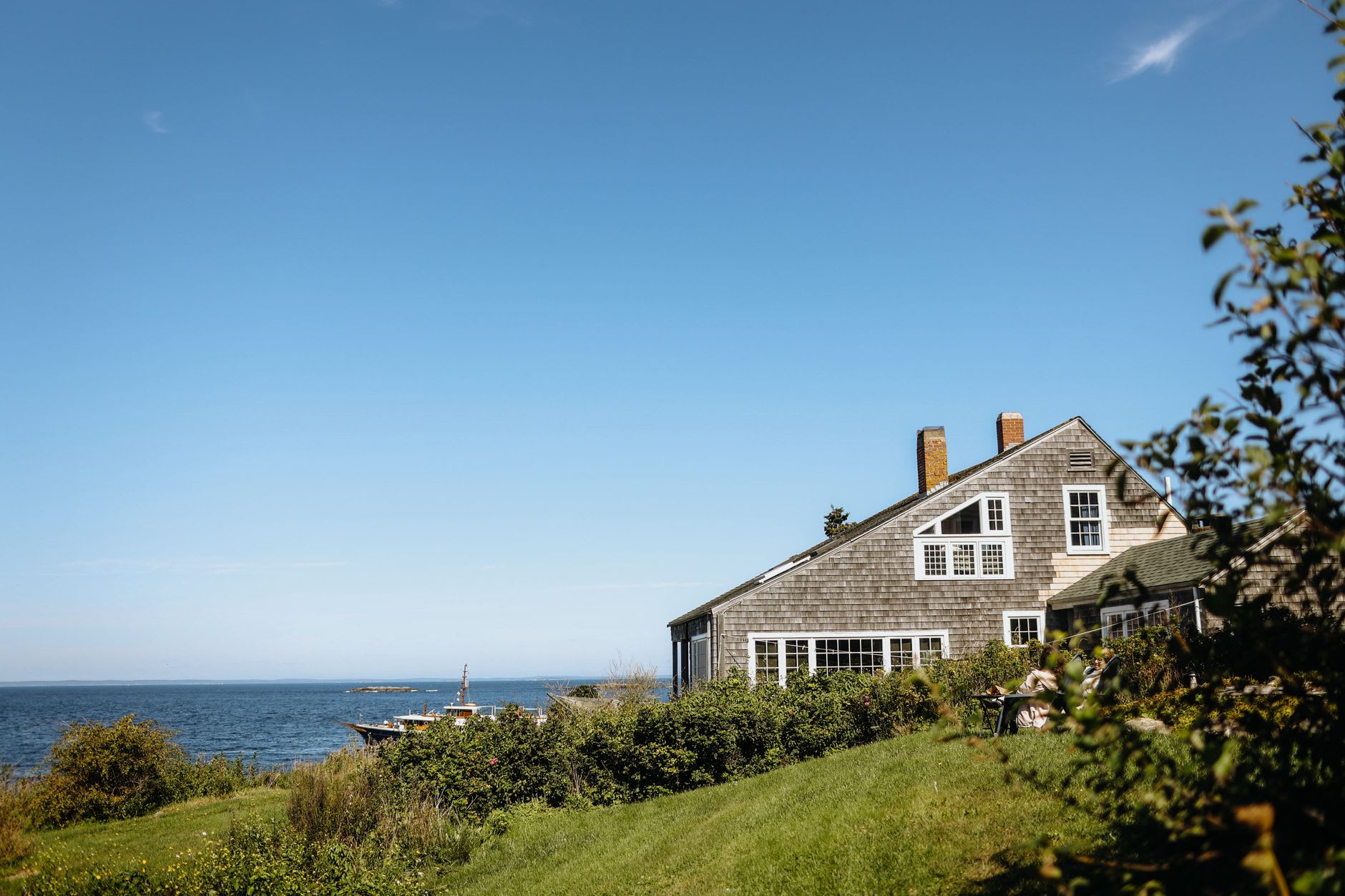
The headland trail — called simply the Cliff Trail — is the reason to come here beyond all the others. It starts at the village end and climbs through Cathedral Woods, where the old-growth spruce forest is so densely shaded that almost nothing grows on the floor except thick, continuous moss of a green so vivid it seems artificial. The light filters down through the canopy in columns. The needles underfoot are soft and deep and silent. Then the trees thin and you are at the edge of the island, where the land simply stops and the cliff begins, dropping forty or sixty or eighty feet straight into the Atlantic with nothing to stop you. The waves below hit the rock with a regularity and a force that is impossible to convey in language: each one arrives with a sound like something heavy being thrown, the water exploding up the cliff face in white and then draining back with a rattling of stones and foam.
I walked the full perimeter trail, which takes three to four hours depending on how long you stand at things, and I stood at things for a long time. The Burnt Head viewpoint. The rocks at White Head at low tide, the offshore ledges covered with cormorants and seals. The meadow at the island’s interior, which was warm and sheltered and full of monarch butterflies in September, in a concentration I had never seen on the mainland. Coming back through Cathedral Woods in the late afternoon, the light had shifted enough that the moss had gone from green to gold, and the spruce trunks were throwing long shadows, and I had the distinct feeling — which I have had in very few places — of having been somewhere that exists entirely on its own terms.
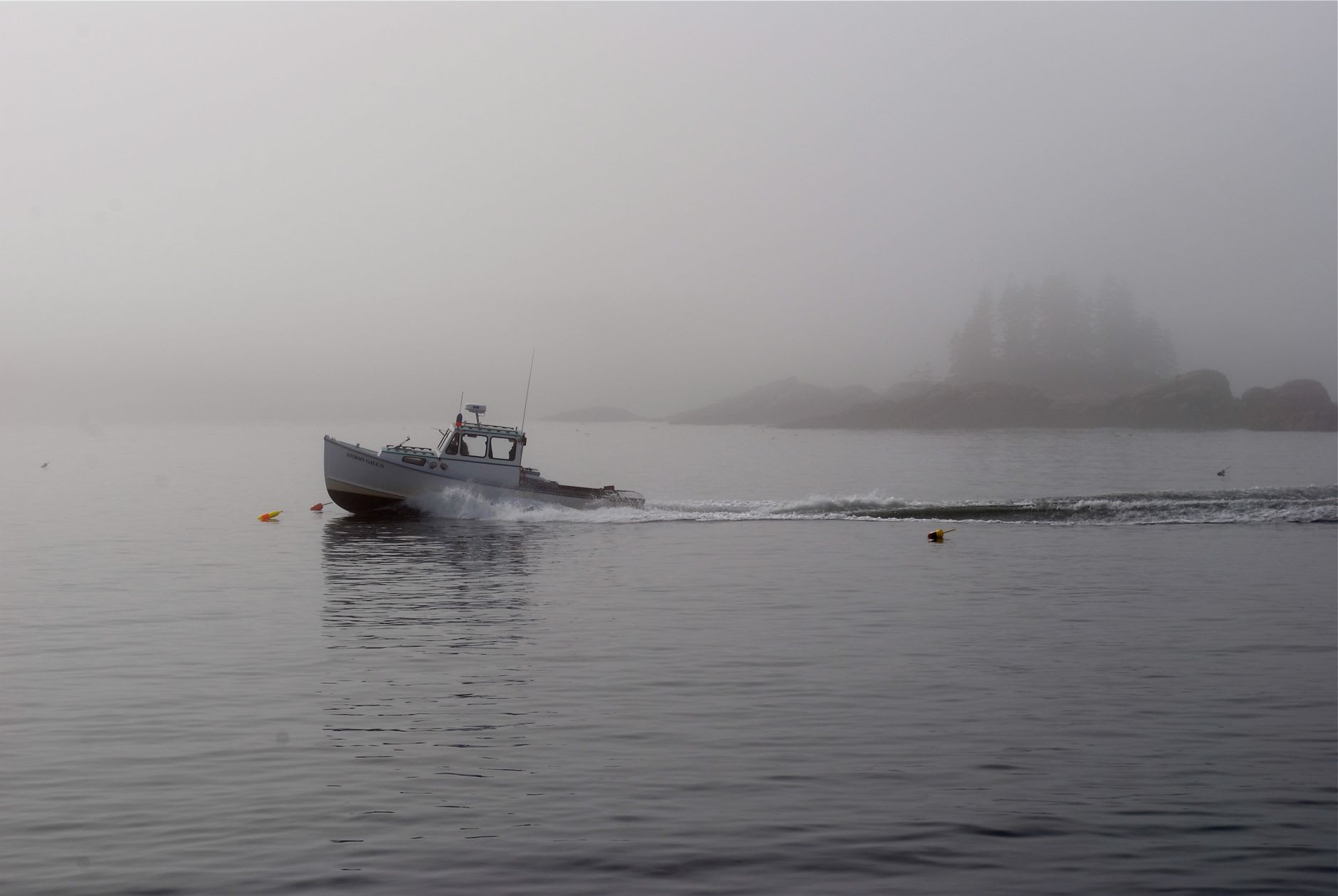
The lobster fishing at Monhegan operates on a compressed schedule unique in Maine: the season runs only from the first of January through June 25th, which means the island’s lobstermen fish in the deepest winter, hauling traps in temperatures and seas that other fishing communities have decided are not worth it. This fact, encountered in the island museum, struck me as one of the most typically Maine things I came across.
When to go: September is exceptional — the crowds are smaller, the monarchs are migrating through, the clarity of the air is remarkable, and the colors in Cathedral Woods are starting to turn. Avoid July 4th weekend. The ferry from Port Clyde runs year-round but less frequently in winter; book accommodation far ahead for any summer stay.