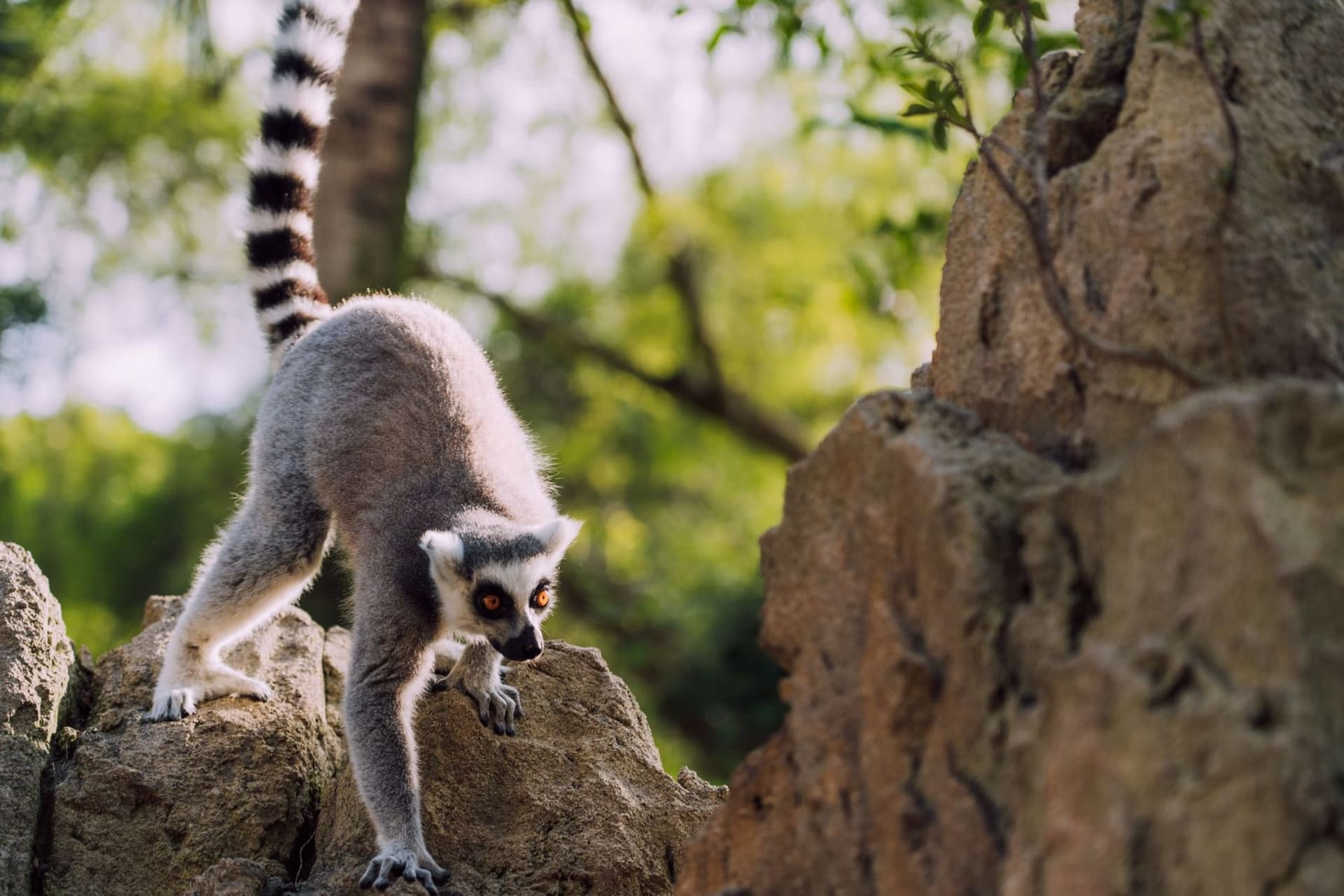
A forest of razor-sharp limestone needles hosting endemic lemurs and birds found nowhere else on Earth.
There is no casual way to move through the Tsingy. Every step is a negotiation — with the angle of a foothold, with the grip of a fixed rope, with the realization that the rock beneath you is not merely sharp but impossibly so, each pinnacle tapering to a point that could open your palm in a moment’s inattention. The guides in Bekopaka, the small town at the reserve’s edge, call it le Grand Tsingy without ceremony, the way people name things they have lived beside their whole lives. I called it extraordinary, quietly, mostly to myself.
The Stone Forest
Tsingy de Bemaraha is a UNESCO World Heritage site in western Madagascar, a plateau of Jurassic limestone eroded into a labyrinth of razor needles — tsingy is a Malagasy word meaning, roughly, where one cannot walk barefoot. An accurate name. The pinnacles rise as high as thirty meters in places, their grey flanks streaked with rust and white mineral shadow, the whole formation carved by monsoon rains percolating through the rock over millions of years. Walking into it feels like entering a cathedral built by water and time, one with no interest in human comfort.
The park divides into two circuits: the Petit Tsingy, accessible and good for an afternoon, and the Grand Tsingy, which demands a full day and genuine comfort with heights. Lia took one look at the first suspension bridge — swaying slightly, strung between two outcrops over a drop she could not see the bottom of — and crossed it first anyway, which is characteristic of her.
The Inhabitants
What stopped me mid-crossing, both times, were the lemurs. The Decken’s sifaka lives here in small family groups, their coats cream and rust against the pale stone, and they cross the tsingy by leaping — impossibly precise launches from needle to needle, not hesitating, not looking down. We watched a female with a juvenile clinging to her back clear a two-meter gap without apparent effort, land on a spire no wider than a human hand, and immediately begin foraging for lichen. I had not expected to feel humbled by a primate that weighs three kilograms.
The unexpected discovery came at midday, in the deepest section of the Grand circuit: a pocket of shade where the spires crowd so close that almost no light reaches the canyon floor. It is cool there, improbably cool given that we had been sweating through the morning, and the sound of the world above disappears. Standing in the silence, I noticed movement in the upper reaches — a Madagascar fish eagle, enormous and unhurried, navigating the narrow channel of open sky between the pinnacles. It seemed to know every gap by memory.
Into the Reserve
Access runs through Bekopaka after a rough road from Morondava — corrugated laterite for three hours or more depending on season, jeeps fishtailing through dry riverbeds. The journey is not a problem but a threshold, the kind of difficulty that filters out casual visitors and gives the place its particular quality of quiet. Lodge food in Bekopaka tends toward zebu stew and vary amin’anana, a rice dish cooked with leafy greens and whatever protein the cook has on hand. After a day of hauling yourself through the tsingy on fixed ropes, it tastes unreasonably good.
When to go: May through October, during Madagascar’s dry season. The roads into Bekopaka become impassable in the rainy season (November through April), and the park itself closes. July and August are the most popular months; May, June, and September offer the same access with fewer other visitors.