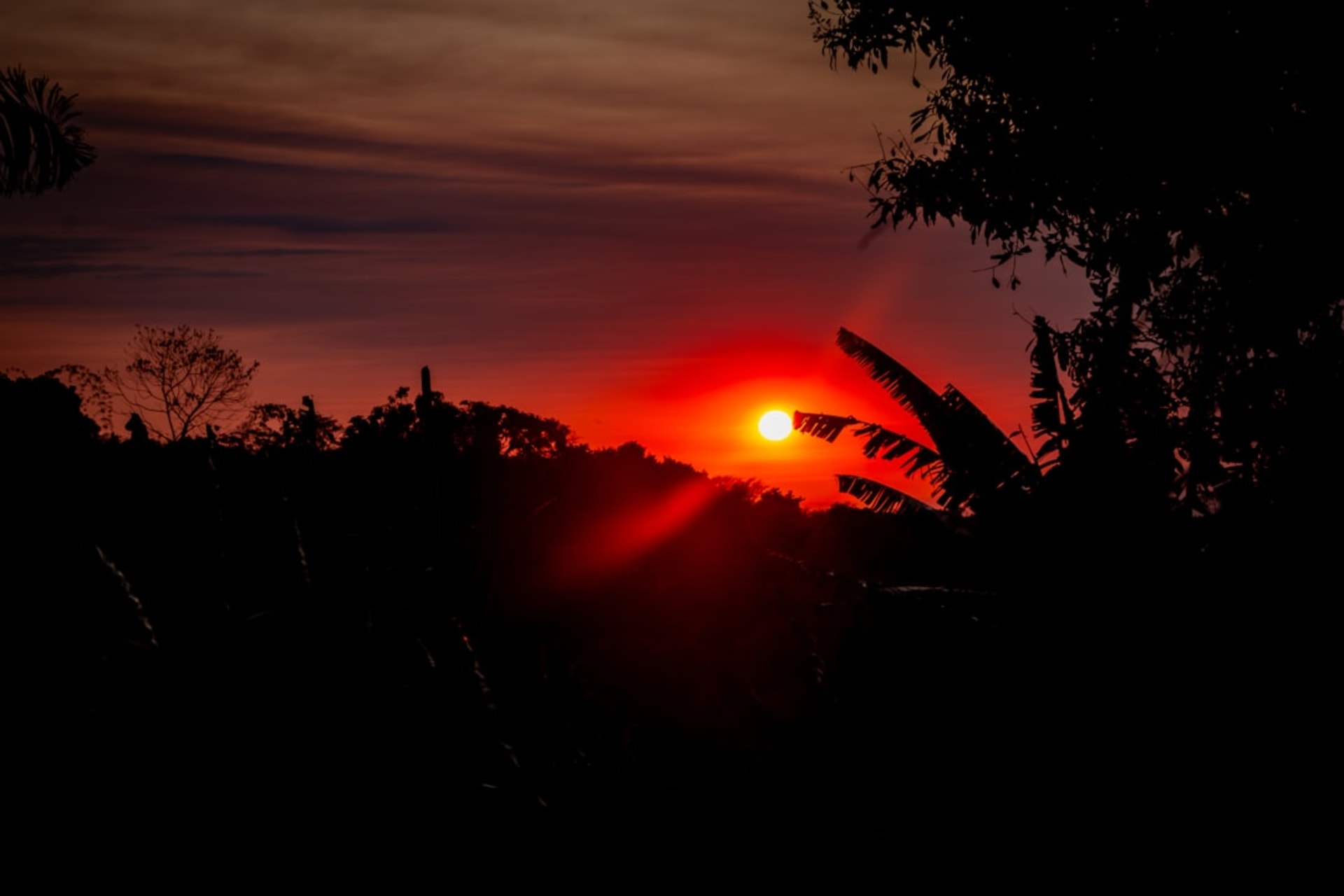
Nosy Komba
"No cars, no motorbikes, no road wide enough for either — just a footpath and a lemur staring at your pockets."
A roadless island between Nosy Be and the mainland where black lemurs beg for bananas and the only traffic is footsteps on packed sand.
The boat from Nosy Be’s Ambatoloaka jetty takes about twenty minutes, cutting across a channel busy with pirogues under patched sails, and it drops you on a beach with no dock, no pier, nothing engineered at all — you just step off the bow into ankle-deep water and wade in. That’s the first sign Nosy Komba runs on a different clock than its bigger neighbor. There are no roads here. Not dirt roads, not bad roads — none. Everything moves by footpath or by boat, and the island’s entire economy seems to have organized itself around that one constraint.
The Village That Faces the Sea
Ampangorinana, the main village, strings itself along the shoreline in a single crowded row: wood-carving stalls, embroidery stands, a scatter of small guesthouses with hammocks strung between porch posts. I walked its length twice in one afternoon, once to look and once to actually buy something — a small carved chameleon from a man named Dada who’d clearly made ten thousand of them and had lost none of his pride in the eleventh. Kids trailed me for a while, less out of hustle than curiosity, and one insisted on practicing his French numbers up to twenty before losing interest and running off toward the water.
Lemurs With No Fear of You
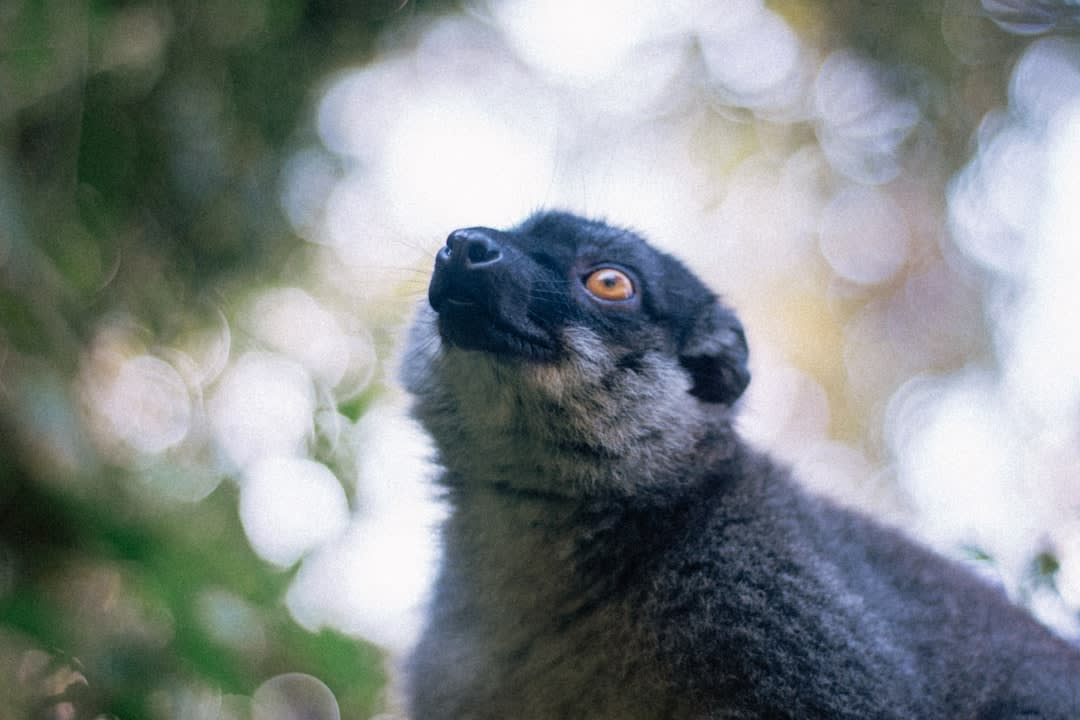
Above the village, a small community-run reserve called Lemuria Land holds a population of black lemurs so habituated to visitors that they’ll drop from the canopy onto your shoulder if you’re holding a banana, and sometimes even if you’re not. I’d read this beforehand and assumed it was overstated for the brochures. It wasn’t. A male landed on my forearm within the first five minutes, sniffed my hand with an expression of frank disappointment at finding it empty, and left for a woman two visitors behind me who’d come better prepared. Their eyes are a startling amber-orange, their fur soft in a way that surprised me — I’d expected something coarser.
The reserve is small, walkable in under an hour, but there’s a decent chameleon and gecko corner too, including a panther chameleon the size of a house cat that stayed absolutely motionless the entire time I watched it, only its independently rotating eyes giving away that it registered me at all.
Climbing Above the Coconuts
A steep path behind the village climbs through coconut groves and patches of cultivated ylang-ylang toward a viewpoint that, on a clear late afternoon, gives you the whole channel at once — Nosy Be to the north, the jagged blue outline of the mainland coast to the east, small uninhabited islets scattered between like punctuation. I made the climb at four in the afternoon, sweated through my shirt completely, and stood at the top eating a warm mango I’d bought for almost nothing from a stall at the trailhead. Worth every step, though I said that through gritted teeth on the way down.
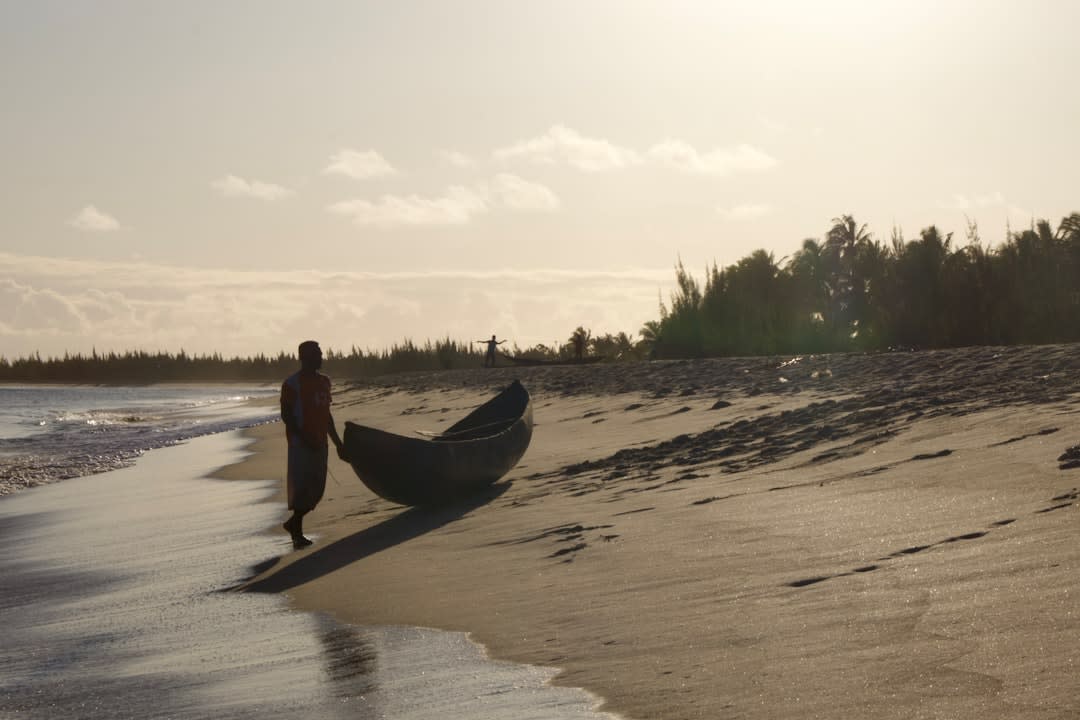
Evenings here are quiet in a way that feels almost engineered — no engines, no generators running past nine, just the tide working against the beach and someone’s radio playing Malagasy pop faintly from a guesthouse kitchen. I slept better on Nosy Komba than anywhere else in the archipelago.
When to go: May through October for dry, mild weather and calm channel crossings from Nosy Be. The reserve gets crowded around midday with day-trippers; arrive early or stay overnight to have the paths mostly to yourself.