Kun Iam Temple
"I came for the incense smoke and stayed for the quiet weight of the stone table in the back garden."
A 400-year-old shrine to the goddess of mercy, where a stone table once sealed a treaty between two empires.
I almost skipped Kun Iam Temple. Lia and I had already spent two days chasing Macau’s casino skyline and the ruins of St. Paul’s, and by the third morning I figured one more temple would blur into the last. I was wrong within about thirty seconds of walking through the gate. The place is enormous — three halls set one behind the other, each opening onto its own garden — and it felt less like a single building than a small walled town devoted entirely to Kun Iam, the Buddhist goddess of mercy also known as Guanyin. We’d arrived on a weekday morning, before the tour groups, and the only sounds were birds, a broom somewhere out of sight, and the soft clatter of joss sticks being set into sand-filled urns.
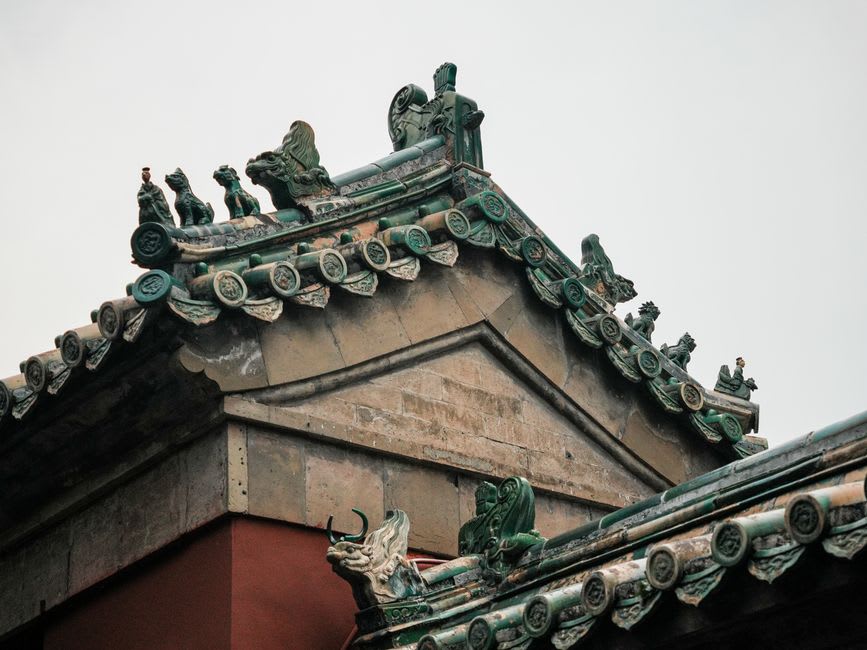
What got me was learning how old the place actually is. Parts of it trace back more than 400 years, to the Ming dynasty, which means people have been lighting incense on this exact spot since long before Macau was the gambling capital it is today. Walking from the first hall to the third, past roofs crowded with Shiwan ceramic figures acting out scenes from Chinese opera, I kept slowing down to look up. Lia pointed out a tiny ceramic general mid-battle, frozen on the ridge of a roof for who knows how many generations of typhoons.
The real gut-punch, though, was in the garden courtyard, at a plain stone table I would have walked straight past if a small sign hadn’t stopped me. In 1844, American and Qing Chinese representatives sat at that table and signed the Treaty of Wanghia, the first formal trade treaty between the United States and China. I stood there a long while, trying to square the calm of the courtyard — birds, incense, Lia photographing a stone lion — with the fact that a whole chapter of trans-Pacific history had been decided on that exact spot. No plaque drama, no velvet rope, just a table sitting quietly among the bonsai.
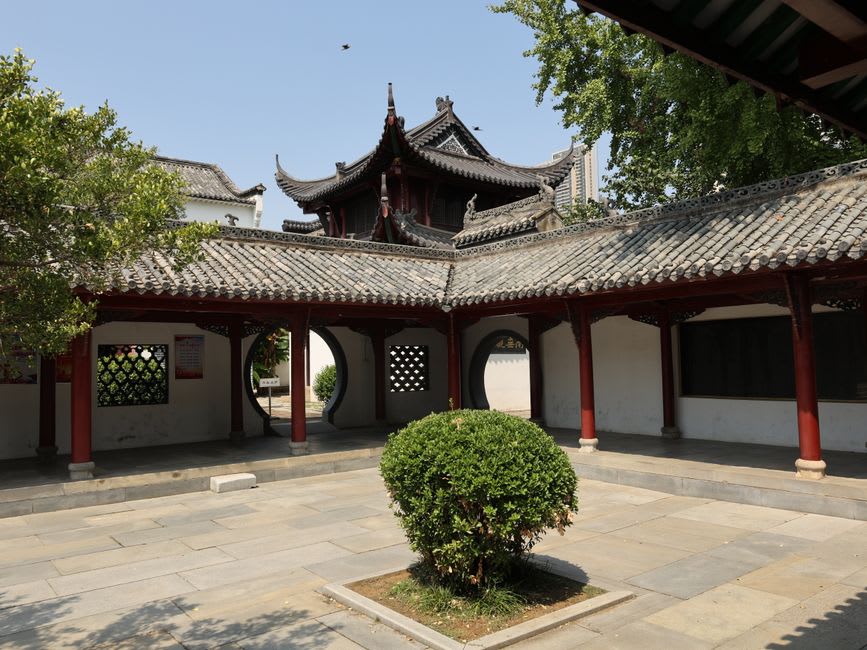
We ended up staying almost two hours, far longer than I’d planned, drifting between the shrine halls where locals were still lighting incense and murmuring prayers, not performing for anyone. That’s what stuck with me leaving Kun Iam: it’s not a museum piece dressed up for visitors. It’s a working temple that happens to also be a protected piece of Macau’s Historic Centre, and you can feel both of those things at once if you slow down enough to notice.
When to go: The temple welcomes visitors year-round, but if you want the shrine halls to yourself the way we did, aim for a weekday morning — that’s when the incense smoke has the place almost entirely to itself.