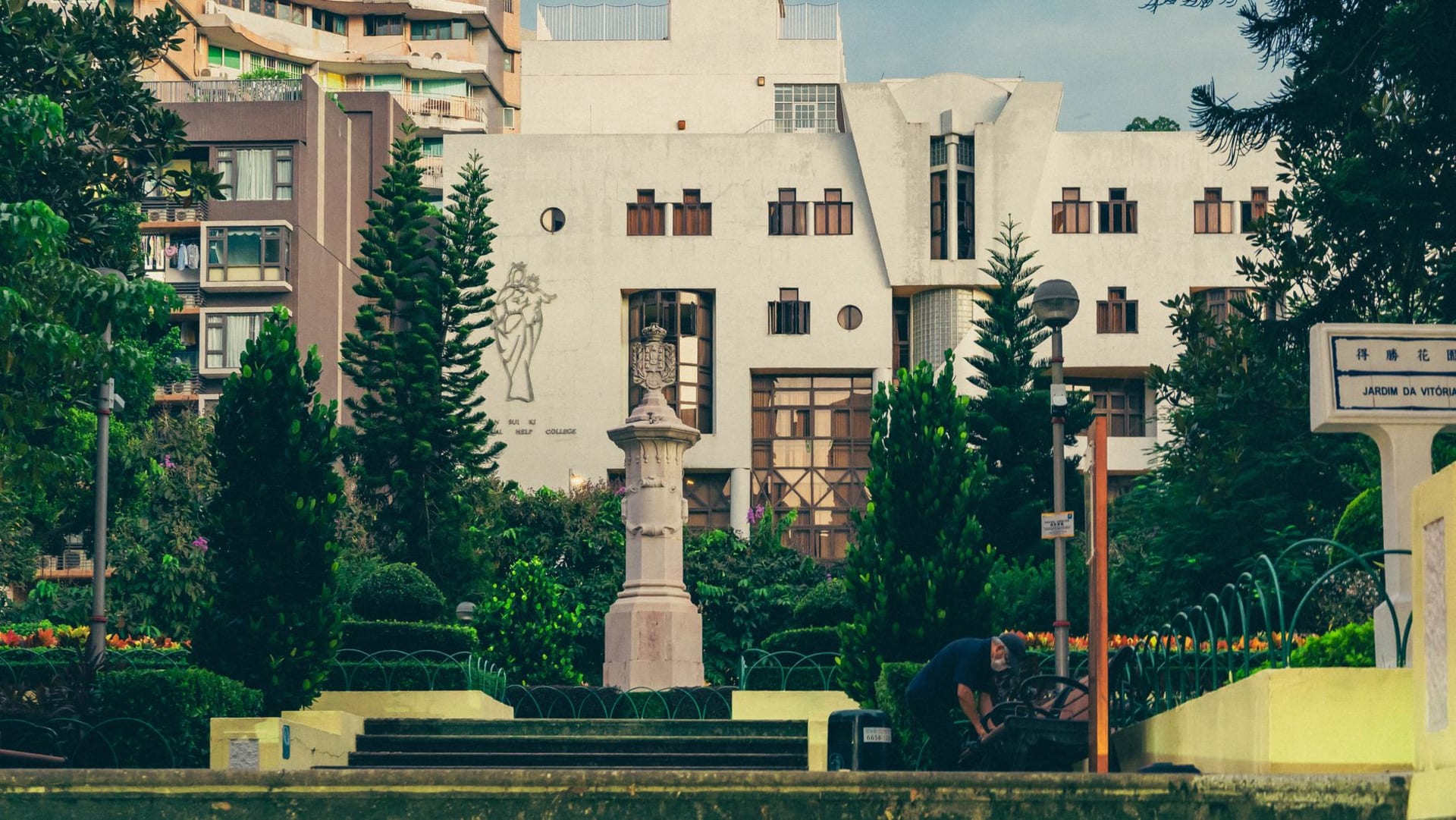
The taxi ride to Coloane Village from the ferry terminal takes you across the Cotai Strip — past The Venetian’s Roman columns and the improbable outline of the City of Dreams — and then, as you cross the bridge onto Coloane Island, something shifts. The density releases. There are trees. The road narrows. By the time you reach the village itself, a small cluster of low buildings around a sheltered bay, you could almost forget that fifteen minutes ago you were watching tourists photograph a fake gondola.
Coloane Village has a square — small, intimate, nothing like the grand Senado — with a yellow Portuguese chapel at one end and a small bronze statue of a navigator at the other. The Chapel of St. Francis Xavier dates from 1928 and is simple enough to feel like an honest act of faith rather than a colonial statement: white interior, painted wooden ceiling, a bone relic of the saint in a glass case by the door. I sat in a pew for a while, not from any religious compulsion but because the chapel was cool and quiet and the only sounds were a ceiling fan and occasional footsteps on the stone floor outside.
The waterfront is lined with old fishing houses, some converted into restaurants, some still showing the weathered paint and rusted ironwork of their original function. The boats in the harbor are smaller than I expected — narrow wooden craft with outboard motors, painted in faded reds and blues. Old men mend nets on the quayside in the morning. It is not a performance for tourists: Coloane is still, to a degree that surprises most visitors, an actual fishing community, though its numbers have thinned.
The egg tart connection is real and worth taking seriously. Andrew Stow, a British pharmacist, opened Lord Stow’s Bakery in the village in 1989 and adapted the Portuguese pastéis de nata into what became the Macanese egg tart — darker, more caramelized, richer in custard, burnished by a higher oven temperature. The bakery still operates from its original corner shop. The tarts come out of the oven every thirty minutes. The queue moves fast. I ate four in a row standing at a small counter, watching the harbor, and had no regrets. The custard is trembling-soft, the shell is shatteringly crisp, and the slight bitterness of the caramelized top layer is what makes it more complex than its Lisbon cousin.

Beyond the bakery, Coloane rewards wandering without agenda. The lanes above the village square lead up into wooded hillside where a few old Chinese temples sit in the shade of banyan trees. The hiking trail to Alto de Coloane — the island’s highest point — takes about forty minutes and ends at a white statue of the Goddess of Mercy overlooking a green landscape that would be unremarkable anywhere else but feels, in the context of Macau, like a minor miracle.
When to go: Coloane is pleasant year-round but genuinely lovely in October and November when humidity drops and the light over the harbor is particularly clear. Weekday mornings are quieter. The bakery queue is shorter before 10am.