
Sekenani Gate
"The moment the tarmac stops and the track begins is the moment the trip actually starts."
The last town before Sekenani Gate is a straggly service strip along the B3 road — fuel stations, supermarkets selling warm Tusker and long-life milk, a mechanic under a shade tree doing something decisive with a socket wrench to a Land Cruiser that has clearly been through things. We stopped there to buy water, bread, and a packet of biscuits that I ate entirely before we reached the gate. My driver Joseph found this mildly amusing. The road from Narok had been three hours of tarmac turning gradually worse, then a lurch onto red dirt where the potholes were deep enough to hide intentions in, and by the time the gate appeared — a concrete arch over a boom gate, a ranger in forest green, a cluster of curio sellers along the verge — I felt the specific relief of arriving somewhere that has made you work a little.
Sekenani is not a destination in itself. It’s a threshold. But the threshold matters. There’s something in the ritual of paying the park fees, handing over your passport, watching the ranger note your vehicle number, that prepares you for what’s on the other side — an ancient, deliberate slowing down. The curio stalls are staffed by women whose beadwork is genuinely worth stopping for: intricate Maasai patterns in reds and blues and whites, the colors carrying meaning I only partly understood when one of the women, named Nashipai, explained them. She was patient about it. I bought a bracelet and felt faintly embarrassed that I’d hesitated over the price.
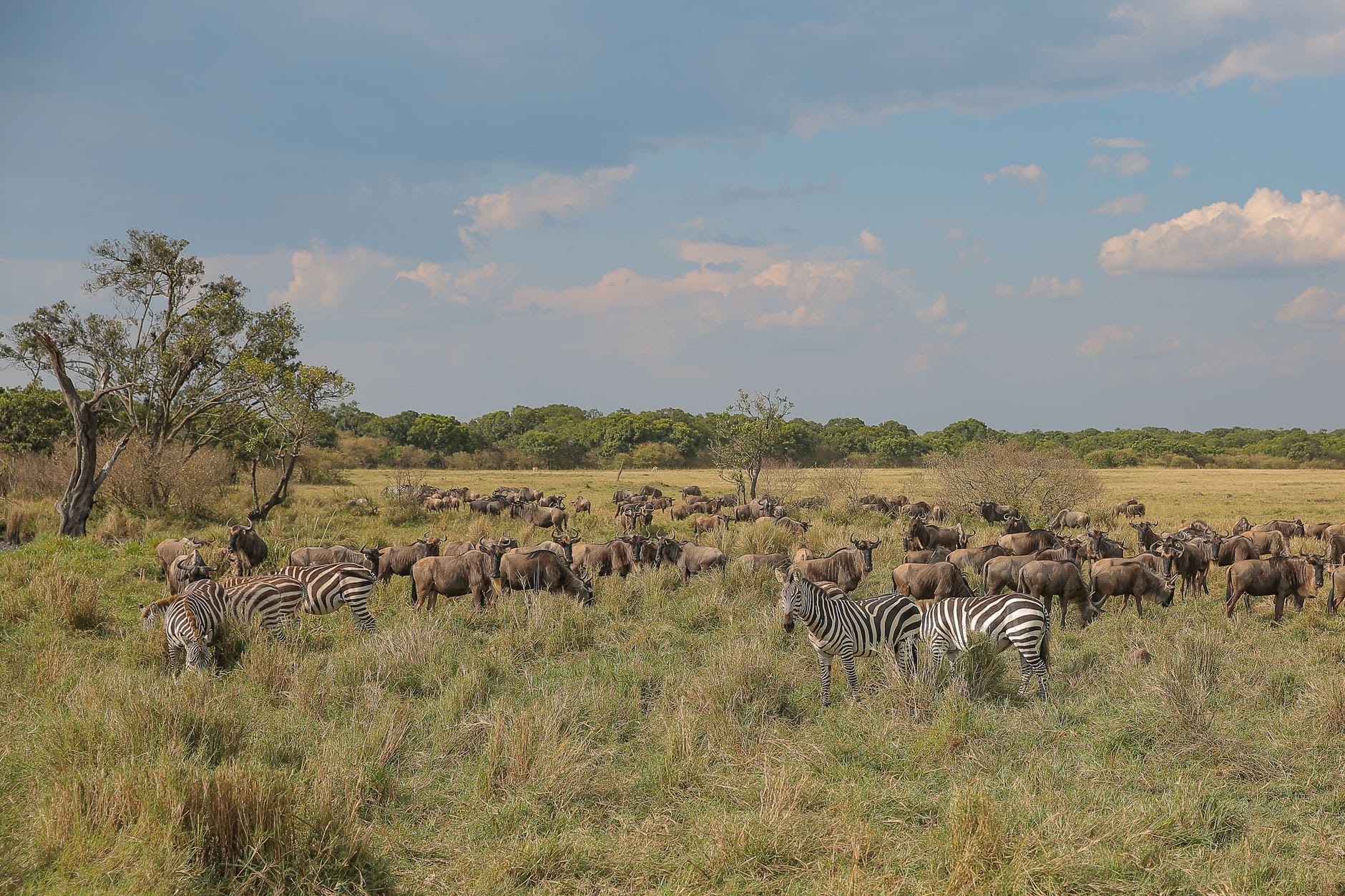
Beyond the gate the track drops and the plain opens. That transition — from the scrubby acacia woodland of the boundary zone into the first sweep of open savanna — happens fast, and it happens to the gut before the eyes register it. The grass is suddenly very large. The sky takes up more of the view. The first wildlife appears without announcement: a line of zebra crossing the track ahead, unhurried, the dust rising around their feet in a soft pink cloud in the early light. Joseph slowed and we watched them file past, twelve or fifteen animals, and nobody said anything.
The area just inside Sekenani Gate sees more vehicles than the deeper sections of the reserve, simply because all traffic entering from Narok funnels through here. But even in peak season, if you’re out before seven, you can drive the first few kilometers with a rare sense of having the place to yourself. The big cats are often closer to the gate than people expect — a resident leopard has been seen repeatedly in the croton thicket about two kilometers inside, and the lions that den in the drainage near the Sekenani River can sometimes be found still visible from the main track in the morning.
When to go: As a gateway, Sekenani functions year-round. But if the curio market and the community experience around the gate are part of your interest, come on a weekend morning when the stalls are fully staffed and the atmosphere is most animated. Arrive early to beat the mid-morning vehicle surge from Narok.