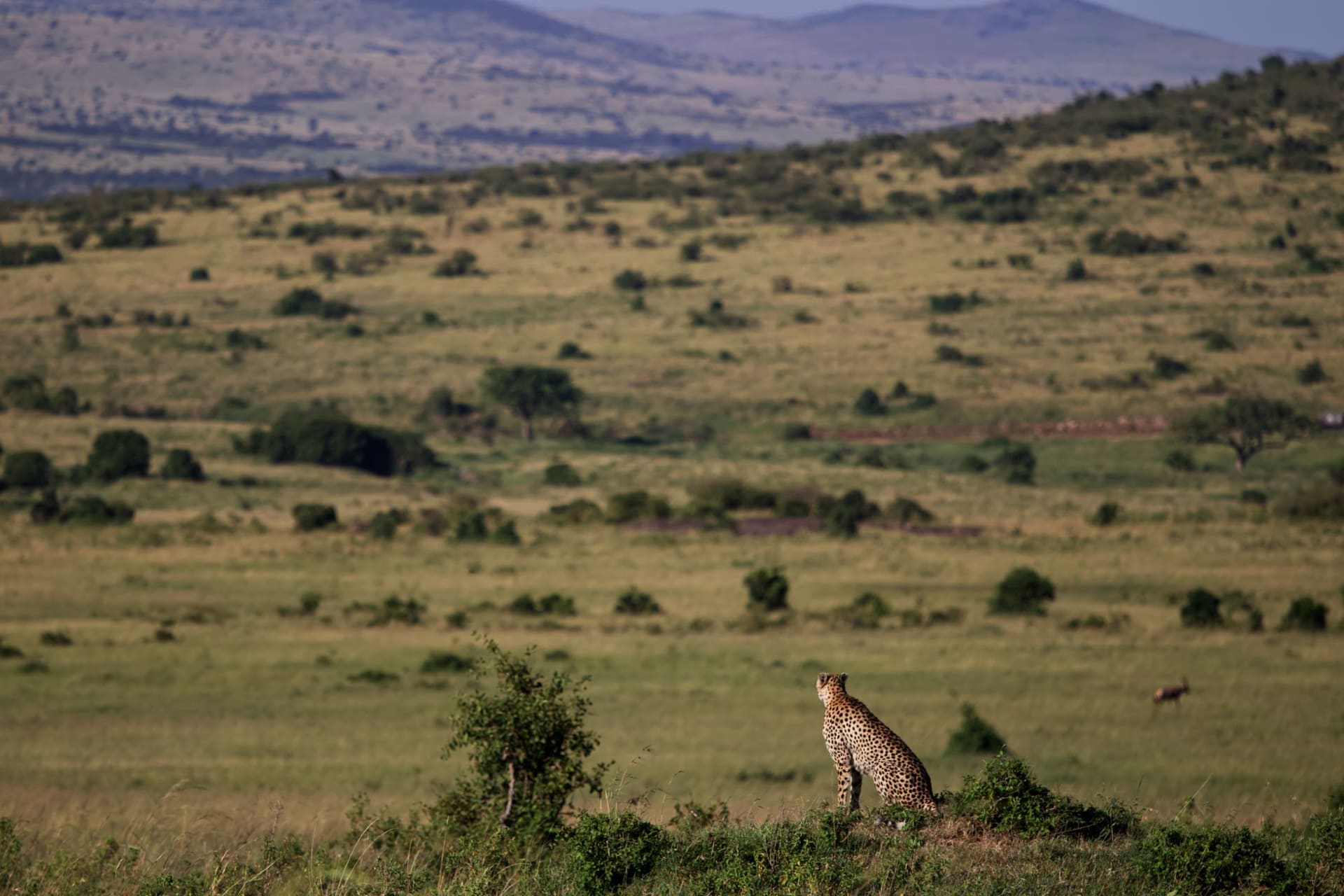
Oloololo Escarpment
"Down on the plains you see the animals. From up here you finally see the Mara."
Most people come to the Maasai Mara and never once look up at the wall that defines its western edge. The Oloololo Escarpment — a long, forested ridge of the Great Rift Valley’s Soit Oloololo fault — rises several hundred metres above the Mara Triangle, and for the entire first morning of our stay I treated it as nothing more than scenery, a green backdrop for the lions and the wildebeest. It was our guide, Joseph, who finally insisted we drive up it. “Everyone looks down,” he said. “Almost nobody looks back.”
The Climb to the Rim
The track up is rough — a rutted, switchbacking thing that had our vehicle groaning in low gear — but as we climbed, the plains began to unfurl beneath us like a map being unrolled. The escarpment marks the boundary between the Mara Triangle below and the cooler highlands above, and the vegetation changes with the altitude: down on the savanna it is open grassland and flat-topped acacias, but up on the rim there are stretches of genuine forest, cooler air, and birdsong I had not heard anywhere on the plains.
At the top, Joseph pulled over at a point where the whole Triangle lay spread out far below, the Mara River glinting silver through it, herds of wildebeest reduced to a faint dark stippling across the gold. Lia, who had been photographing every individual zebra at close range for two days, finally put her camera down and just looked. There is a scale to the Mara that you simply cannot grasp from inside it. You have to get above it, and the escarpment is the only place that lets you.

The Edge of Two Worlds
What I had not understood until we were up there is that the escarpment is also a frontier of human geography. The protected plains of the Mara Triangle lie on one side; on the other, the land tips over into Maasai community country, with cattle and small homesteads and the smoke of cooking fires rising in the late afternoon. Joseph grew up on this ridge, and as he drove he pointed out where his family’s boma had stood, where the cattle were grazed, where as a boy he had walked an hour to school along the very edge of the drop. The escarpment is not wilderness to him. It is home, with the most extraordinary view in Africa thrown in for free.
We stayed up there until the light went amber and the first chill crept into the air, then began the slow descent back down to the plains, where the predators were starting to stir for the night’s hunt. I have rarely felt the geography of a place so physically — the literal step up from the wildlife stage to the seat in the gods.

When to go: July to October overlaps the great migration on the plains below, but the escarpment is rewarding year-round and is at its greenest after the rains, from November through to March. Ask your guide specifically to drive up — many itineraries skip it entirely, which is their loss.