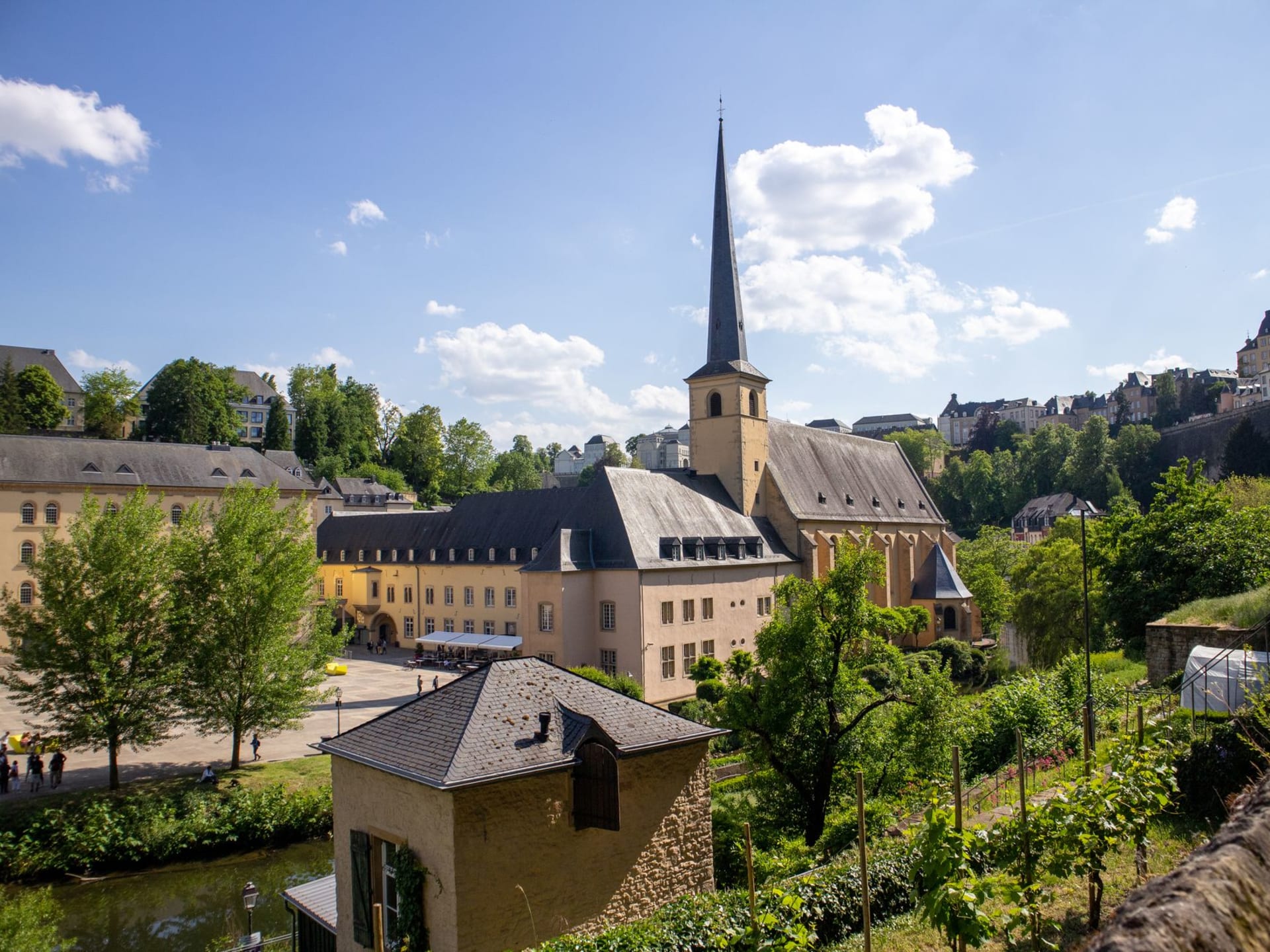
Diekirch
"I came for the military museum and left thinking mostly about the beer, which is not a criticism of either."
There’s a particular kind of provincial town — and I mean this as high praise — where everything works without fuss. Diekirch is that. The museum is excellent and takes it no further than that. The beer is widely distributed across the country and the brewery stays open for visits without making an event of it. The Saturday market sells vegetables and local cheese. The Sûre river runs behind the town with a walking path alongside it. Nothing performs. It’s a relief.
The National Military History Museum
The Musée National d’Histoire Militaire is one of the best WWII museums I’ve been to, and I’ve been to more than I intended. What sets it apart is the specificity of its focus: the Battle of the Bulge in the specific terrain of Luxembourg’s Ardennes, told through the experience of the civilians and soldiers who were actually here. The life-size dioramas are the kind that could easily be hokey — uniformed mannequins, authentic equipment, recreated command posts — but the attention to detail and the documentary evidence surrounding them keeps it anchored. One section presents first-person testimonies from local civilians, many of them farmers, about what it meant to have German troops occupying their houses in December 1944 and American troops liberating them in January 1945. The gap between those two events — weeks of winter, no food, animals dying in frozen barns — is documented without embellishment. I spent two hours and read everything.
The Brewery
The Diekirch Brewery was founded in 1871, and while it’s now owned by AB InBev, the brewing still happens in Diekirch and the tour of the facility is genuinely informative about industrial brewing at scale. What interests me more is the result: Diekirch Pils is the beer you drink at ordinary moments in Luxembourg — at market days, in local cafés, at the kind of brasserie where the menu is written on a chalkboard and the service is brisk in a friendly rather than hurried way. At the end of the tour there’s a tasting room. I sat there for longer than I planned and talked to a retired teacher who had grown up in the town and remembered the brewery’s expansion in the 1970s as the defining economic event of his childhood. The beer tasted exactly like itself.
Roman Mosaics and the Old Town
Diekirch was a Roman settlement, and the evidence is in the Musée d’Art et d’Histoire, which houses a remarkable third-century mosaic floor discovered under a private house during renovation in 1926. The mosaic depicts mythological scenes in a state of preservation that still seems unlikely given that it spent sixteen centuries under someone’s kitchen. The museum is small and the mosaic is the clear highlight, but the surrounding collection of Roman artefacts from the Sûre valley gives it context that makes the whole more than the sum of its parts.
Walking Along the Sûre
The Sûre river here is wide and slow, and the walking path east toward Bettendorf runs along the bank through meadows and riparian woodland. I walked it for an hour in the late afternoon, when the light was coming in low and gold and the river surface was flat enough to reflect the poplar trees on the far bank exactly. Two kayakers passed going downstream, paddling without hurry. The path eventually reaches a small weir where the water sounds different — a low, steady churning — and I stood there for ten minutes just listening.
When to go: The military museum warrants a visit year-round and is closed only on Mondays. The Saturday market runs spring through autumn and is worth timing a visit around. The Sûre walking paths are best April through October. If visiting in winter, Diekirch’s Christmas market is modest and genuine — the kind where locals actually shop rather than the kind set up for tourism.