French Quarter
"The Quarter found me at 2am on my first night, when I had sworn to go to sleep early."
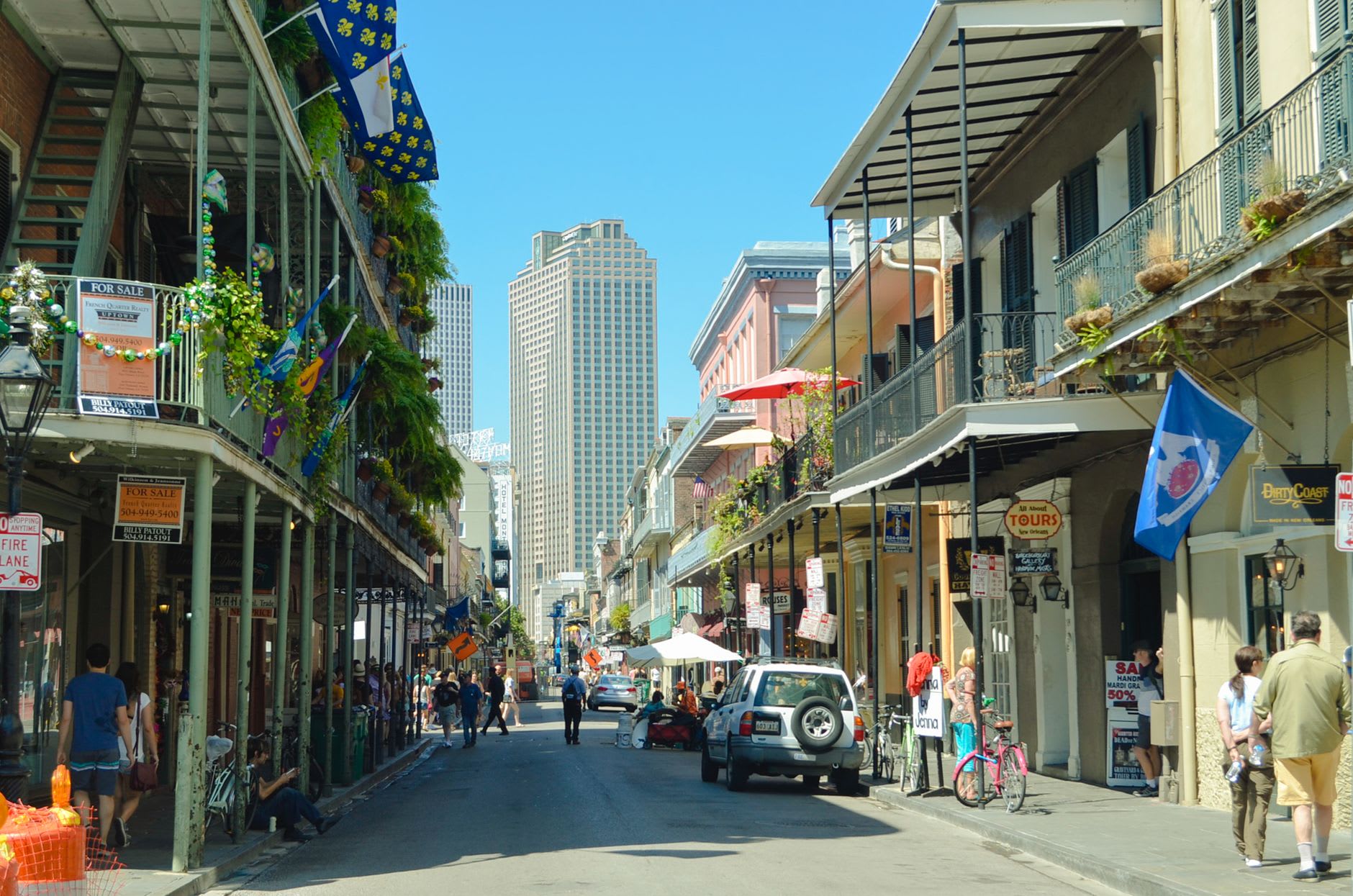
The French Quarter found me at 2am on my first night, when I had sworn to go to sleep early. I’d been walking back from dinner when a trumpet floated down Frenchmen Street — not Bourbon Street, Frenchmen, where the music actually lives — and the next thing I knew it was four in the morning and I was eating a beignet at Café Du Monde with powdered sugar on my shirt and nowhere to be. The Quarter smells of horse manure, hurricane cocktails, and frying dough, and somehow the combination is not unpleasant. It is dense with sensation in a way that takes adjusting to, like walking out of a dark room into very bright light.
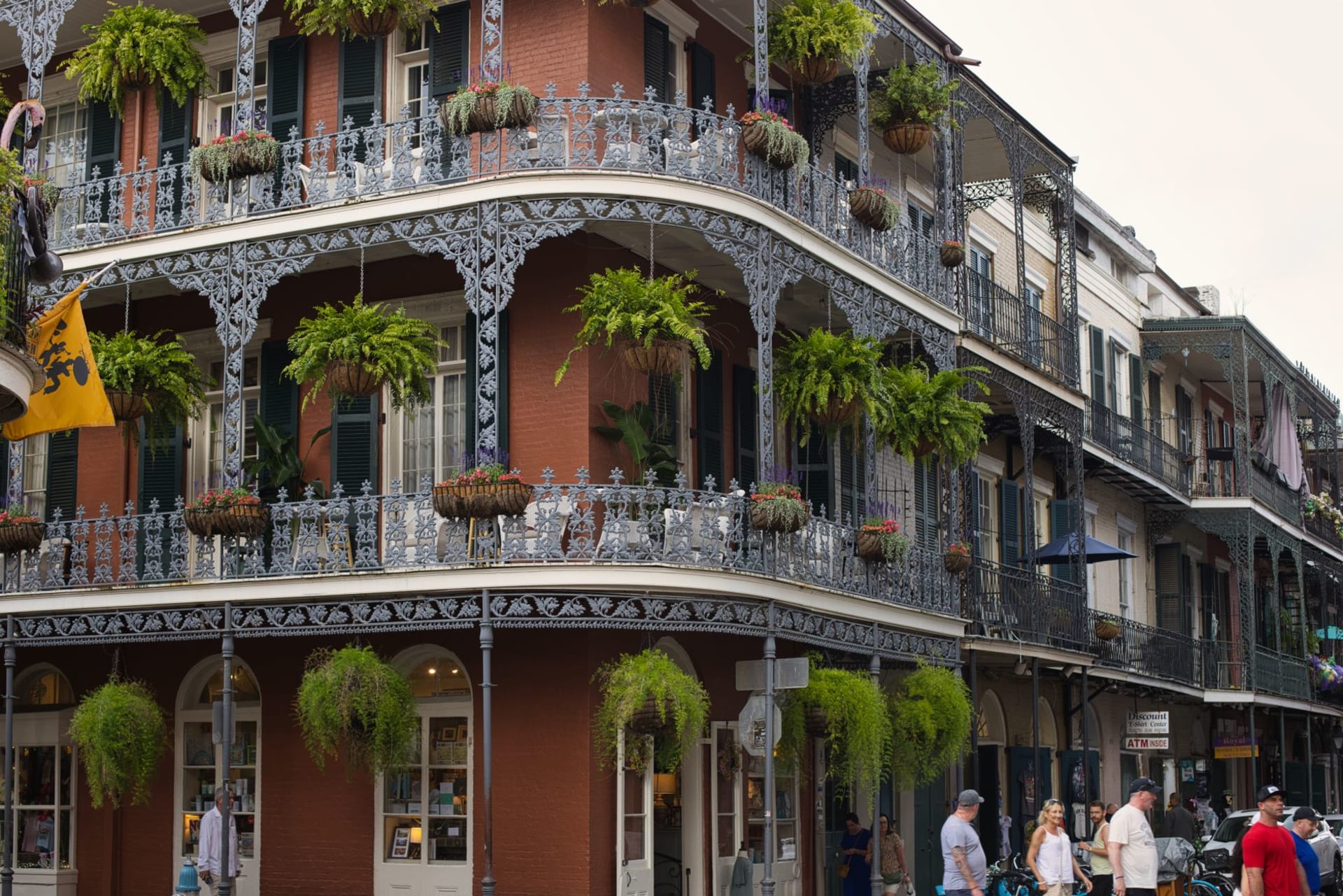
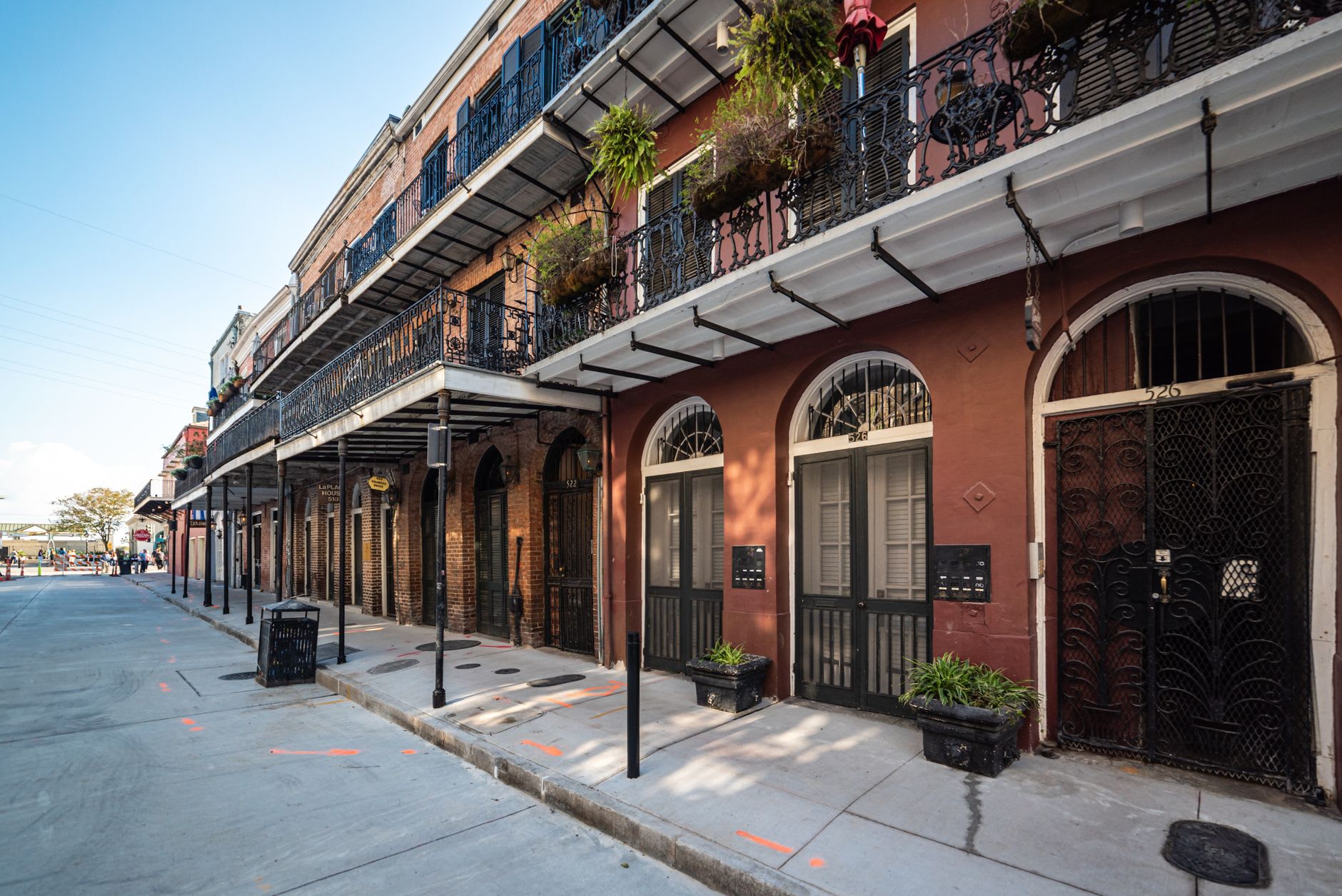
The architecture stops me every time. Those wrought-iron balconies tangled with jasmine and fern, the Creole townhouses whose street facades give nothing away but whose courtyards open into fountains and banana trees and a private green silence that feels like a secret the city keeps from itself. The buildings are painted in ochre and mustard and that particular shade of Caribbean turquoise you never quite find on a paint swatch afterward. Jackson Square anchors the neighborhood with its cathedral and its bronze Andrew Jackson frozen mid-salute, the fortunetellers spreading tarot cards on folding tables in the shadow of Saint Louis Cathedral.
The food here is the kind that gets inside you. A bowl of turtle soup at Antoine’s, where the waiter moves with a formality that hasn’t changed in decades. A muffuletta at Central Grocery — that dense round of sesame-seeded bread stuffed with salami, ham, mortadella, and olive salad, so heavy you eat half and carry the rest. Oysters at Casamento’s, tiled floor, marble counter, the kind of place that shuts in summer because the proprietors feel like it and that’s that. The Quarter runs on appetite in all its forms.
Afternoons on Royal Street belong to the antique shops and art galleries, where you can lose an hour examining silver candlesticks from the 1840s or a painting of a Black Mardi Gras Indian chief in full plumage. The dealers are not pushy — they’ve been here too long for pushiness. There’s a particular quality of time in the Quarter, not slow exactly but different, as if the clocks decided centuries ago to run on their own schedule and never felt any reason to reconsider.
When to go: October through December, when the humidity relents and the tourist crush from Jazz Fest and Mardi Gras has passed. December brings a certain melancholy beauty — fewer crowds, warmer light, and the peculiar New Orleans Christmas decorating instinct that puts Spanish moss on wreaths and alligators in nativity scenes.