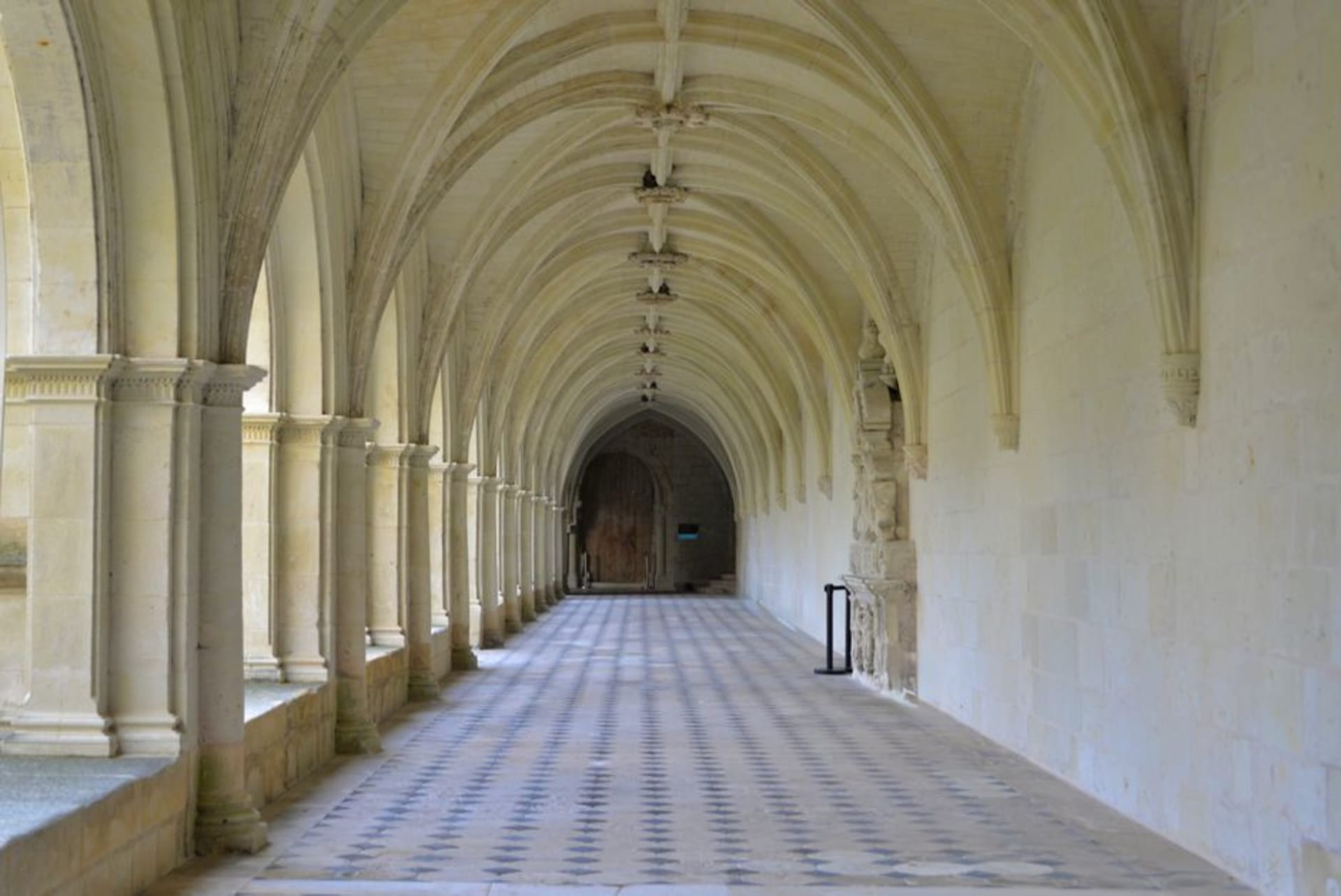
A vast Romanesque abbey where Plantagenet kings lie carved in stone, and where I lost an afternoon just listening to the silence.
I almost skipped Fontevraud. Lia and I had already done three châteaux that week, and I remember telling her in the car that I was “châteaued out.” But Fontevraud isn’t a château, and that’s exactly what saved it for me. It’s an abbey, founded in 1101 by a wandering preacher named Robert of Arbrissel, and it has this odd, quietly radical detail that stuck with me the moment our guide mentioned it: the monks here answered to an abbess, not an abbot. In the twelfth century. I kept turning that over in my head as we walked through the cloisters, trying to picture what that must have meant for the women who ran the place for centuries.
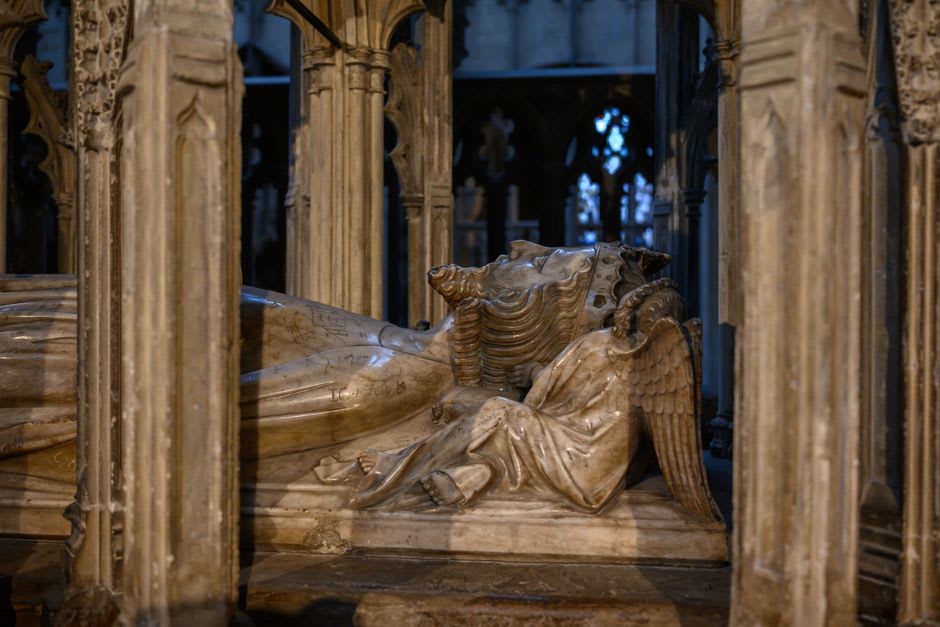
The abbey church is where I actually stopped talking. Lying in a row down the nave are the painted stone effigies of Henry II of England, Eleanor of Aquitaine, and Richard the Lionheart — the Plantagenets, buried in the Loire Valley rather than in England, which still feels strange to say out loud. Eleanor’s effigy shows her reading a book, and I stood there longer than I probably needed to, thinking about how deliberate that must have been for someone alive eight hundred years ago to be remembered mid-page.
What I didn’t expect was the prison history. From 1804 until 1963, on Napoleon’s orders, Fontevraud was a penitentiary — and weirdly, that’s part of why so much of the medieval structure survived at all. Our guide pointed out cell markings still faintly visible in some of the stone, and it gave the whole visit a second, heavier layer that I hadn’t prepared for. Then we wandered over to the Tour d’Évraud, the old Romanesque kitchen, and the mood lifted again. Its chimney stacks and fish-scale roof tiles are almost playful against the abbey’s austerity — one of the only surviving examples of secular Romanesque architecture left in France, apparently, and you can feel how singular it is just standing beneath it.
We ended up sitting in the abbey gardens for a good hour, not saying much, just watching the light change against the stone. Lia said it felt less like a monument and more like a place that had simply kept living, one purpose after another, for nine hundred years. I think that’s the right way to put it.
When to go: I’d aim for spring through early autumn — the abbey gardens and cloisters catch the light beautifully then, and honestly, that light is half the experience.
Keep exploring
More from Loire Valley
 loire-valley
 Sancerre
A hilltop village so committed to one grape on one limestone ridge that it turned a single flavor — flint and citrus and goat — into a world standard.
Explore loire-valley
 Saumur
A town built on tufa limestone where the underground life — sparkling wine caves, mushroom farms, troglodyte houses — is richer than anything visible from the street.
Explore loire-valley
 Tours
The Loire Valley's most alive city, where a medieval timber-frame quarter sits beside a thriving university town and the whole thing smells of rillettes and fresh bread.
Explore loire-valley
 Villandry
A château where the gardens took over centuries ago, laying out cabbages and leeks in geometric Renaissance patterns that treat vegetables with the seriousness of sculpture.
Explore loire-valley
 Vouvray
The village where one grape on one river slope produces bone-dry, honeyed, gently sparkling, and fully effervescent wines from the same earth — often from the same cellar.
Explore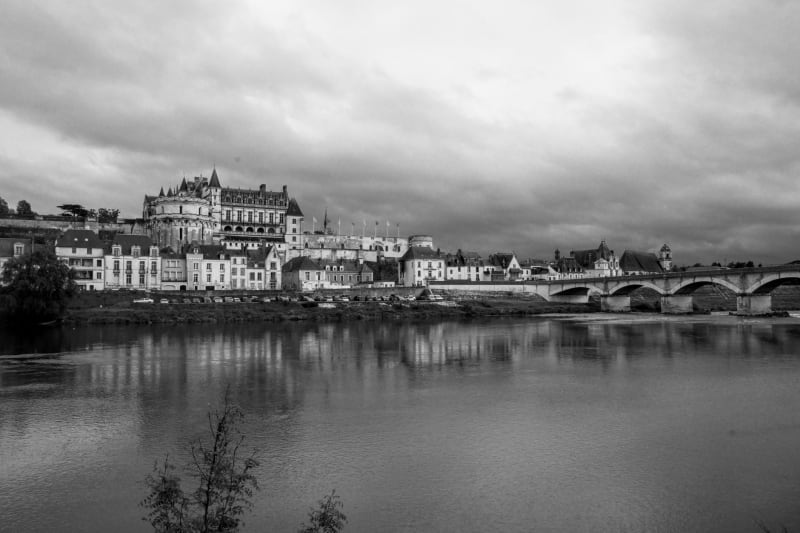 loire-valley
 Amboise
A royal town where Leonardo da Vinci spent his final years watching the Loire and apparently finding it sufficient.
Explore