
Blois
"Standing in Blois's château courtyard is like being at a dinner party where everyone is talking at once and somehow it works."
A Loire city where four French kings from four different eras layered four different architectural styles onto one château, creating an accidental masterpiece of royal ambition.

The train from Paris pulls into Blois station and there is the château — directly across the road, up on the hill, its towers visible before the platform ends. It is an unusually aggressive way for a city to make its introduction. Most Loire towns ease you in. Blois just presents itself, matter-of-factly, as somewhere that has been historically significant since before significance was fashionable and would like you to notice.
I noticed. I crossed the road and started climbing immediately, bags in hand, because you don’t ignore a château that positions itself across from the railway station with that kind of confidence.
The courtyard is where Blois reveals its peculiarity. Four distinct wings surround it, each from a different era, each in a different architectural language, none of them designed with the others in mind, and somehow the collision works. The Louis XII wing is late Gothic, its brick and stone arranged in diamond patterns, warm and domestic. The François I wing is pure Renaissance ambition — exuberant, vertically oriented, that extraordinary open-spiral staircase tower bolted to the façade like an afterthought that became the building’s whole personality. The Gaston d’Orléans wing is seventeenth-century classical severity, grey and correct. The Gothic Salle des États-Généraux is older than all of them. Standing in the middle and turning slowly, you get four centuries of French architectural ego in a single revolution.
The town below the château is more interesting than most Loire town centers. The old quarter runs down from the château gate in a series of steep lanes — rues des Papegaults, Denis-Papin with its famous staircase street — past Renaissance hôtels particuliers and workshops and a chocolaterie that has been operating in the same space since 1814 and whose window display is a separate argument for visiting Blois. The smell from that doorway on a cold morning — dark chocolate and roasted cocoa — is not a smell you forget quickly.
The market fills the streets around the old quarter on Tuesday and Saturday mornings, and it is proper, unpretentious, and excellent. Goat cheeses from the Sologne, rillettes in pots with handwritten labels, vegetables from the Beauce plateau, mushrooms from the nearby Chambord forest. I ate breakfast standing up at a bread stall — a wedge of warm onion tart and a paper cup of coffee — while the stall holders called to each other across the street in the easy shorthand of people who’ve worked the same market for years.
Chambord is only fourteen kilometers east — close enough for an afternoon detour if you want the great set piece of Loire château-hunting. But Blois has something Chambord entirely lacks: the feeling of an actual city, with actual residents living their actual lives around the historical weight. The boulangerie near the château gate opens at seven. The wine bar on the rue Foulérie pours Cheverny and Touraine by the glass to regulars who arrive in work clothes. There is a bookshop with local history in the window and jazz from somewhere inside.
When to go: April through June for the best combination of gardens in bloom and manageable crowds. September is the vintage and a good season for the wine country around Blois — Cheverny and Cour-Cheverny appellations deserve an afternoon. The son-et-lumière light show on the château runs summer evenings and is genuinely spectacular; the summer crowds that come for it less so.
Keep exploring
More from Loire Valley
 loire-valley
Château de Chambord
A hunting lodge that grew into a stone skyline, its double staircase and endless towers still stopping visitors mid-step after five centuries.
Explore loire-valley
Chenonceau
The château that strides across a river on graceful arches, built and defended by a succession of formidable women who outmaneuvered the men around them.
Explore loire-valley
Cheverny
Still owned by the same family after four centuries, Cheverny is a château that never became a monument — and the difference is palpable from the first room you enter.
Explore loire-valley
Chinon
Where Joan of Arc convinced a reluctant dauphin to take back his kingdom, and where Cabernet Franc still convinces you to order a second carafe.
Explore loire-valley
Fontevraud Abbey
A vast Romanesque abbey where Plantagenet kings lie carved in stone, and where I lost an afternoon just listening to the silence.
Explore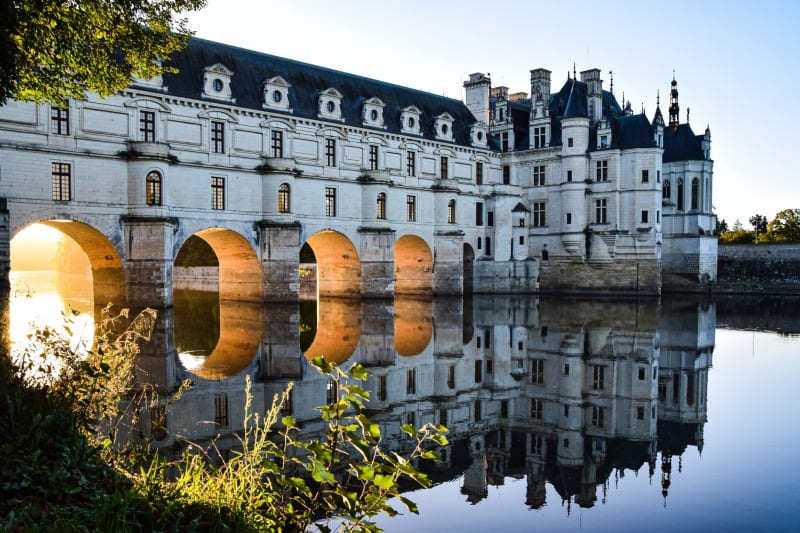 loire-valley
Sancerre
A hilltop village so committed to one grape on one limestone ridge that it turned a single flavor — flint and citrus and goat — into a world standard.
Explore