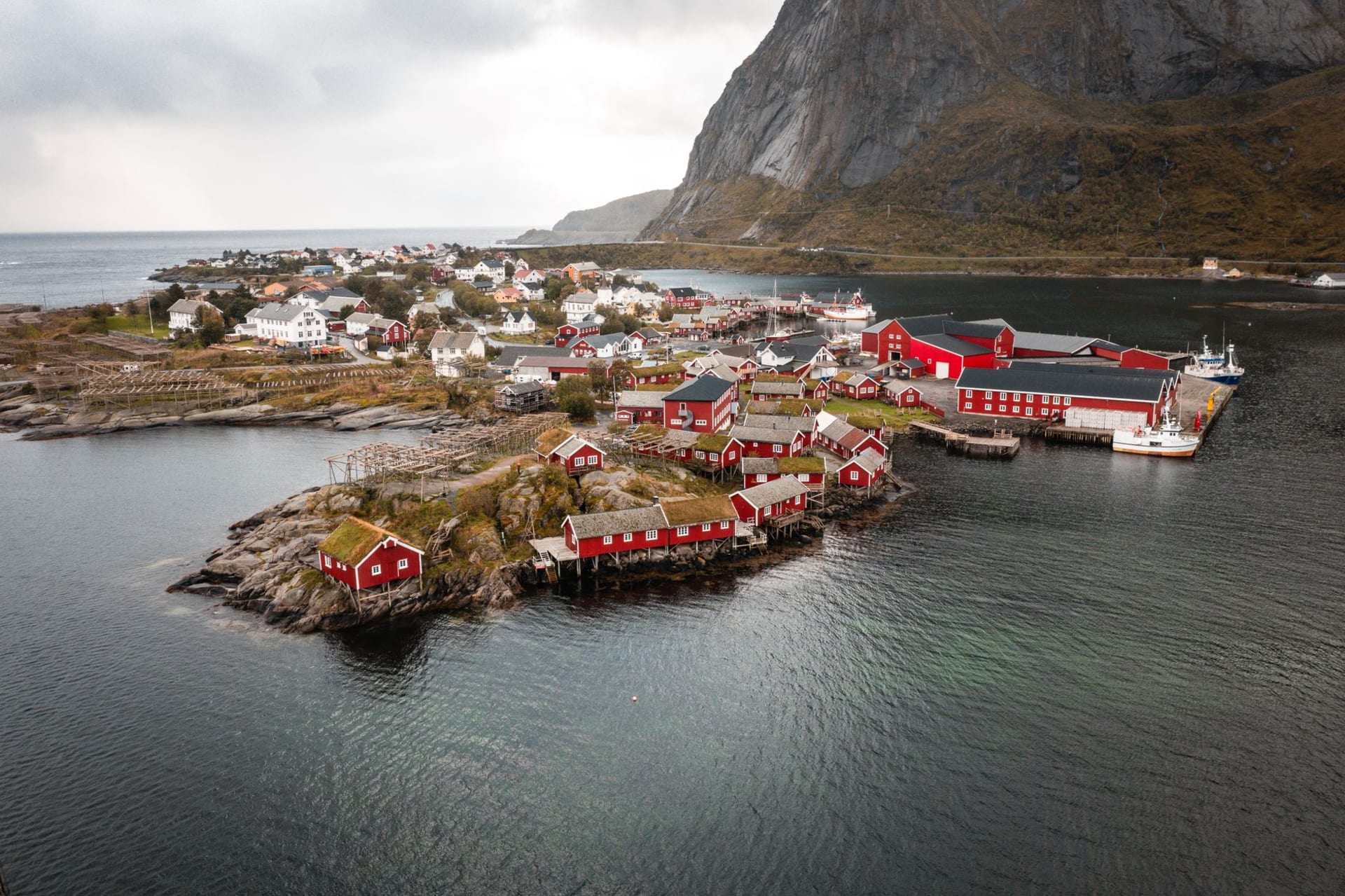
Unstad
"The wave at Unstad breaks the same whether there is snow on the mountain above it or not — the sea has no opinion about the season."
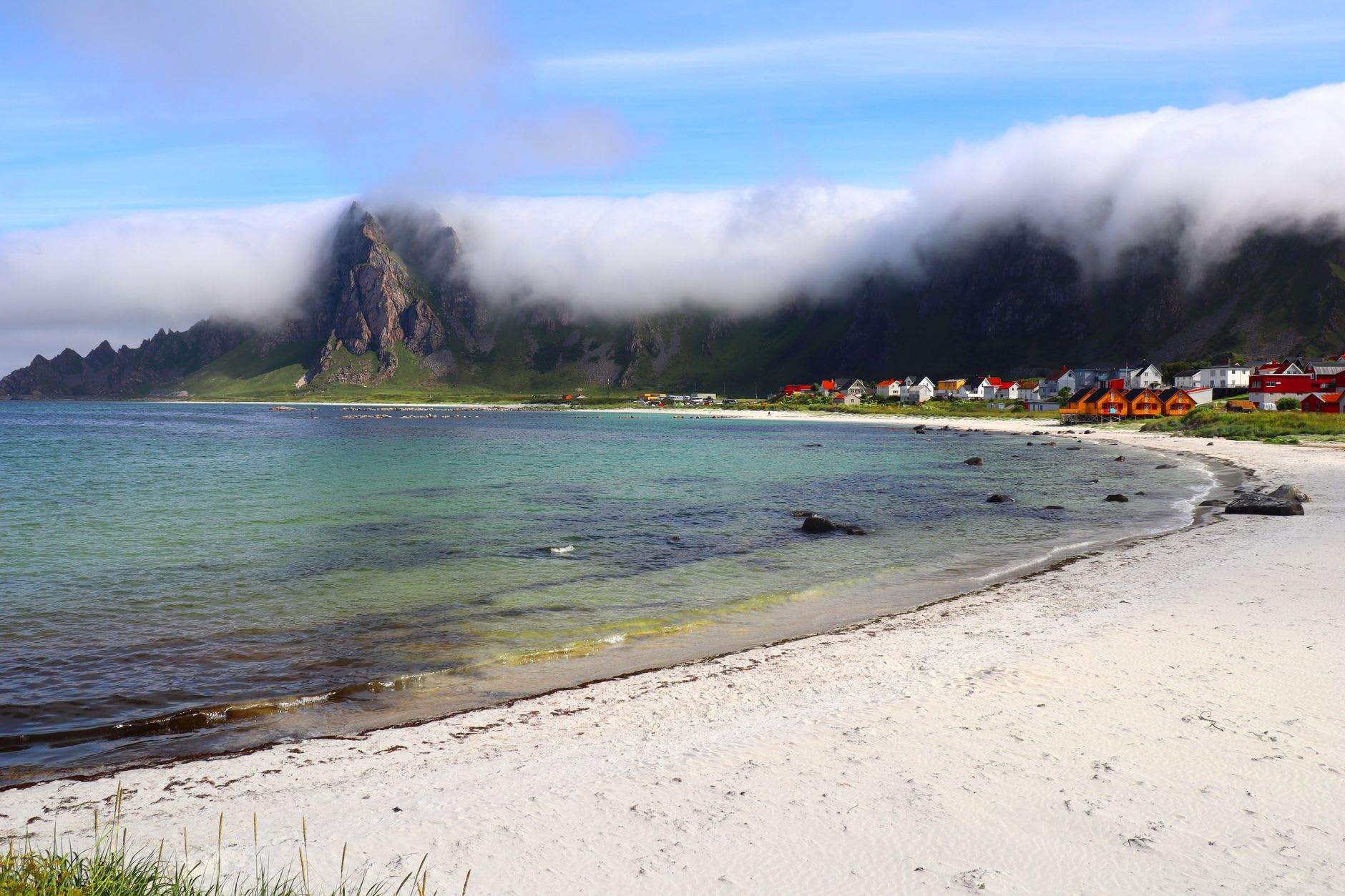
The road to Unstad drops into a valley so suddenly that you have to brake for it, and then there is the beach: a wide grey-sand cove at the base of steep mountains, the Atlantic pushing in from the west in long, consistent sets. In the carpark above the beach — if you can call a small gravel patch a carpark — there were six cars and a van when I arrived in late November, and four people in thick wetsuits were already in the water. This is the thing about Unstad that takes some adjusting to: people surf here year-round, in water temperatures that hover between four and eight degrees, wearing six-millimetre wetsuits and hoods and gloves, and they do it with the same casual commitment that surfers in Costa Rica devote to their own warm-water routine.
Unstad is not, technically, a village — it is a valley with a beach and a surf camp and a handful of houses, the surrounding mountains close enough that you can hear the wind working in the crags above the sound of the waves. The surf camp, Unstad Arctic Surf, has been here since 2010 and has done more than anything else to bring people to this particular valley. It operates year-round, rents boards and wetsuits, and runs lessons for people who want to learn in what the instructors cheerfully describe as “challenging conditions.” The café sells fish soup and waffles and strong coffee, and after a session in that water, everything tastes better than it would elsewhere.
I do not surf, which means my relationship with Unstad was conducted entirely from the beach and the café. But watching people surf — really watching, not just glancing — is something I have never done properly before, and Unstad turns out to be a good place to start. The waves here are a particular kind of powerful: not huge, but thick and fast, breaking in a way that requires quick reactions. I watched a woman in a red helmet take a wave that pitched her sideways and then stood her up again with what looked like minimal effort, and the whole sequence — from paddle to drop to the long wall of water — took about twelve seconds. It seemed to require absolute attention. In that way, surfing in the Arctic cold makes a certain philosophical sense.
The walk from the beach into the valley above Unstad, following the stream that runs down from the mountains, takes about forty-five minutes each way and climbs steeply enough to make your legs understand what they are for. At the top, on a clear day, you can see the ocean on both sides of the peninsula. In November the heather was brown and the grass bleached, and I had the hillside entirely to myself.

When to go: Winter — November through March — for the full Unstad experience: snow on the mountains, surfers in the water, the existential comedy of it all at maximum. The waves are most consistent in winter when Atlantic storms push swells in from the west. Summer is warmer and more forgiving for beginner lessons but the beach becomes busier and loses some of its strangeness.