Palanga
"The Baltic in June is cold enough to make you feel completely alive, which is probably the point."
Palanga is Lithuania’s answer to the coastal resort question, and the answer is specific and unapologetic: wooden villas from the tsarist era lining streets of old pines, a long pier stretching into the Baltic that the whole town uses as an evening promenade, a beach wide enough to walk for an hour without reaching its end, and in summer, an atmosphere of released pressure from a people who have weathered enough winters to know how to enjoy a warm evening without irony. I arrived by bus from Klaipėda on a Friday afternoon in June and walked into a town that was already moving at a speed I had to recalibrate for.
The pier is the center of everything. It runs several hundred meters out over the water from the end of Basanavičiaus gatvė, the main pedestrian street, and on a June evening the entire population of the town seems to drift slowly along it and back again. Old couples. Groups of teenagers eating ice cream. Families pushing prams. A man fishing from the far end, unbothered. The Baltic from the pier end is a particular shade of grey-green that shifts toward silver as the sun lowers, and when the light hits it right, at around nine in the evening when the northern summer refuses to get properly dark, the whole surface of the sea glows.

The Amber Museum surprised me in the best way. It is housed in a nineteenth-century palace in the Botanical Garden — meaning you walk through pine forest and past rose gardens to reach a neoclassical manor house that contains several thousand pieces of amber, including specimens with insects and plant matter suspended inside that are seventy million years old. I am not generally a museum person, but I found myself standing in front of a palm-sized piece of transparent Baltic amber with a spider inside — complete, detailed, still — and feeling the particular vertigo that very old things occasionally produce. The gift shop sells amber in every form imaginable and I bought a small piece, raw and unpolished, for about three euros. I still have it in a jacket pocket somewhere.
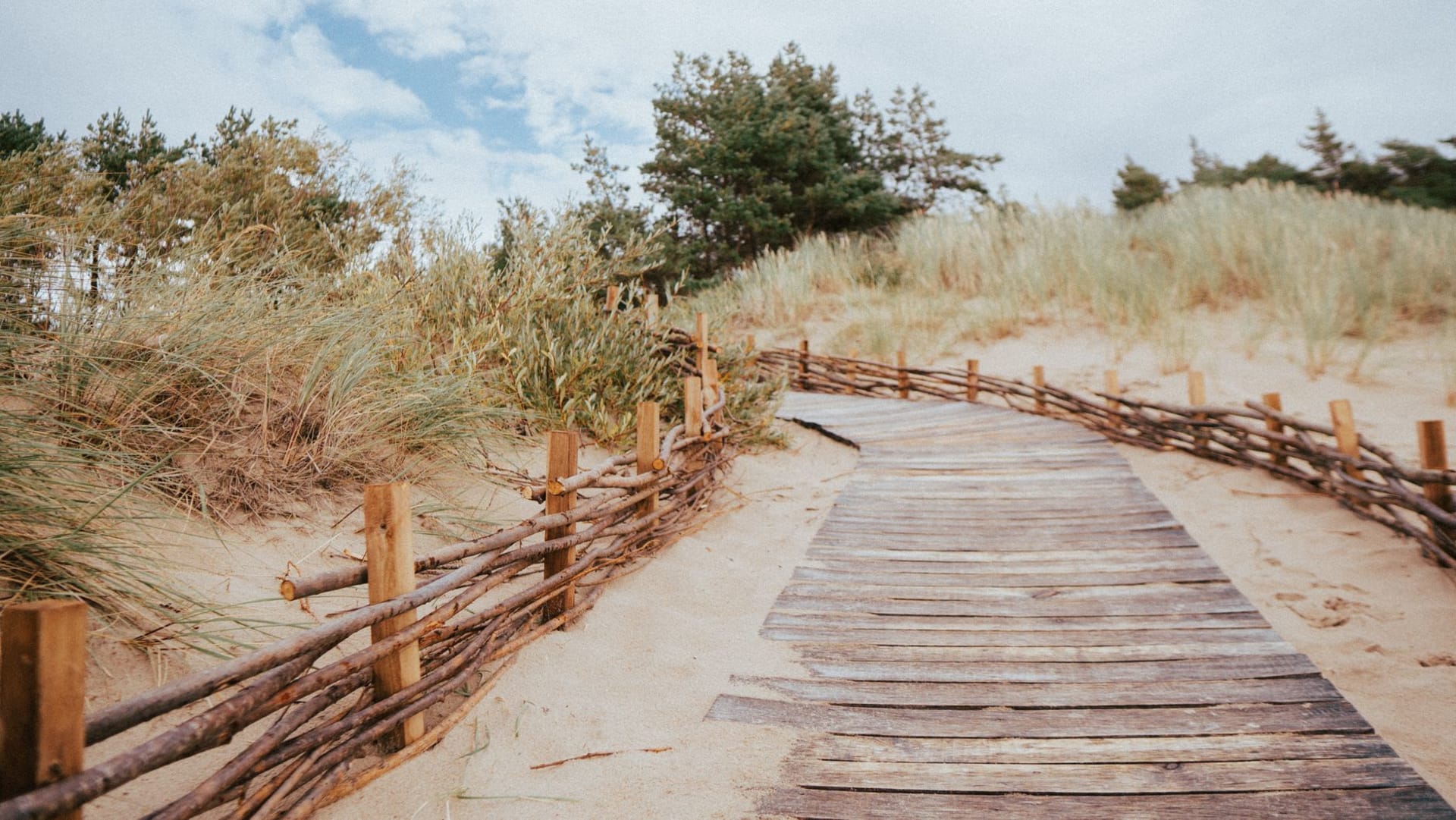
The beach at Palanga is different from the Atlantic beaches I grew up visiting. The sand is fine and pale, the dunes behind it run with pine grass, and the water is genuinely cold even in midsummer — cold enough that getting in is a decision that requires commitment and produces a kind of involuntary shout. Once you are in, it is crystalline and clean, the water more transparent than I expected. Lithuanians do not seem to mind the cold at all. I stood at the water’s edge while families waded in and children screamed happily in a way that suggested the cold was part of the entertainment.

Palanga in summer is its own world: live music floating out of bars along Basanavičiaus gatvė until midnight, the smell of grilled meat mixing with pine resin and salt air, and this pervasive feeling of a community letting itself go a little after a long year. Out of season, the town is quiet to the point of seeming abandoned, the wooden villas shut up, the pier near-empty. That version has its own beauty, if you came for solitude.
When to go: June through August is high season and the town earns it — long evenings, warm-ish water, the full resort atmosphere. June is better than August: slightly less crowded, the amber light on the Baltic lasts until nearly ten at night. September brings a melancholy emptiness that is beautiful in a different register. Avoid the depths of winter unless the idea of an empty Baltic shore appeals to you specifically, which I understand it does to some people.