
Ubari Sand Sea
"The lake appeared between dunes like someone had left a mirror face-up in the desert and forgotten about it."
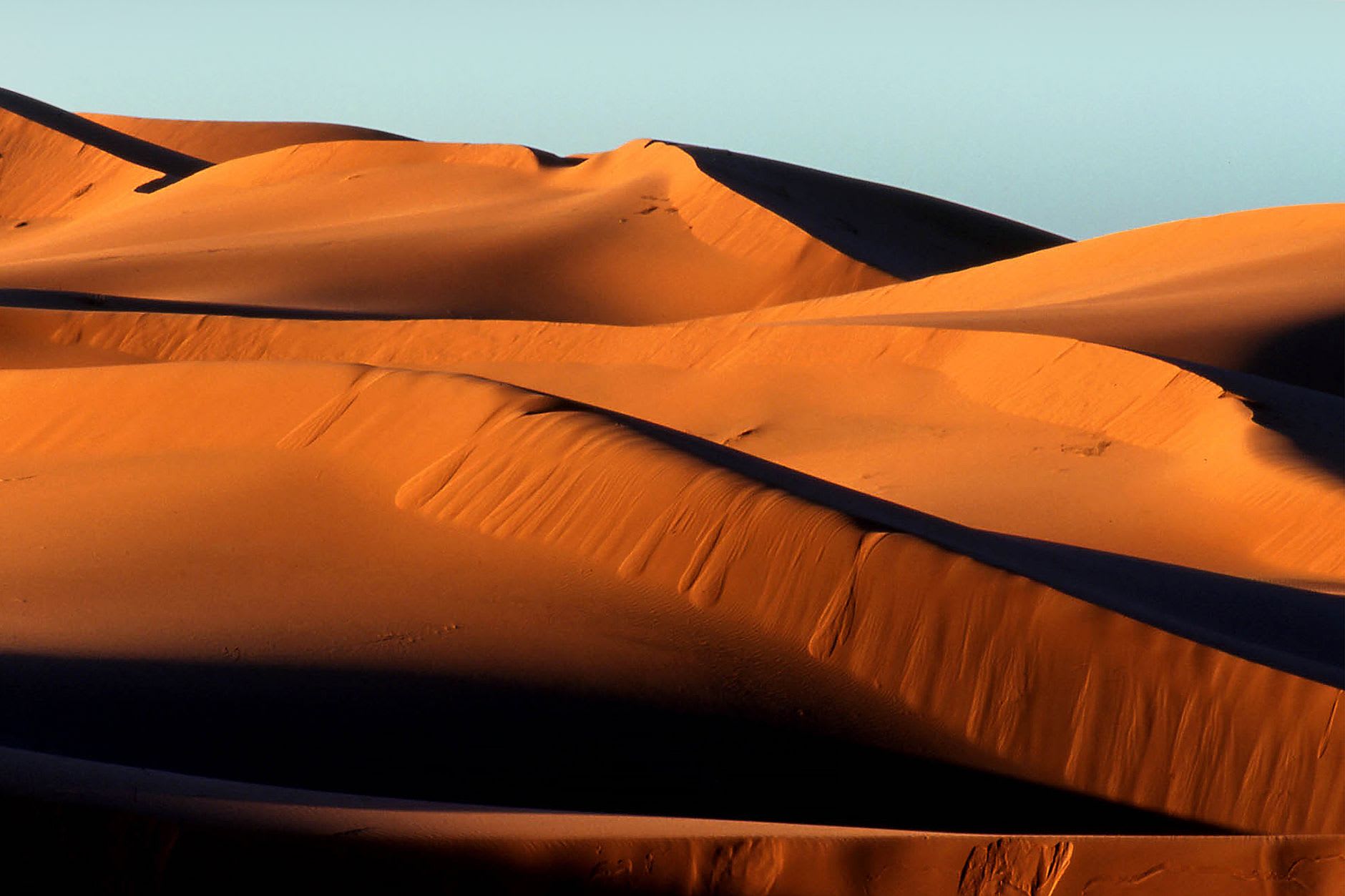
The first dune I crested on foot in the Ubari Sand Sea was taller than I had expected — I had been walking for twenty minutes and the summit kept retreating — and when I finally stood on the ridge the landscape behind me was simply gone, buried in sand, replaced by a series of parallel dunes in orange and copper and a deep rust-red that intensified toward the horizon. The sky was the absolute blue that only exists at altitude or in desert interiors far from moisture. I did not move for a long time. There was no sound at all except the faint hiss of sand grains shifting in a wind too gentle to feel on my skin, and the absence of sound had a texture, something like the inside of a room with very thick walls.
The Ubari Sand Sea — Idhan Ubari — is part of the Fezzan, Libya’s great southwestern desert region, and it covers roughly forty thousand square kilometers of dunes that rise in some places to three hundred meters. What makes the Ubari distinctive, even among Saharan sand seas, are the lakes. Hidden between dune ridges, fed by ancient aquifers draining from rock strata laid down millions of years ago, are a series of salt lakes — Umm el-Maa, Gaberoun, Mandara — that sit in the midst of the driest landscape on earth. The water in Umm el-Maa is so saline it is buoyant in the way of the Dead Sea; I floated there on my back and stared at the dunes framing the sky above me and felt a specific, wordless contentment I associate with the most improbable places I have been. The surface of the lake was the color of turquoise and the reflections of the dunes in the still water made the whole thing look doubled, as if the desert had folded over itself.
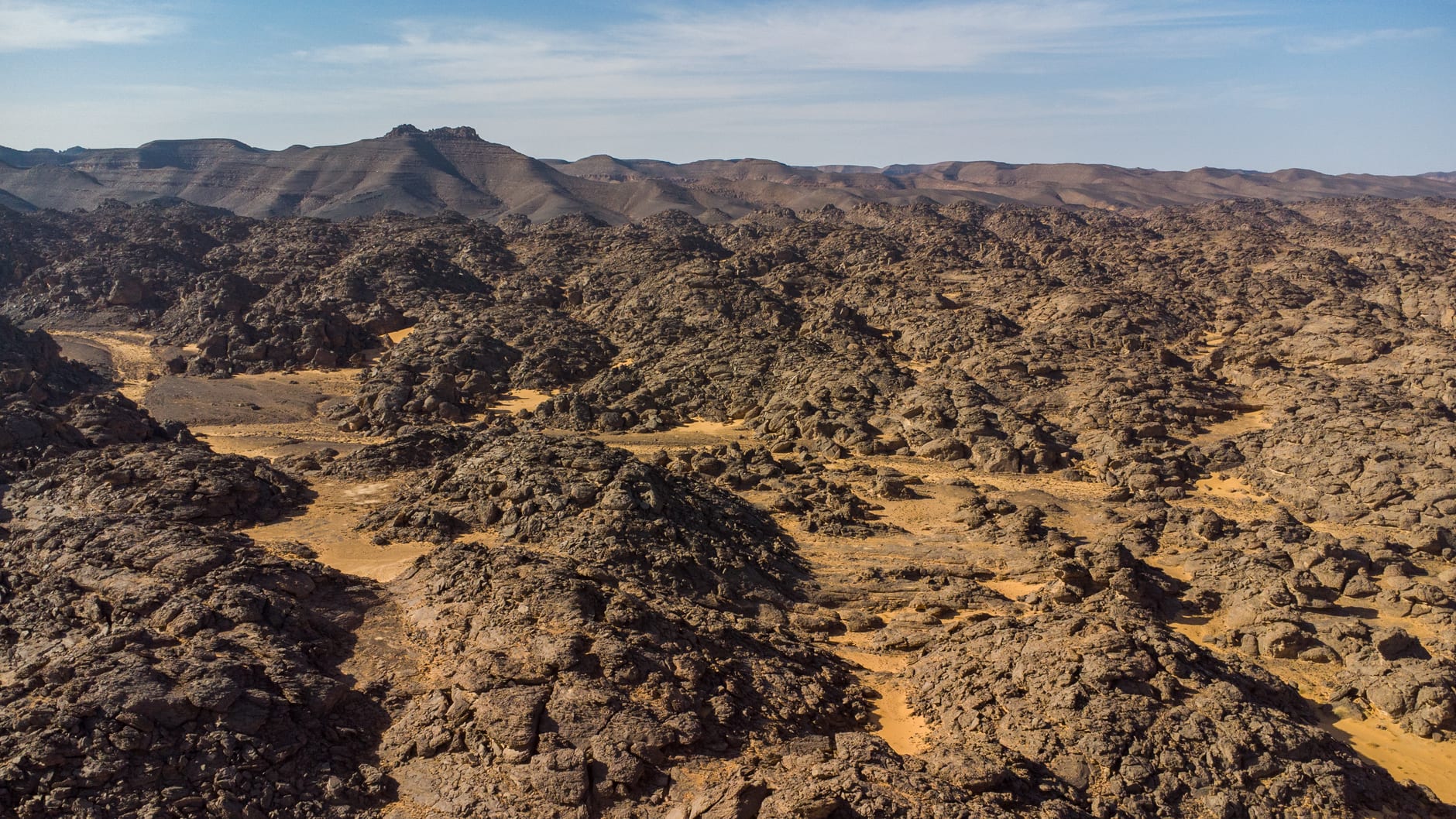
The Tuareg who guide visitors into the sand sea navigate by dune shapes I cannot read — to me every ridge looks like every other — and they drive Land Cruisers across the soft sand at speeds that feel reckless until you understand that stopping means sinking. The camp where I slept was a line of low tents on the leeward side of a dune, with a fire that burned down to coals by nine o’clock and a sky that made city darkness look like a performance. The Milky Way at the Ubari is not a band of faint light but a solid architectural structure, three-dimensional, the stars in the near foreground bright enough to cast a shadow if you hold your hand above the sand at the right angle. My guide Hossein made tea over the coals and told me in French, which he spoke with considerable precision, that his family had been in the Fezzan for as long as the family’s memory reached. He could not tell me how long that was. “A long time,” he said, in French, and added in Tamashek something I didn’t understand, and when I asked he said it translated roughly as: before the sand was this tall.
The dates from the oasis towns at the edge of the sand sea — sold from the back of pickup trucks at the supply point for the camps — were dense and amber and complex in the way I associate with fruits that have grown slowly in difficult conditions, as if difficulty concentrates something essential.
When to go: November through February. The Sahara in summer is genuinely lethal for sand sea travel; temperatures exceed 50°C. Winter nights are cold — near freezing is possible — so bring layers you will not regret. The light on the dunes between seven and nine in the morning and four and six in the afternoon is unmatchable. Bring more water than you think you need, and then bring more.