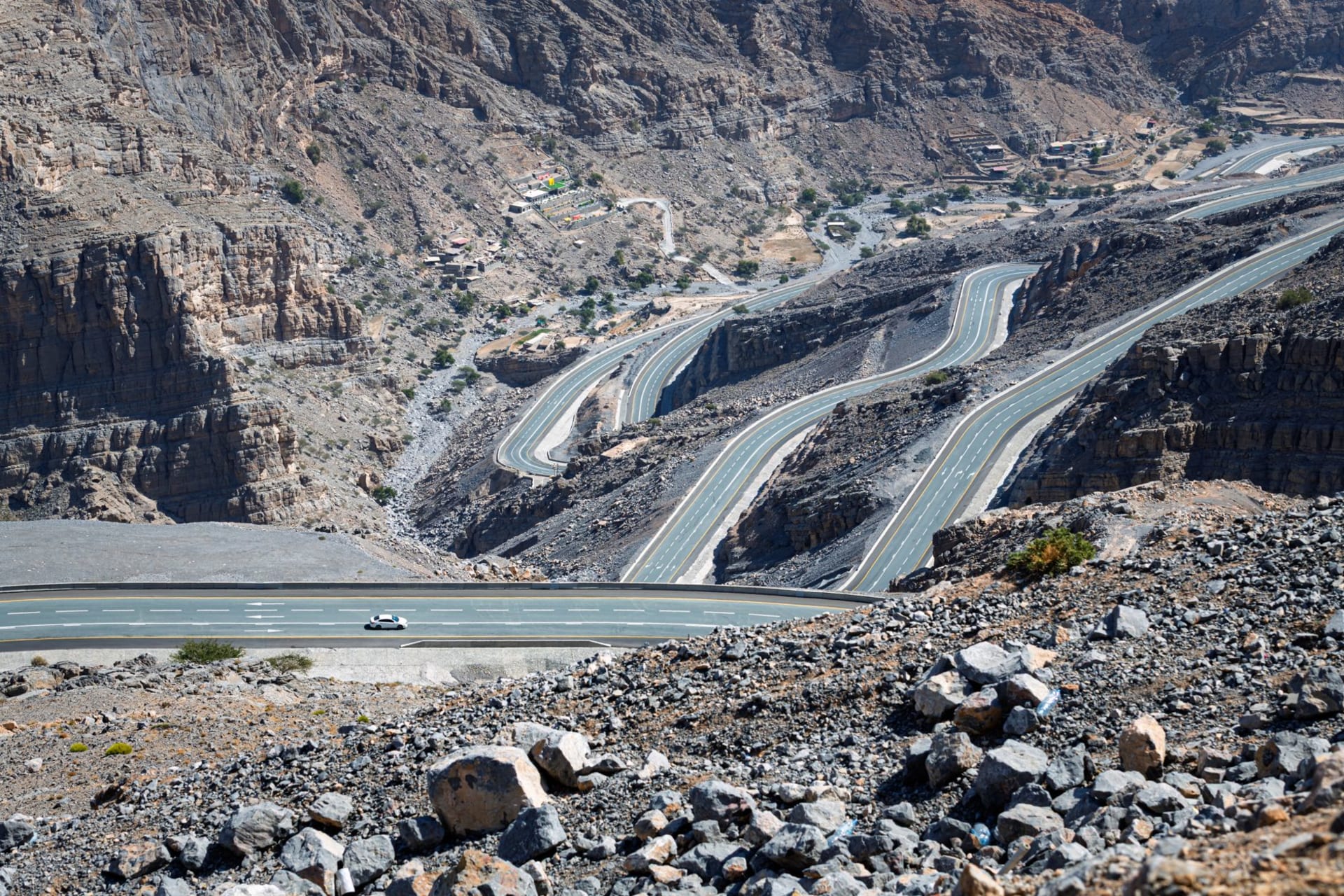
Jebel Akhdar
"Libya's green mountain is not a metaphor. It is genuinely, startlingly, confusingly green."
Nobody warned me that Libya had a place like this. I had been traveling the coast for days — sun-bleached, white, flat, the landscape resolutely Mediterranean in its low scrub and pale stone — and then the road inland from Bayda climbed steeply into a plateau and the vegetation changed. Scrub became juniper. Juniper became forest. The air cooled by seven or eight degrees in less than twenty minutes of driving and began to smell of resin and wet limestone, a smell I associate with the hills above Nice or with the Lebanese mountain roads in April. The Jebel Akhdar — the Green Mountain — is a limestone massif in northeastern Libya that rises to nearly nine hundred meters and catches moisture from the Mediterranean in a way that the coast below and the desert to its south never do. The result is a landscape that has no business being in Libya and is there anyway: terraced fields, olive groves, stone walls, valleys that hold mist in the morning.
The villages on the plateau are ancient in the way that limestone villages always seem to be — built from the same material as the rock below them, the color of the hillside, accreting detail over centuries so that the distinction between structure and landscape becomes unclear. Bayda and Shahat are the main towns. Smaller hamlets stud the plateau edge and the road between them passes fields of barley and wheat that move in the wind in a way I was not expecting, a long-grass movement that belongs to somewhere northern and cool. I stopped the car and got out and stood in the road and the wind moved the grain and the juniper trees above the field made a low sound and there was no traffic and no one else there.

In the market at Shahat I found olives cured in a way I have not encountered elsewhere in North Africa — with cumin and preserved lemon and a faint sweetness I traced to pomegranate molasses — and bought a jar to carry home that leaked in my bag three days later and I do not regret it at all. The stall keeper was Amazigh Berber, spoke Arabic and a little French, and was entirely unimpressed by my enthusiasm for his olives, which I understood to mean they were entirely normal to him, which made me want to stay longer. The Amazigh Berber populations of the Jebel Akhdar have lived here continuously since before recorded history, and their presence is woven into the local architecture, the agriculture, and the particular way the mountain’s villages are organized in relation to the land — close to water sources, sheltered from the north wind, the fields oriented to catch winter rain.
Walking between two hamlets one morning I passed a man driving a donkey loaded with firewood. We exchanged a nod that felt as old as the path we were both on, which it probably was. The plateau in spring — March and April — is covered in wildflowers: red anemone, yellow crown daisy, asphodels, small purple irises I couldn’t name. Driving across it in that season is like driving through someone’s careful painting of what they imagined Libya might look like if the world were slightly more generous, and it turns out the world, here, was.

When to go: March through May for wildflowers and warmth. October through November for clear, cool days with autumn color on the juniper trees. The plateau can receive snow in January — unusual and genuinely beautiful, but check road conditions before ascending from the coast, as the steep approach road ices over quickly.