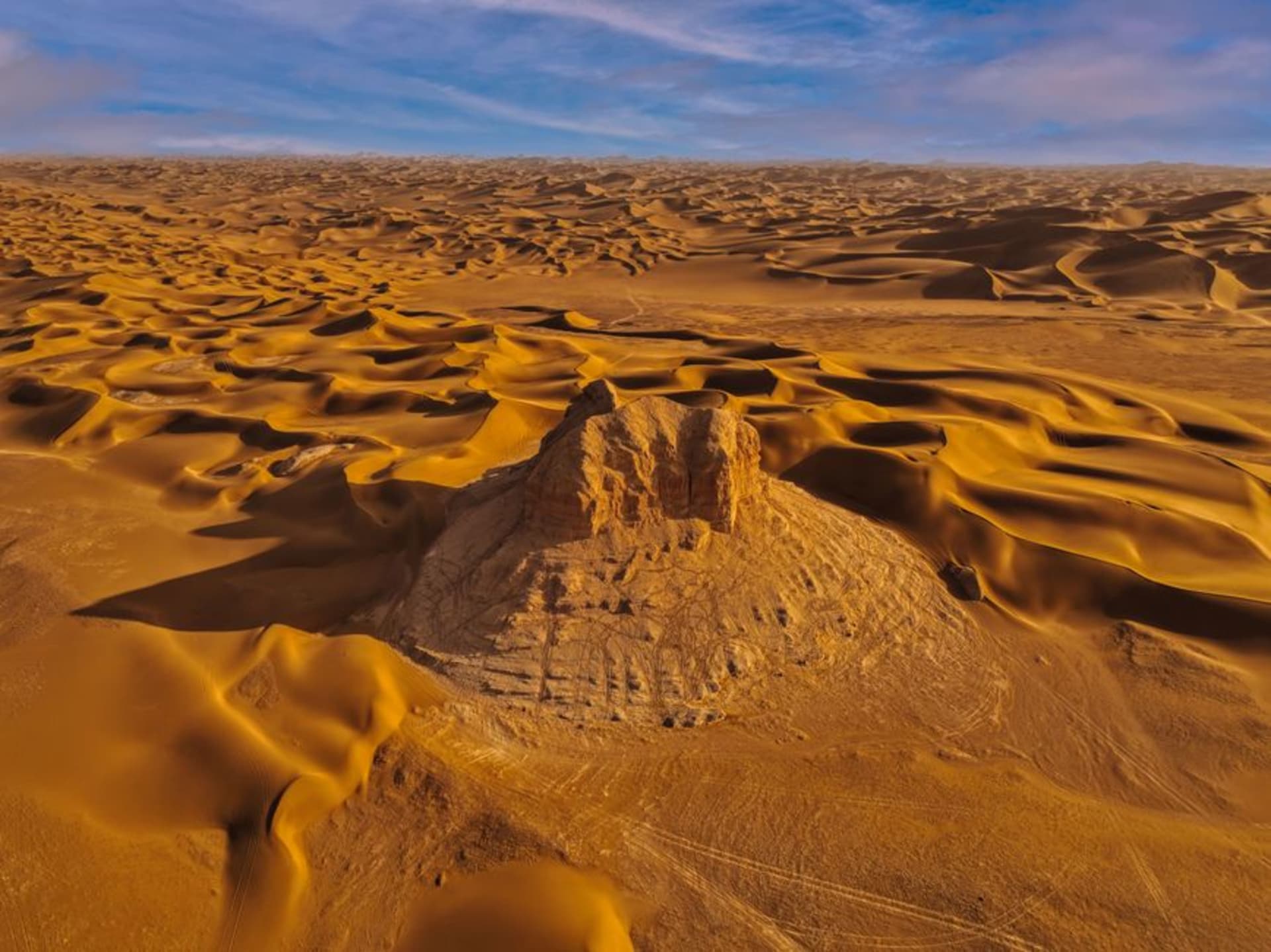
An oasis of mudbrick and Tuareg memory at the foot of the Akakus, where the Sahara's caravan roads once converged.
I’d wanted to go to Ghat since a fixer in Tripoli first mentioned it to me over mint tea, tracing a line with his finger from the coast down to a dot near the Algerian border. “That’s where the caravans used to stop,” he said, and something about the way he said it stuck with me for months. When Lia and I finally made it down to the Fezzan, the drive alone told half the story — hours of nothing, then suddenly a smear of green and a jumble of pale mudbrick walls rising out of the sand like they’d grown there.
Ghat al-Qadima, the old town, is the part that got me. Narrow lanes, walls the color of the ground they came from, doorways too low for me and just right for Lia. We wandered in without much of a plan, and a kid who couldn’t have been older than ten ended up walking with us for twenty minutes, pointing out which houses were still lived in and which had been left to slump back into the earth. I kept thinking about how many centuries of traders — salt, gold, slaves, cloth — must have passed through gates just like the ones we were ducking under, moving between the Mediterranean and the Sahel long before anyone called this place Libya.

What surprised me most was how present Tuareg culture still felt, not as some museum display but as daily life. We had dinner one night with a family connected to our guide, sitting on rugs while the kids ran in and out, and the father talked about his own father guiding expeditions into the Acacus for the rock art — the same reason most people find their way to Ghat at all. He unrolled an old indigo turban to show me how it’s wrapped, laughing at how badly I did it myself.
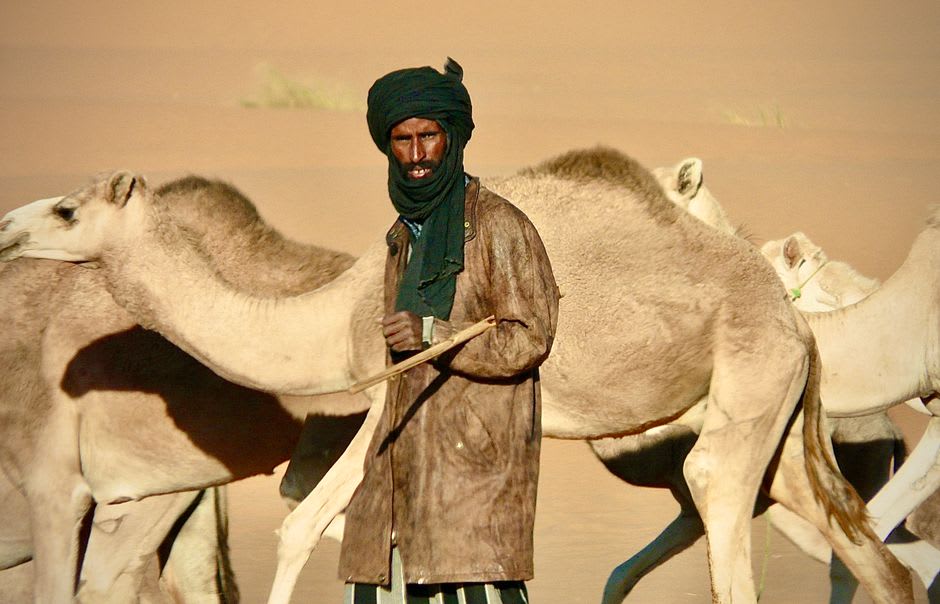
Leaving Ghat, I understood it less as a destination and more as a threshold — the last real town before the Akakus swallows the road, and for centuries, the first sign of civilization for anyone coming the other way. When to go: stick to the cooler months, roughly October through March — we went in December, and even then the midday sun had real weight to it. Summer here isn’t a discomfort, it’s a risk.