Cyrene
"The Greeks came here and built as if they intended to stay forever. They were half right."
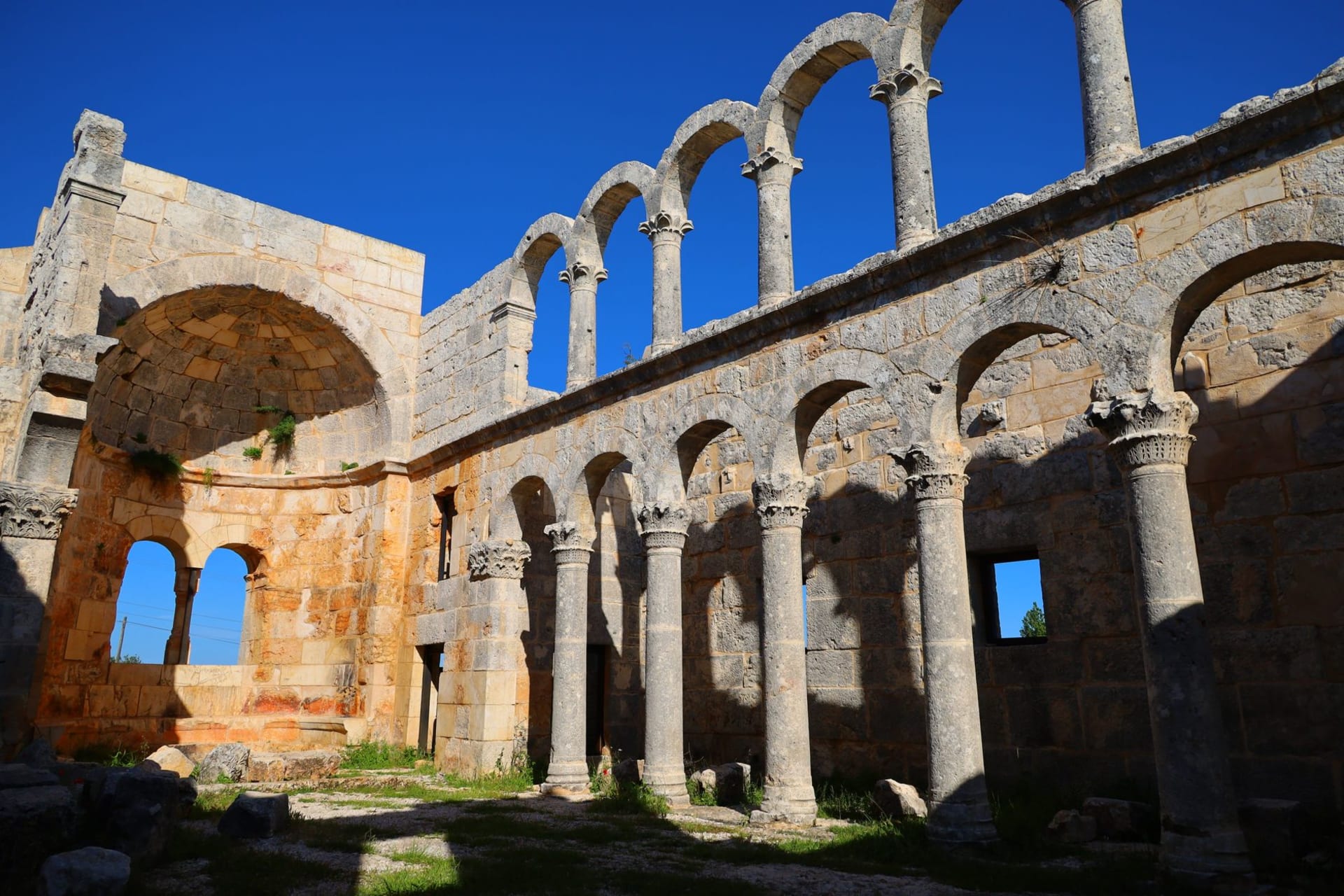
Cyrene is in the wrong country. That is my first and recurring thought on the approach to the site, climbing inland from the coast through a landscape that shifts, improbably, from Mediterranean scrub to limestone plateau to what I can only describe as a Greek hillside: terraced, green, the stone pale and the light diffuse in a way that has nothing to do with my idea of Libya. The city was founded by Greek colonists from the island of Thera in 631 BC — six hundred years before the common era, which means it is older than the concept of most things I consider old — and what they built here over five centuries was a genuinely major city. Temples, an agora, a forum, a theater, baths, a necropolis that sprawls across a hillside for two kilometers. I had been to Delphi. Cyrene felt comparable in scale and exceeded it in atmosphere, partly because of the green hillside it occupies and partly because there was almost no one else there.
The Temple of Zeus at Cyrene is the great shock of the site. It is larger than the Parthenon. Its columns — drums scattered across a wide area after an earthquake in 365 AD collapsed the structure — are enormous; you can stand next to one drum and your shoulder barely reaches its equator. The Romans restored and rebuilt the temple in the second century, so what survives is a palimpsest of Greek and Roman construction, layer over layer, the limestone developing different textures as it ages at different rates depending on its quarrying date. I spent two hours just in the precinct of the Zeus temple, walking the fallen drums, trying to reconstruct the building’s plan in my head, calculating from the spacing what the colonnade would have looked like standing.

The sanctuary of Apollo, lower down the hill, is where the springs are. Fresh water seeps out of the limestone here and has done so since before the Greeks arrived; the original settlers chose this site because of the spring, then built an oracle around it, then built a city around the oracle — the most ancient logic of urban formation. The water still runs along a channel cut into the rock two and a half millennia ago. I bent down and put my hand in it and felt the particular startlement of touching something that was old before Rome was founded. The water was cold. The grass around the channel was improbably green. Small white flowers I could not name were growing between the paving stones of the sanctuary.
Cyrene’s necropolis lines the road approaching the site — thousands of rock-cut tombs carved directly into the cliff face, Doric facades in varying states of preservation, some with inscriptions in Greek still legible, some with the burial urns still inside their chambers. It is one of the most intact ancient burial grounds I have seen anywhere on earth. The tombs are open and unguarded. You can walk in, which I did, and stand in chambers that last held people some two thousand years ago, and the feeling is not macabre but oddly companionable, as if the dead here are patient about being remembered.

When to go: October through April. The Green Mountain plateau is cooler than the coast and can be genuinely cold in January. Spring is the ideal window — March and April bring wildflowers across the hillsides and the ruins of Cyrene sit in grass that is startlingly green, an unexpected encounter in Libya that makes the whole site feel like a fever dream of the Mediterranean at its most beautiful.