Buchanan
"The beach at Buchanan on a Tuesday afternoon belongs entirely to you and whoever is selling fish."
Buchanan arrived as a smell before anything else — the iron ore dust that coats everything near the port, a mineral dry smell that mixes with the ocean salt and the diesel from the ships queued in the harbor. The town grew up around the Bong Mine railway that ran iron ore from the Bong Range hills to the coast, and that industrial logic still defines its shape: the port dominates the northern end, the town radiates back from it, and the beaches run south of the harbor where the iron dust thins and the Atlantic takes over.
Grand Bassa County, of which Buchanan is the capital, has a particular Liberian character — more rural than Monrovia, more market-town than administrative center, with a population that moves between fishing, rubber tapping, and small commerce with the ease of people who have diversified because they had to. The market in Buchanan is a good one: cassava in huge piles, fresh-killed chickens, palm oil sold by the bottle from recycled containers, and at the back, in a section that smells powerfully of the sea, dried fish in quantities that suggest a very active fishing fleet.

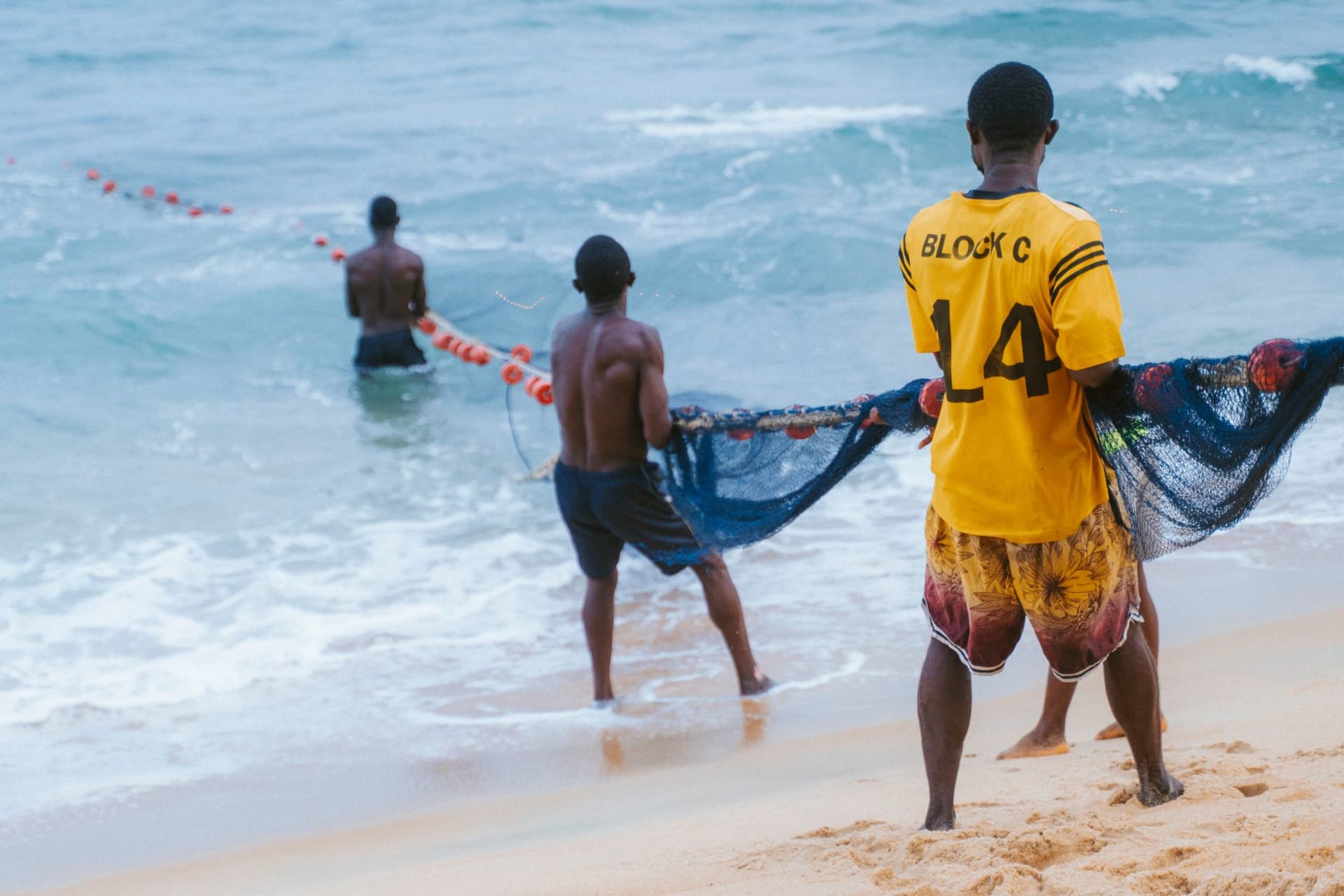
The beach south of the port is where I spent the best part of a day. The sand is fine and pale — almost the color of wet concrete — and the Atlantic here comes in with conviction, long rollers rather than the short chop you get near the port. I set up under a palm tree with a warm Club beer from a woman who materialized from somewhere with a cooler on her head, and for several hours I watched almost nothing happen with great attention. A group of boys played football in the shallows, which I can report is harder than it looks. A fishing canoe came in through the break and the men pulled it above the tide line with a coordinated rhythm. The pelicans that follow the fishing boats stood on the water’s edge in a row and watched the men with the fixed intensity of something negotiating.
The town has a few hotels and guesthouses, mostly used by the engineers and logistics workers connected to the port, and the restaurants run toward rice and stew and fried fish and not much else. I ate dinner at a spot near the market where the chicken stew came with a heat level I had not anticipated and which I appreciated enormously. The cook watched me eat the second bowl with visible satisfaction. These are the small cross-cultural moments that happen outside the tourist infrastructure and that I collect without knowing quite why.

Buchanan is most useful as a stop on the way to somewhere else — it sits squarely on the road between Monrovia and Harper, and breaking the journey here makes the longer stretch south less brutal. But it also rewards a deliberate stop of its own: the beach is uncrowded in a way that feels luxurious, the market is lively without being overwhelming, and the town has the self-contained confidence of a place that knows what it’s for and isn’t trying to be anything else.
When to go: Year-round, though November through April offers the most reliable road conditions for continuing south toward Harper. The port is always active but the beach is at its most pleasant in the dry season when the harmattan mutes the humidity slightly.