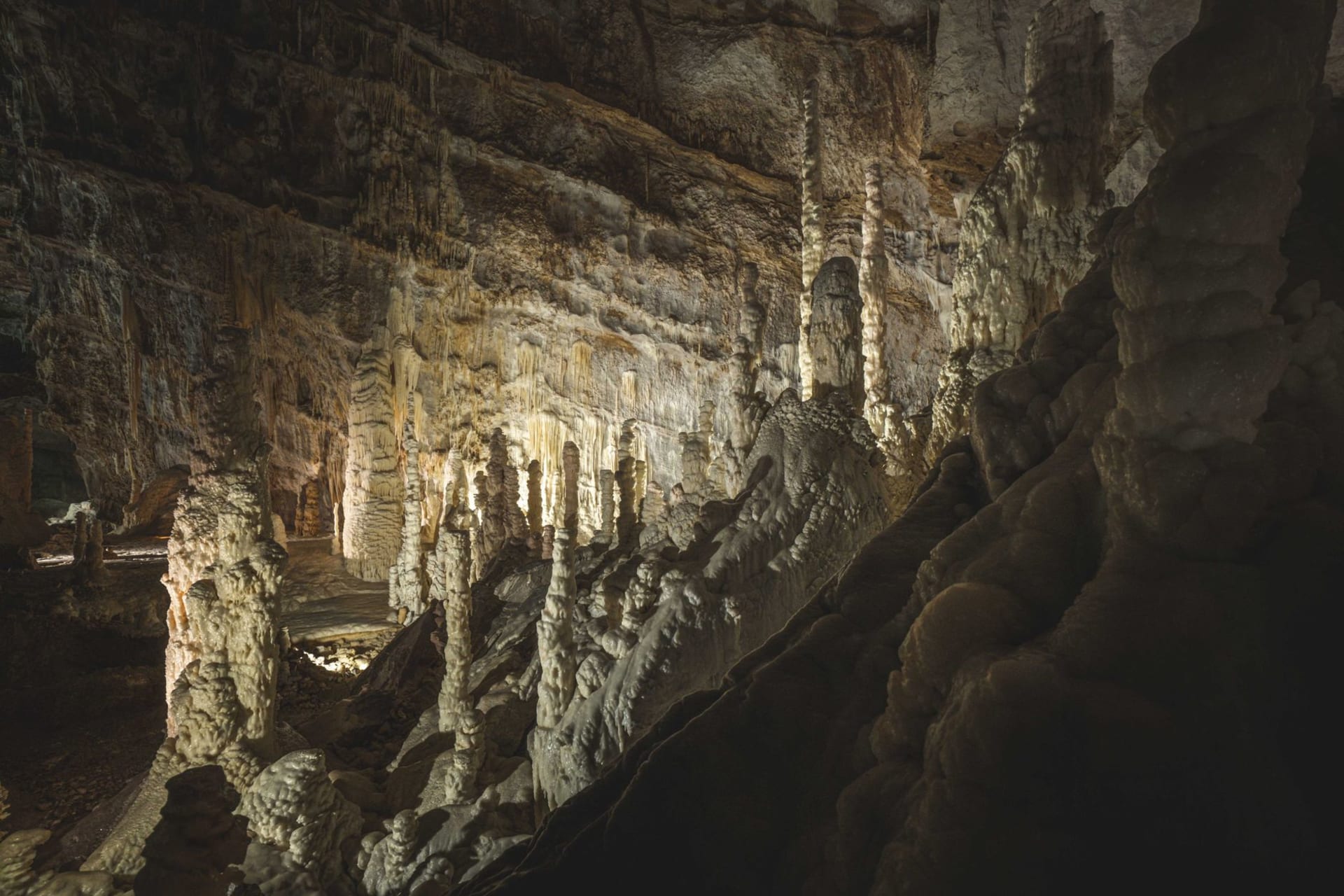
Jeita Grotto
"The largest stalactite in the world is in a cave in Lebanon. I stood under it and felt the particular smallness that geology produces."
The lower cave at Jeita Grotto is accessed by boat, which is the correct way to enter an underground cathedral. I sat in the flat-bottomed vessel as it moved slowly through the darkness between passages so narrow the ceiling was three feet above my head, then opened abruptly into chambers of such scale that the lamp lights didn’t reach the ceiling. The water was absolutely still — black and reflective, doubling the stalactites above so that the formations appeared to extend infinitely downward. Silence, except for the occasional drip that produced a note of startling purity, and the soft sound of the electric motor moving us through a river that has been carving this space for millions of years.
Jeita sits about eighteen kilometers north of Beirut in the Nahr al-Kalb valley, and the cave system it occupies extends for nearly nine kilometers inside the mountain — though only a fraction of that is accessible to visitors. The lower cave, only reachable by boat, contains the underground river that feeds the Nahr Ibrahim. The upper cave is reached on foot along raised walkways, and it is where the true scale of the formations becomes fully apparent.
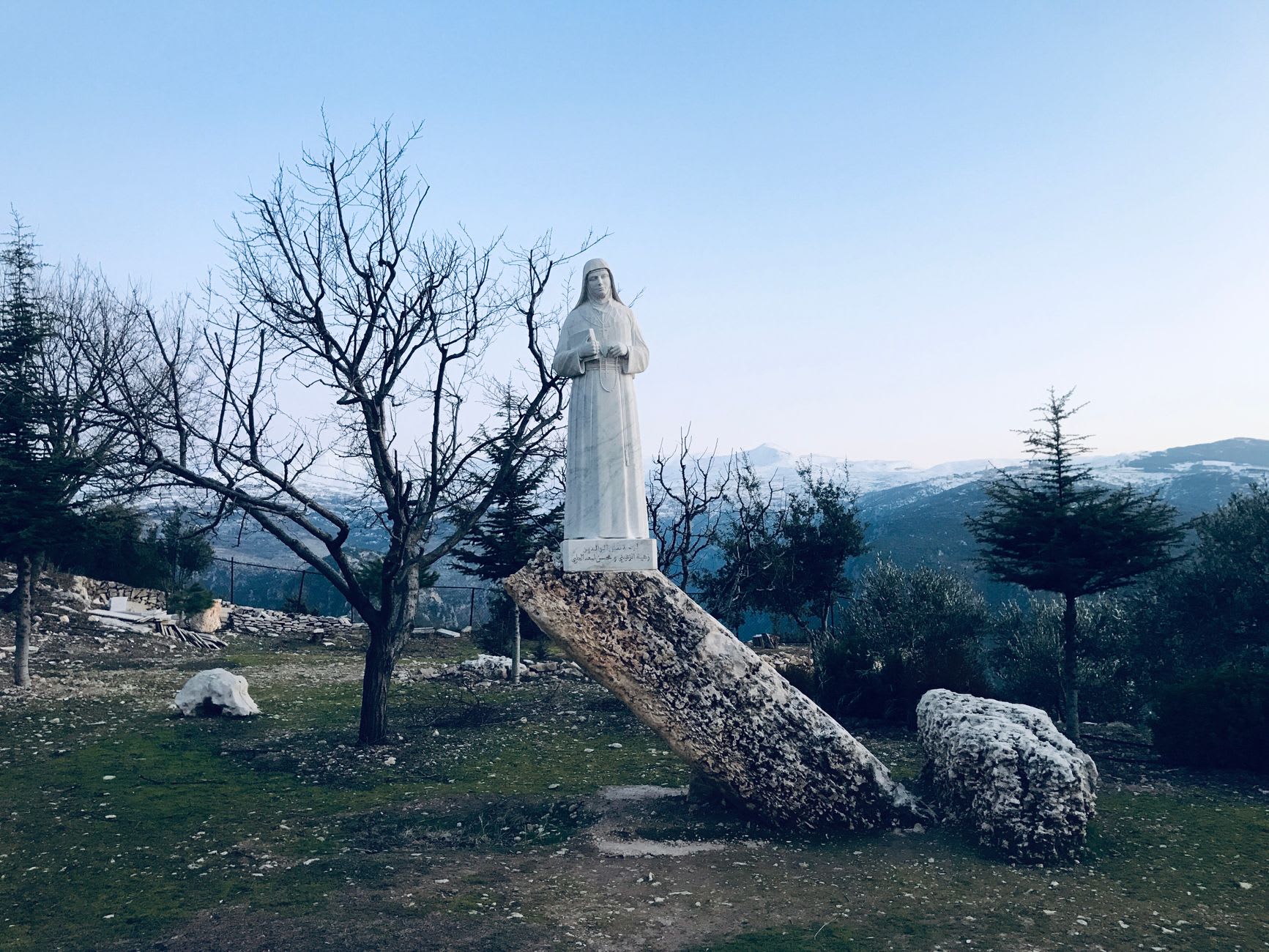
The upper cave took my breath in a literal sense — I remember inhaling sharply when the walkway opened into the Hall of Lost Time, where formations the size of apartment buildings hang from a ceiling forty meters above. Photography is prohibited inside, which initially seemed bureaucratic but quickly revealed its logic: being unable to document the experience forces you to actually inhabit it. I found myself doing something I almost never do in tourist attractions, which was stopping completely still and just looking, without doing anything else.
The longest stalactite in the world is in this cave — 8.2 meters of calcium carbonate deposited over thousands of years at a rate of roughly a cubic centimeter per century. The number matters less than what it produces in your chest when you stand beneath the thing and try to map the pace of its formation onto the pace of a human life. At that rate, it has grown perhaps a few millimeters since I was born. It will be here, unchanged to the naked eye, long after everyone currently alive has gone.
Outside the cave, the valley itself has a lush, subtropical quality unusual for Lebanon — fig trees, oleander, the river running green and cold through gorge walls stained with mineral seepage. There is a small cable car connecting the lower and upper cave entrances that operates over the valley and provides a moment of aerial perspective that contextualizes what you’ve just seen underground. After the cave’s dark and silence, the outside light feels almost violent in its brightness, and it takes a few minutes for the eyes and the emotions to recalibrate.
When to go: Open year-round, but the lower boat section closes when the underground river runs too high — typically in late winter and early spring (February through April). Arrive at opening time to avoid the midday crowds, especially on weekends and during Lebanese school holidays. The caves maintain a constant temperature of 18 degrees Celsius regardless of outside weather.