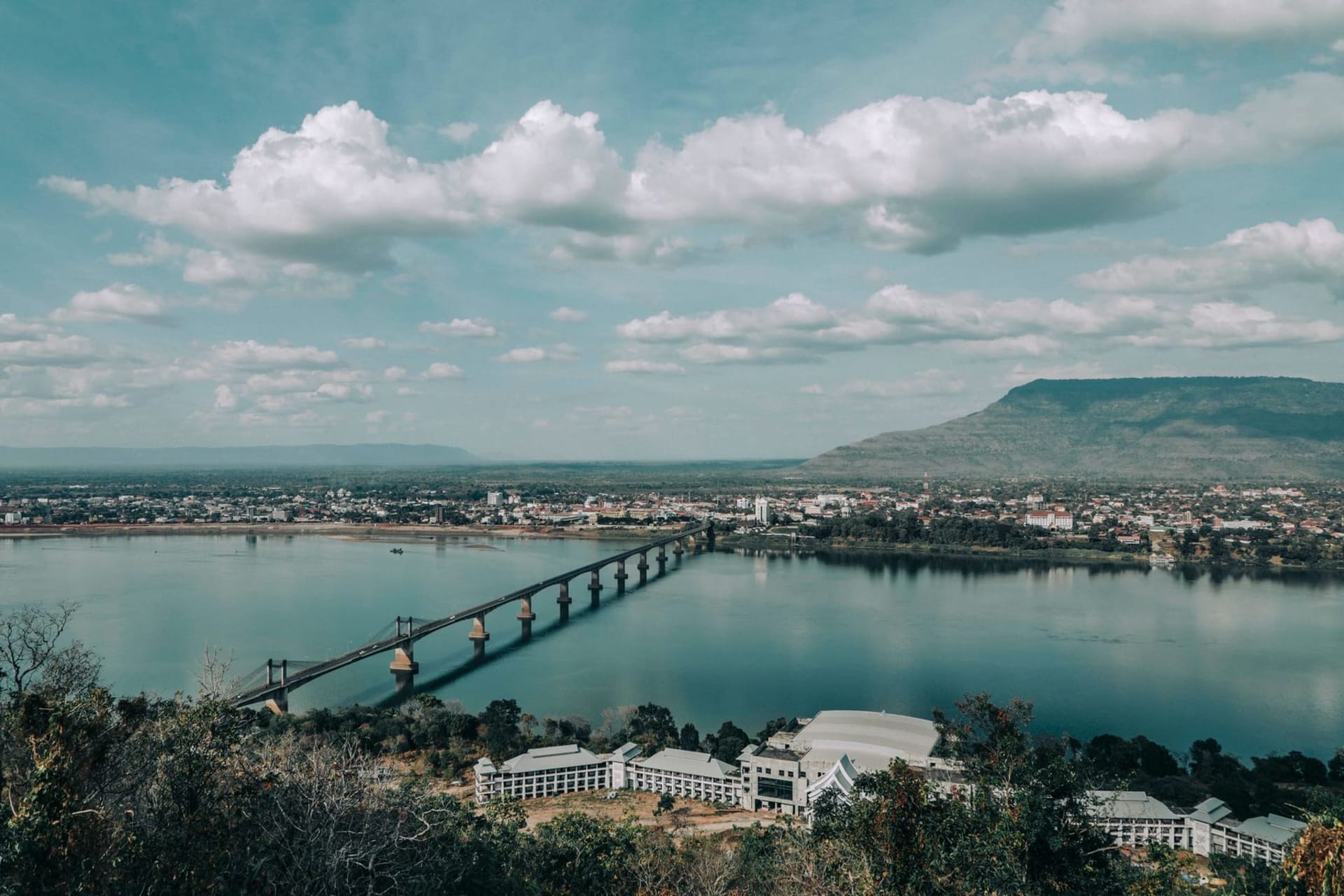
Pakse
"The coffee grown above Pakse is what happens when altitude and isolation collaborate with perfect terroir."
Gateway to the Bolaven Plateau's coffee farms, Khmer ruins, and waterfalls lost in jungle.
Pakse arrived at dusk, the Mekong doing its slow bronze turn as the ferry swung us into shore. I had spent three days reading about the Bolaven Plateau on a slow bus from Vientiane, and by the time we stepped onto Thanon 11 with our bags, I was already half-convinced the coffee would justify everything. It did, but not in the way I expected.
The Town Below the Plateau
Pakse is not a place that performs for tourists. The morning market on the north end — Talat Dao Heuang, a warehouse-sized sprawl of vegetables, dried fish, and bundles of lemongrass — operates entirely on its own logic. Lia and I spent an hour there the first morning, drinking or-lam, the thick Lao stew of eggplant and wood ear mushrooms and dried buffalo skin, from a woman who served it from a dented pot over charcoal. The smoke from that pot clung to our shirts until noon.
The city grid is colonial French in its bones — straight avenues, faded shuttered facades — but the rhythm is Lao. Slow. The light by mid-morning turns milky and diffuse, filtered through the dust that rises off Route 13, and everything seems to operate at about two-thirds speed. I was grateful for it after weeks of cities that never stopped moving.
Up to the Bolaven
The plateau begins less than thirty kilometers from the city center, but the altitude jump is abrupt enough to change the air inside of twenty minutes on a rented motorbike. The temperature dropped, the road narrowed, and the arabica appeared — low, dark-leafed plants spread across hillsides worked by Jhai and Katu farmers whose families have been growing here for generations.
What I did not anticipate was stopping at a farm near Paksong and being handed a cup of something that tasted like brown sugar dissolved in forest. Not roasted, not bitter — just clean and deep and slightly floral. The farmer, who spoke enough French to make me feel the colonial ghost of the place, told me the cherries were still hand-sorted by color before processing. It was the unexpected detail that made the whole trip crystallize.
Tad Fane, the twin-fall waterfall that drops nearly a hundred meters into a gorge draped in fern and cloud cover, requires walking through mist so fine it reads as humidity until you realize your jacket is soaked. We stood there longer than made practical sense.
Wat Phu Without the Crowds
Thirty kilometers south, the Khmer ruins of Wat Phu predate Angkor Wat and receive a fraction of its visitors. Sandstone lions guard a staircase that climbs through frangipani trees toward a sanctuary the jungle has partially reclaimed. I went at seven in the morning before tour buses arrived. For forty minutes I had it almost entirely to myself.
When to go: The dry season runs November through April, with the coolest plateau mornings between December and February — ideal for long rides and clear falls. Arrive before March if you want coffee harvest season, when the cherries are still red on the branch.