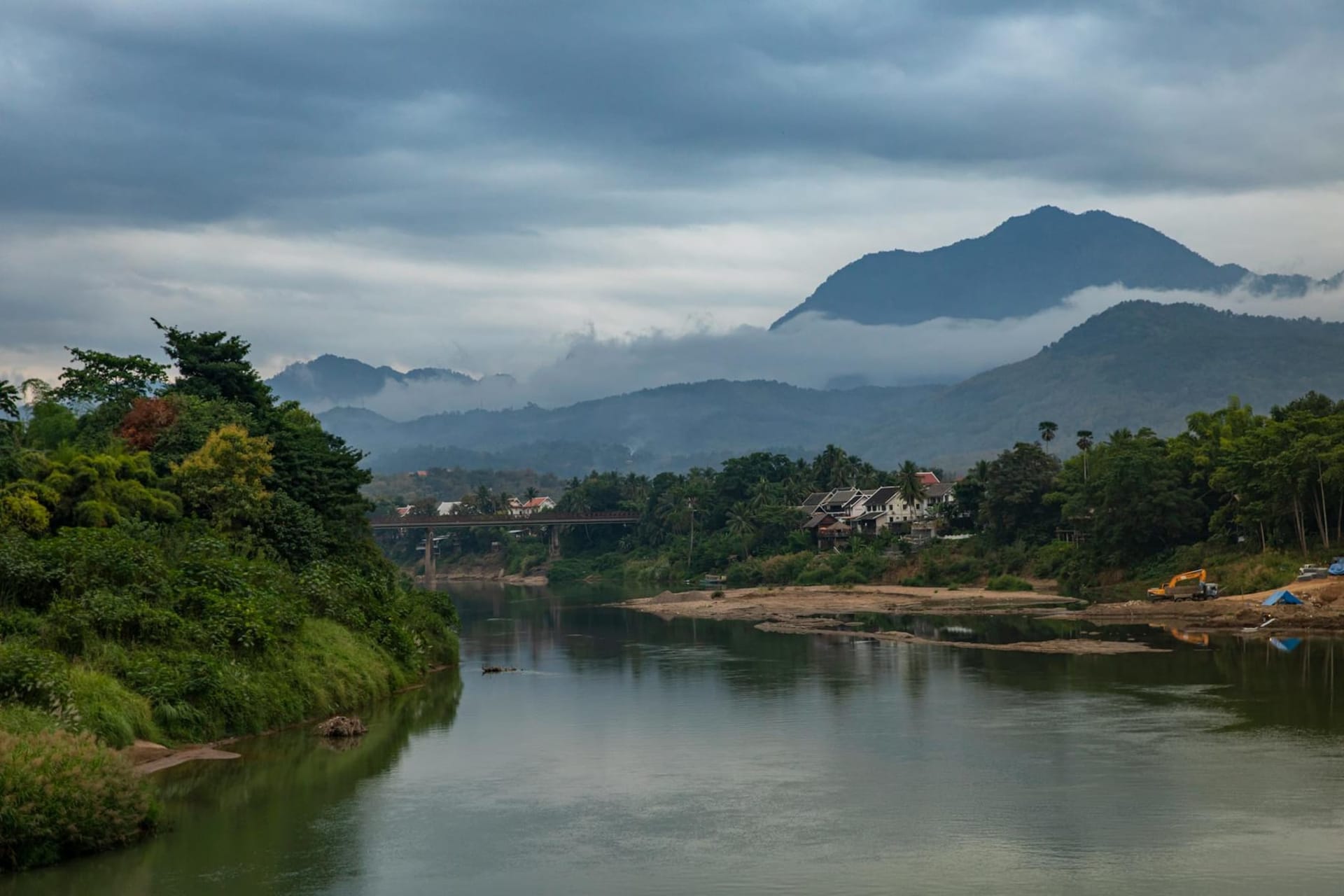
Nong Khiaw
"Nong Khiaw is what Southeast Asia looked like before it knew it was supposed to cater to tourists."
A tiny village lodged between vertical limestone cliffs on the Nam Ou River with few roads out.
There is one road into Nong Khiaw. It crosses a low concrete bridge over the Nam Ou, and if you linger on that bridge for a moment before entering the village — which I did, while Lia kept walking — you understand immediately why people arrive here for two nights and stay for two weeks. The cliffs close around you like parentheses. The river below is the color of celadon after rain. Nothing about the scene is performing for anyone.
The Shape of a Day
Nong Khiaw does not have a centre so much as a seam — a single unpaved lane running roughly parallel to the river, lined with guesthouses, a handful of open-air restaurants, a woman who sells fresh baguettes from a basket each morning around seven. The French left their bread behind when they left everything else, and here you eat it with Lao drip coffee so dense and sweet it could pass for dessert, watching the mist burn off the cliff face across the water.
Most mornings I walked north along the bank until the guesthouses thinned and the path dissolved into scrub. The Nam Ou at that hour was almost entirely still. Fishermen in flat-bottomed wooden boats moved without sound. The light on the limestone turned from grey to amber to white in the space of an hour, and I never got tired of watching it happen.
The Viewpoint and What We Found Beneath It
Every guesthouse will point you toward the Pha Daeng viewpoint — a 45-minute climb up a karst ridge that delivers a panorama so composed it seems implausible. We went at dusk, which was the correct decision. But the better discovery was accidental: on the descent, we took a wrong turn and ended up at a cluster of wooden houses where a family was preparing a baci ceremony. A teenage boy spoke enough English to explain what was happening, then waved us in as if we had been expected. We sat cross-legged for twenty minutes, eating sticky rice from a shared bamboo basket, entirely unsure of the protocol but certain we were welcome.
That is the thing about Nong Khiaw. The village is small enough that its hospitality is personal rather than commercial. Nobody is trying to sell you a tuk-tuk tour to somewhere else.
Eating on the Riverside
Dinner was almost always at one of the open-fronted restaurants along the main lane — tam mak hoong, the fiercely sour green papaya salad they make differently here than anywhere in Thailand, and mok pa, river fish steamed in banana leaves with dill and lemongrass. The dill surprised me the first time. It is a northern Lao thing, borrowed from somewhere across the mountains, and it makes everything taste faintly of home and nowhere at once.
When to go: November through February, when the dry season brings cooler temperatures and clear skies that sharpen the limestone to its best light. Avoid July and August — the river floods and the cliffs disappear entirely into cloud.