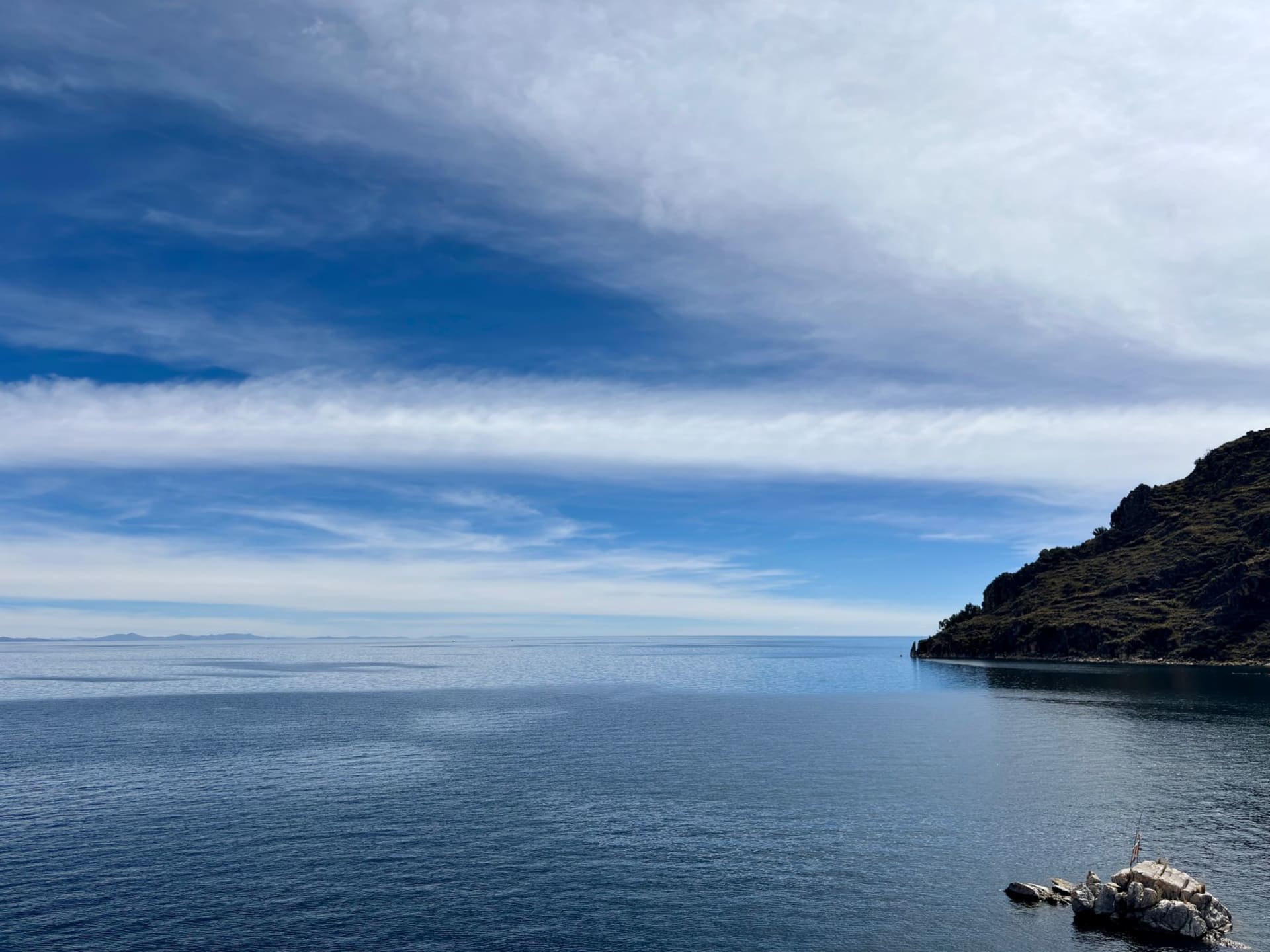
Amantaní Island
"I woke at 4am to see the lake — and the dark was so complete I couldn't tell where the water ended and the sky began."
I arrived on Amantaní in the early evening, when the light had already gone flat and the families waiting at the dock were just shapes against the grey water. A woman named Rufina gestured for me to follow her up the hill with something between authority and patience, and I did, past terraced quinoa fields and adobe walls with doors painted turquoise, until we reached a house with a courtyard and a view that I couldn’t properly see in the failing light. I ate dinner at her table — potato soup with a floating herb I couldn’t identify, boiled eggs, fresh bread — and went to bed before nine o’clock because the altitude demanded it.
The island reveals itself in the morning. Amantaní is larger than Taquile and less visited, its two sacred summits — Pachamama and Pachatata, Earth Mother and Earth Father — rising at opposite ends of the island above an inhabited middle band of fields and houses. The terraces here are ancient, some of them pre-Inca, built with a precision that still holds four hundred metres above the lake. I climbed to the ruins of Pachatata before sunrise, slowly, stopping to breathe every hundred steps, and arrived at the summit as the light began hitting the Bolivian peaks across the water.
What happens at the top is hard to describe without sounding like a person who needs to get out more. The lake at that hour, at that altitude, in that light — it does something to your sense of scale. The water is not blue but silver-grey before the sun fully clears the mountains, and the far shore could be forty kilometres away or four hundred. The ruins are modest: a low circular enclosure of fitted stone, a few upright slabs. The Aymara still consider this space sacred and hold ceremonies here during the festivals of San Sebastián in January and Santiago in July. I sat on the stones for a while and felt entirely, specifically small in the way that’s actually quite relaxing.
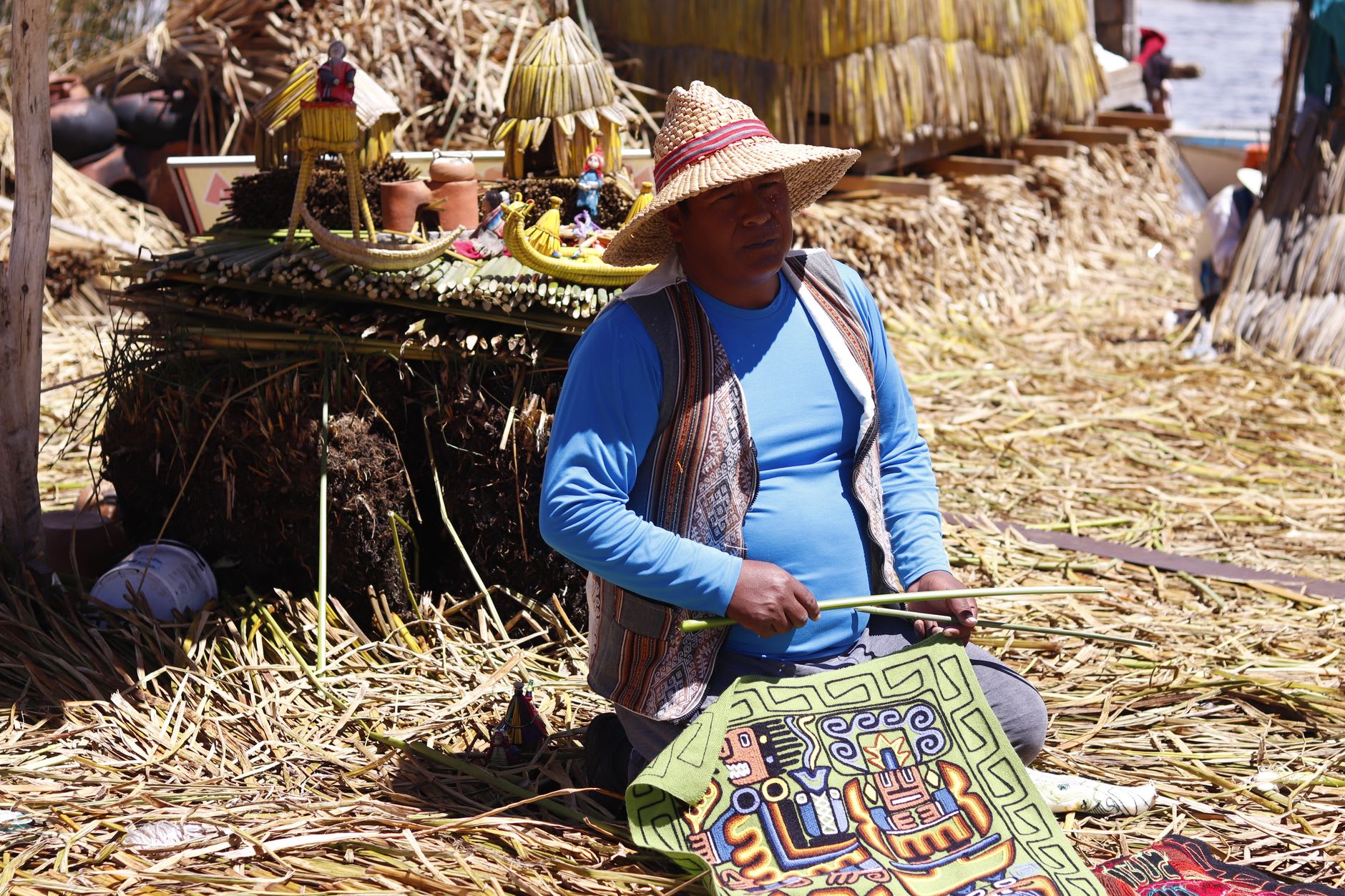
Rufina’s family grew quinoa and potatoes on their terraces, and most of what appeared on our table came from within a few hundred metres. The community on Amantaní operates a strict rotation system for tourist homestays — families take turns hosting, so no single household captures all the income. It is an elegant piece of community organisation, and it means that whoever hosts you gets the full benefit. I contributed by eating enthusiastically, which seemed to please Rufina considerably.
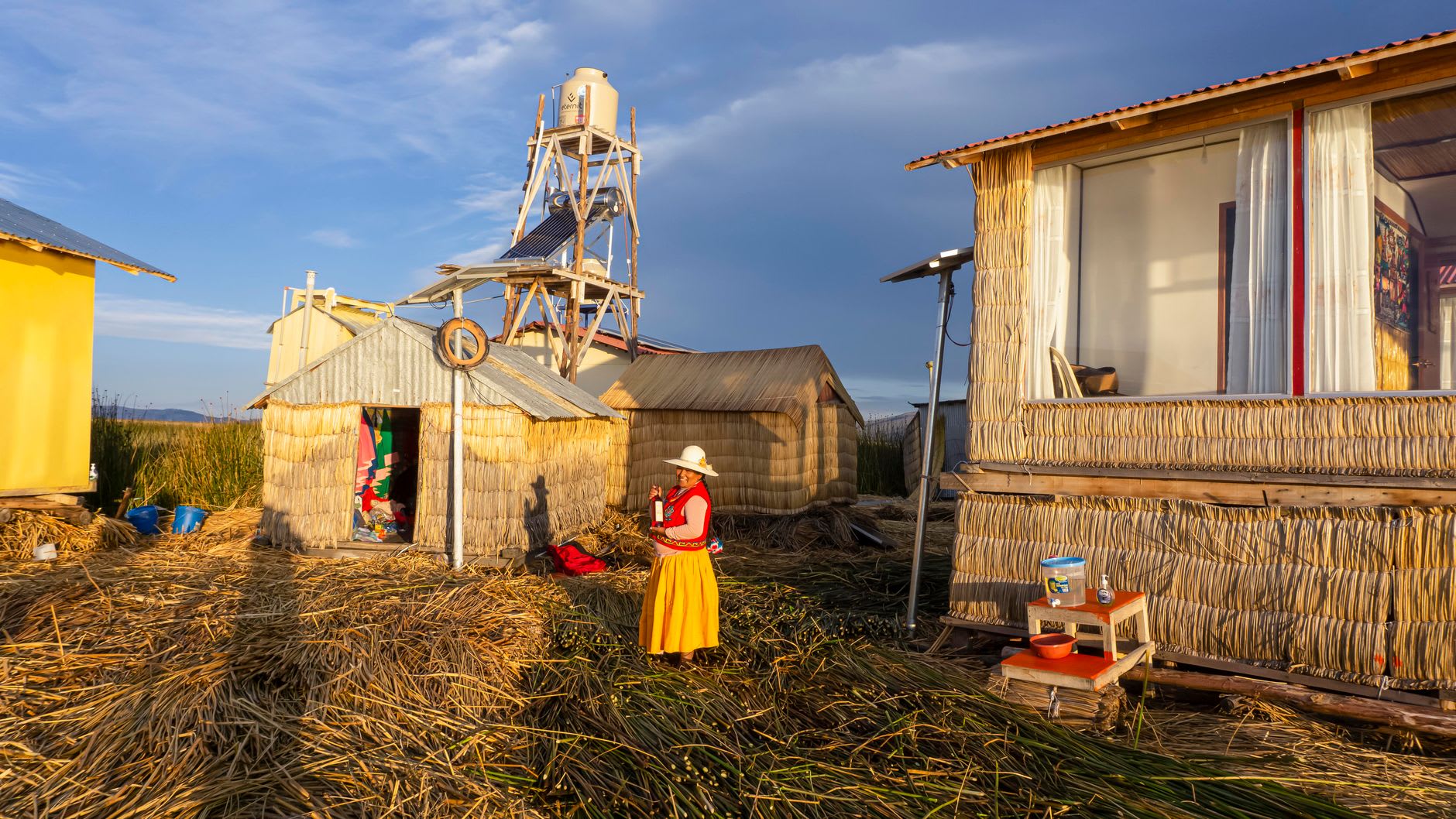
The night sky is the thing that stays with you. Amantaní has no light pollution to speak of — a few bare bulbs, a solar panel here and there. After dinner the second evening, Rufina’s husband Victor led me up to the terrace and pointed at the Milky Way as if pointing out something that needed fixing. At 4,000 metres the atmosphere is thin enough that the stars are not points of light but smears, overlapping, too numerous. The dark between them looked different. I stood up there a long time.
When to go: May through October for dry, cold, clear conditions. The homestay experience is the point — do not come and leave the same day. Two nights is the minimum to feel the island properly shift. Book through the community tourism office in Puno rather than through private operators, as this ensures the rotation system works correctly. January’s festival of San Sebastián and July’s Santiago celebration are extraordinary times to be on the island if you can coincide.