Valdivia
"The sea lions at the Feria Fluvial are professional thieves and everyone is completely fine with this arrangement."
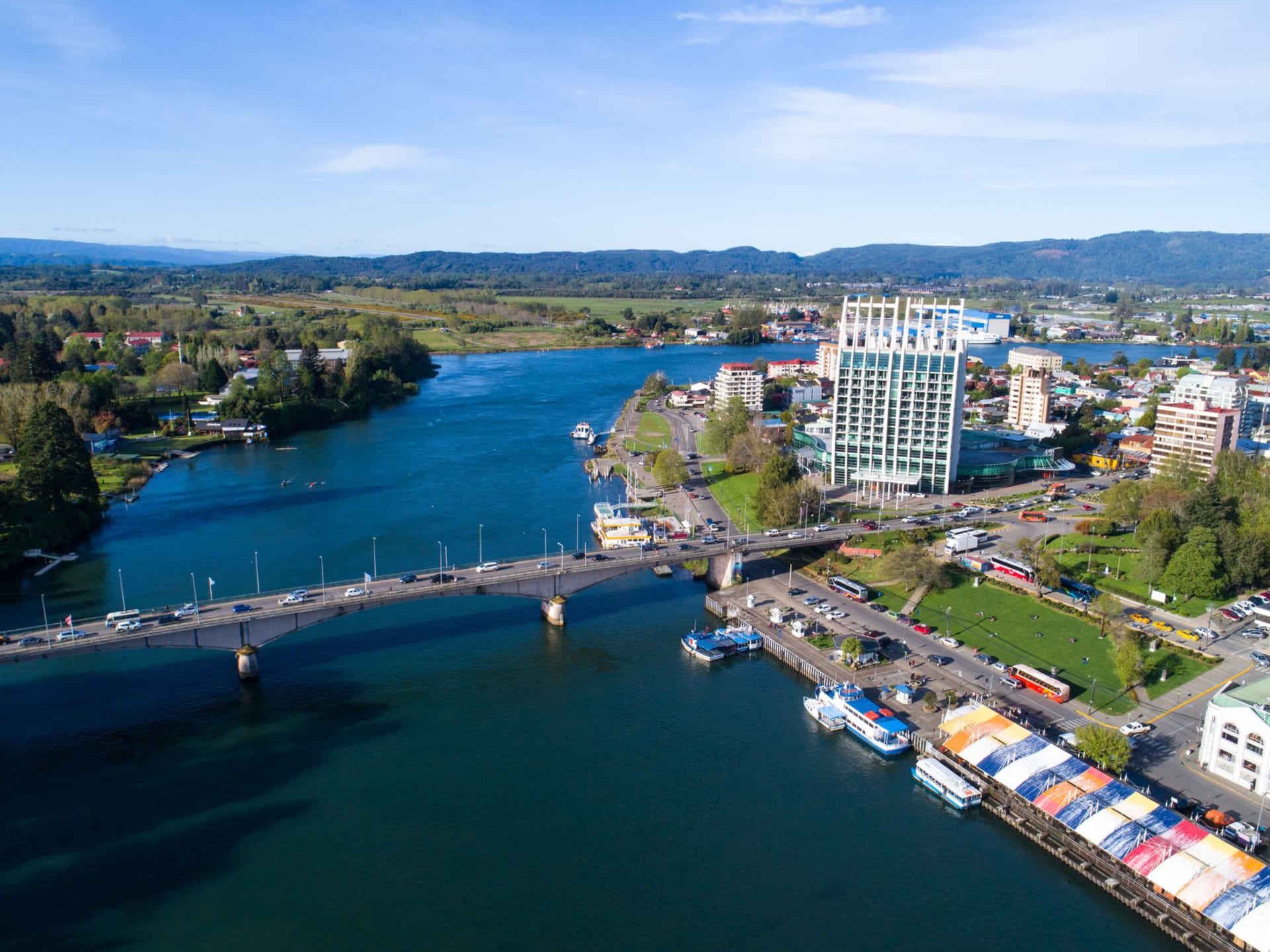
Valdivia is built on rivers, plural — the Calle-Calle, the Cau-Cau, the Cruces — and the city exists at their confluence in a way that makes water feel like the organizing principle of urban life rather than a backdrop to it. I arrived at night by bus and the first thing I saw walking from the terminal was the river, wide and dark and carrying the smell of something clean and cold coming down from the interior forests. By morning I was at the Feria Fluvial — the floating fish market on the riverbank — watching a sea lion haul itself onto a wooden platform and intercept a salmon before the vendor could complete the sale. The vendor sighed in a way that suggested this happened with regularity. The sea lion ate the salmon with an efficiency that suggested the same.
The Feria Fluvial is where Valdivia earns its reputation as a city of genuine character. The stalls run along the riverside under corrugated iron roofs, selling fish so fresh they were in the river this morning, crustaceans piled in ice, smoked trout wrapped in paper, heaps of piure and sea urchin that smell uncompromisingly of low tide. The sea lions have worked out that hanging around the fish-cleaning area results in a continuous stream of heads and offal, and they have colonized the wooden platforms with the confidence of animals that have correctly assessed the local power dynamics. There are also South American terns and black-necked cormorants and Kelp gulls competing for the same scraps, and the whole thing is a raucous, fragrant, completely unself-conscious display of a city actually living next to the river it was built on.

The German brewery tradition here is serious and unironic. Kunstmann, founded by Karl Anwandter — another German immigrant, this one arriving in 1850 — has been producing lager in Valdivia for more than a century and a half, and the brewery tour and adjacent restaurant are one of the better afternoon experiences the city offers. But the craft beer scene has also expanded considerably: Bundor, Tropera, and a handful of smaller operations produce ales and stouts that show what happens when you combine German brewing technique with Chilean hops and a young market that wants experimentation. I drank a smoked dark ale at a bar on Calle Independencia that tasted of the salmon vendor’s woodsmoke and the rain on the street outside simultaneously, which felt appropriate.
The Spanish colonial fort at Niebla, twelve kilometres downstream where the river meets the Pacific, is the other Valdivia entirely. The Castillo de Niebla was built in 1671 to defend against pirates and Dutch naval incursions, and it sits on a bluff above the river mouth with walls of volcanic stone that have absorbed three centuries of weather without much apparent opinion about the experience. From the ramparts you see the Pacific opening to the west and the forested hills of the interior behind you, and the sound is entirely of wind and surf with occasional seabirds. The fort across the water at Corral communicates with Niebla by line of sight, the way defenses used to work before everything became instantaneous and invisible.

Valdivia was essentially destroyed by the most powerful earthquake ever recorded — the 1960 event that measured 9.5 and caused a tsunami that rearranged the coastline — and the city rebuilt itself without much sentimentality about what was lost. The result is a mix of architectural eras that feels honest: colonial fragments, mid-century reconstruction, recent university buildings, all coexisting on streets that remain uneven in the charming Chilean way of streets that have settled into the earth they are on.
When to go: February is the best month — the Semana Valdiviana festival brings river parades and fireworks and the city is at its most festive. January and March are also excellent. Valdivia is worth visiting in any season because the fish market and the rivers are year-round institutions, but winter (June through August) brings grey weather and occasional flooding that reduces the charm of the waterfront considerably.