Listvyanka
"I bought omul from a woman who had been smoking fish on this same shoreline since before I was born."
The marshrutka from Irkutsk takes less than an hour, but the transition feels like crossing into a different logic entirely. The road runs alongside the Angara River — the only river that drains out of Baikal rather than into it — and then suddenly the river widens into something incomprehensible, and you understand you are no longer looking at a river at all. You are looking at the lake. In February, it doesn’t even register as water. It’s a white plain that extends to the horizon like a prairie that forgot to have grass, and it has that particular stillness of things too large to move.
Listvyanka is the kind of village that has organized its entire existence around one thing. That thing is omul. The Baikal omul — a white fish of the salmonid family, endemic to this lake and nowhere else on earth — arrives smoked, dried, hot, cold, whole, filleted, wrapped in newspaper, held out from wooden stalls by women in enormous fur coats who will not let you pass without buying something. The smell reaches you before you step off the bus: woodsmoke and cold fish fat and the particular sharpness of frozen lake air. I stood at the fish market for twenty minutes before I could decide what to try first. I ended up buying one of everything.

Hot-smoked omul eaten standing in minus fifteen is one of those experiences that recalibrates your idea of what food can do. The skin crackles and carries a faint bitterness from the smoke. The flesh beneath it is tender in a way that feels almost impossible given how long it’s been sitting over charcoal. You eat it with your hands, peel it away from the spine, and the heat of it travels through your gloves. I ate three that first afternoon and felt obscenely happy about it.
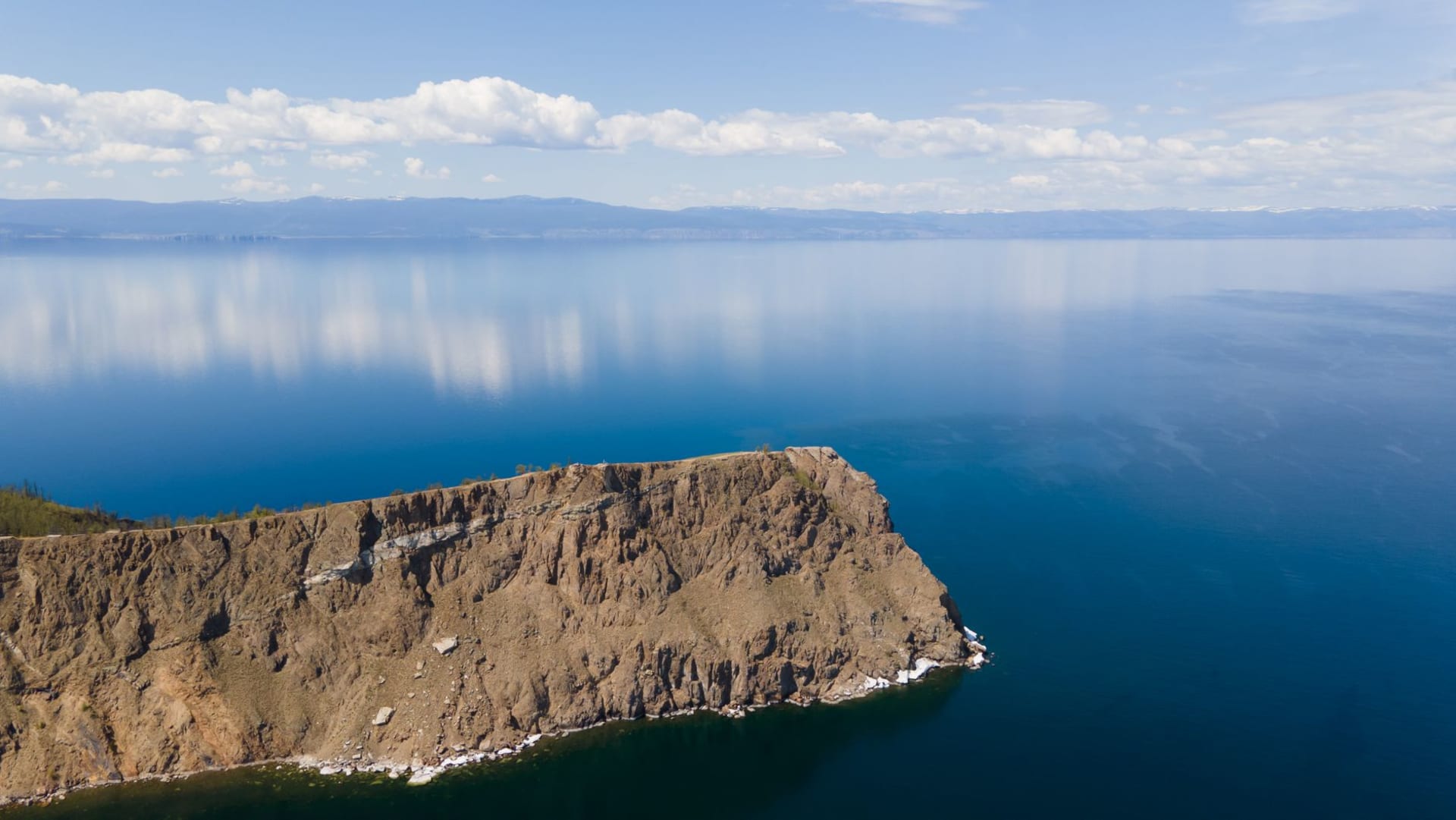
The village itself is not large. A single main road runs along the shore, lined with wooden houses painted blue and green and rust-brown, most of them with carved window frames in the lacework style that Siberian craftsmen somehow had time to elaborate even in this unforgiving climate. There’s a cable car that hauls you up to a viewpoint above the village, where the lake opens up in all directions and you understand, viscerally, why people call it a sea. From up there you can see the Khamar-Daban mountains on the far shore, dusted white, impossibly distant. The scale of the thing is what gets you. You keep thinking you’ve understood it, and then you haven’t.

In the evenings the village goes quiet in the way that cold places go quiet — not just an absence of sound but an active suppression of it, as if the cold has weight and that weight presses sound into the ground. I sat on the steps of my rented wooden cottage with a bowl of Buryat buuzy — steamed dumplings, fatter and more satisfying than any I’d eaten in Ulan-Ude — and watched the ice change color as the sun dropped. It goes orange, then purple, then a shade of grey-blue that has no name I know of, and then dark all at once.
When to go: February and March for the ice and the winter fish market, when the cold is absolute but the experience is unlike anything else. June through August brings warmer temperatures and kayakers on open water, and the village gets genuinely crowded on summer weekends. Come midweek if you can. Spring and autumn are the underrated seasons — fewer people, softer light, and the fish market still running at full strength.