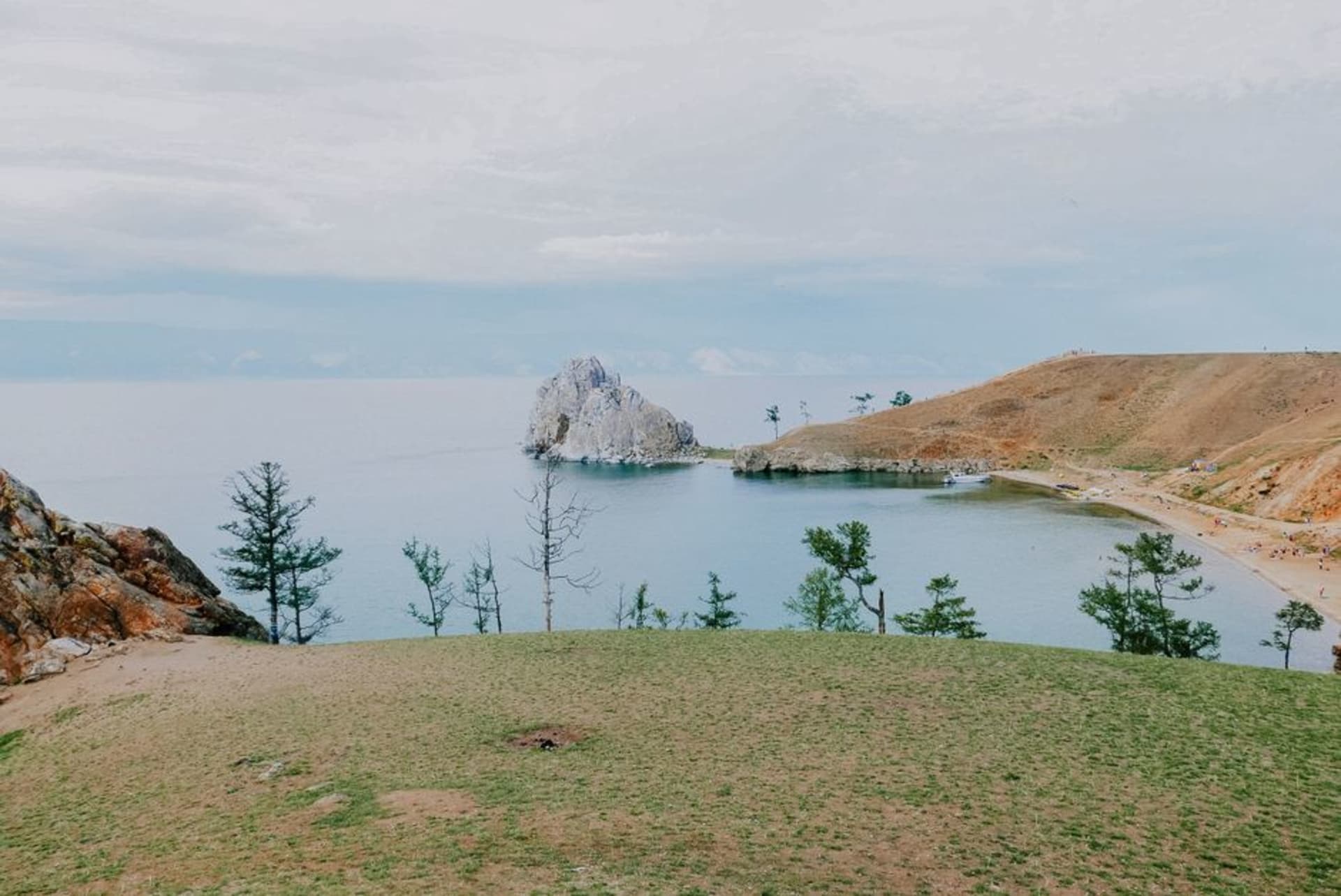
Chivyrkuisky Bay
"Everyone told us Baikal was too cold to swim in. Nobody mentioned this bay."
A sheltered bay behind the Svyatoy Nos peninsula where Baikal's icy water finally turns warm enough to swim in.
We’d been on Baikal for almost a week before anyone mentioned Chivyrkuisky Bay to us, and it was a fisherman in Ust-Barguzin who did it, almost as an aside, while he was untangling a net. Lia had asked him, half-joking, if there was anywhere on this lake where a person could actually swim without their lungs seizing up. He laughed and said yes, behind the peninsula, where the water hides from the wind. Two days later we were there, and I understood what he meant the moment I waded in past my knees — the water was warm. Not Baikal-warm, which usually means “slightly less than lethal,” but actually warm, the kind you sink into without flinching.
The bay sits tucked behind Svyatoy Nos, the peninsula that juts out from the eastern shore like a thumb, and that geography is the whole story. Cut off from the open lake, shielded from the wind and the deep cold currents, Chivyrkuisky’s shallow water heats up through the summer to something like 20-22°C. On a lake where swimming is usually a five-second dare and a fast retreat, that’s almost absurd. We spent an entire afternoon just floating there, watching the light change on the peninsula, half convinced we’d wandered into a different lake altogether.
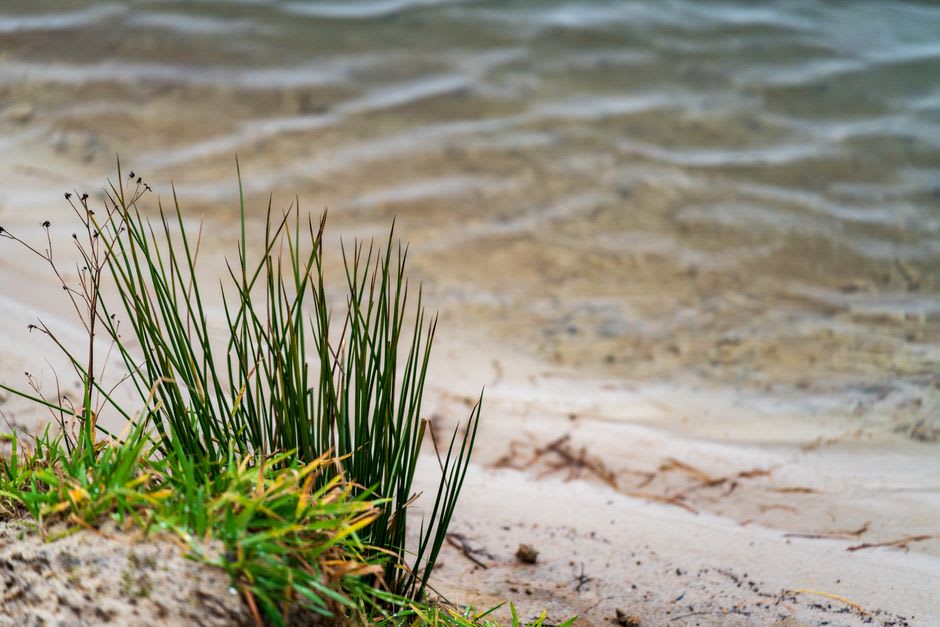
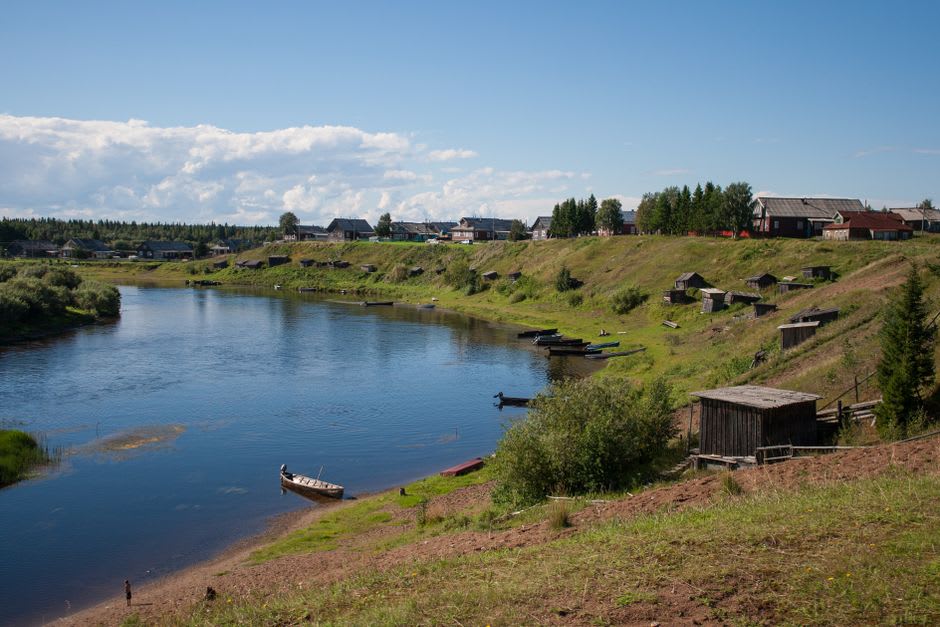
What I didn’t expect was the smell of sulfur drifting over the water near the Dagarskie hot springs, further along the shore. We hiked in on a rough path through larch trees to find a handful of wooden pools fed straight from the ground, steaming even in July heat, with a couple of local families already soaking and passing around a thermos of tea. Lia and I sat in the hottest one until our skin went pink, then walked straight down and dropped into the bay to cool off — hot spring to lake and back again, over and over, until neither of us could tell if we were relaxed or just boiled. Nearby, small fishing settlements sit along the coastline, nets drying on wooden racks, wood smoke curling up from someone smoking omul over an open fire. We bought a fish straight off a rack from a woman who barely looked up from her work, still warm, and ate it sitting on driftwood with our fingers.
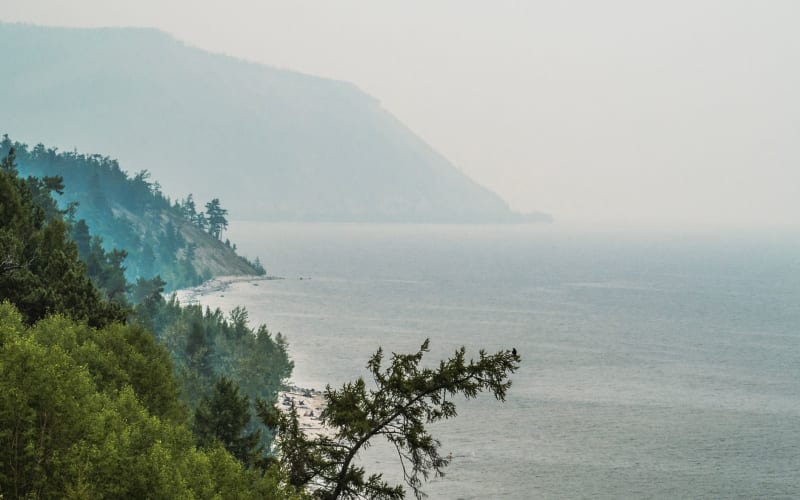
The bay is also the jumping-off point for hikes up onto Svyatoy Nos itself, and we did a short one from a boat camp near the shore, more birdwatching than climbing — herons, terns, and something Lia insisted was a white-tailed eagle circling far above the ridgeline. Zabaikalsky National Park protects the whole area, and it shows: no crowds, no infrastructure beyond a few camps and boats pulled up on gravel beaches, just the sense that this corner of Baikal has been left mostly alone. We camped one night on the shore, ate more fish, and fell asleep to water that, for once on this lake, didn’t sound cold.
When to go: July and August are the months to aim for — the water is at its warmest for swimming and the weather is steady enough for boating and camping without the bay turning on you.
Keep exploring
More from Lake Baikal
 lake-baikal
 Circum-Baikal Railway
A hundred kilometers of tunnels, viaducts, and cliffside track that engineers carved from solid rock along Baikal's southern shore in the early 1900s.
Explore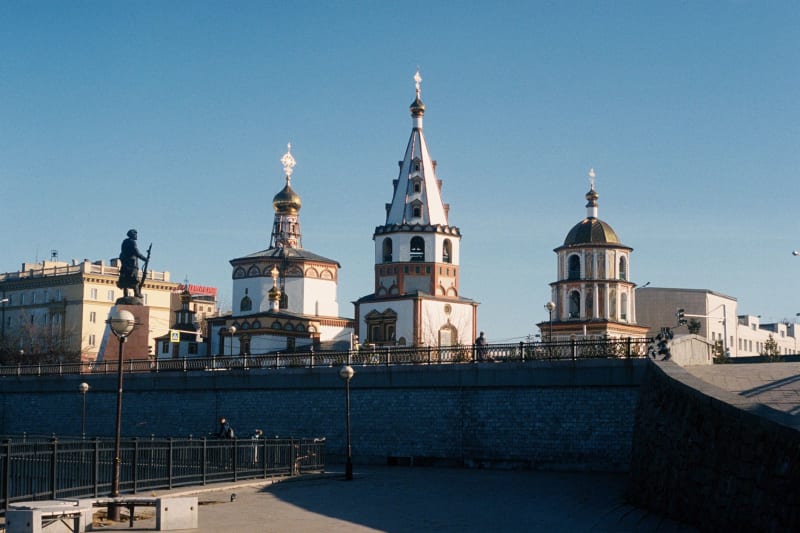 lake-baikal
 Irkutsk
Siberia's most civilized city, where exiled Decembrists built carved wooden mansions and the Trans-Siberian Railway still runs through the center of town.
Explore lake-baikal
 Listvyanka
The first place Baikal hits you — a village of smoked fish and wooden houses at the edge of the world's deepest lake.
Explore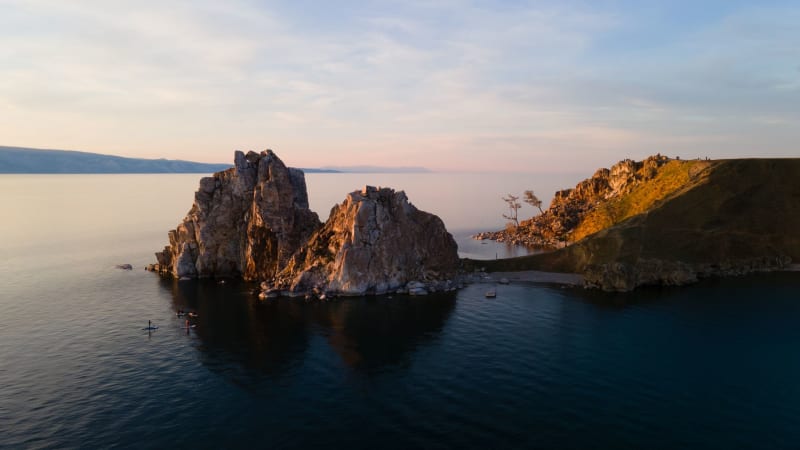 lake-baikal
 Olkhon Island
Baikal's largest island is a place Buryat shamans have considered sacred for centuries, and after two days here you start to understand why.
Explore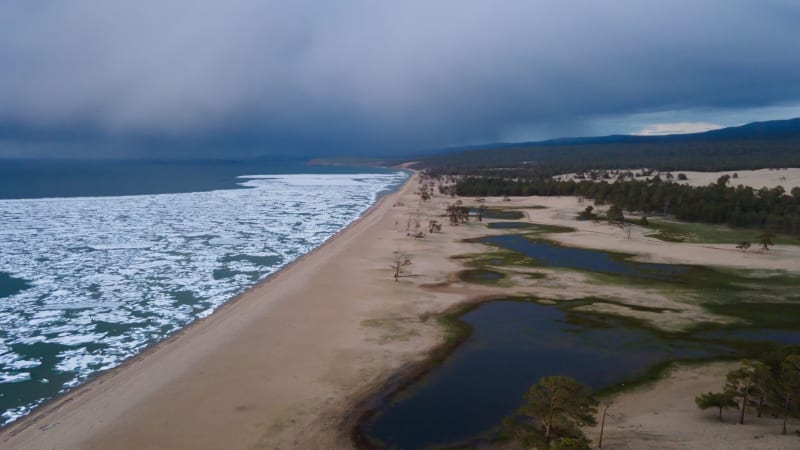 lake-baikal
 Peschanaya Bay
A crescent of pale sand on Baikal's western shore where wind-sculpted pines stand on stilts of exposed root, reachable only by boat or a long walk through the taiga.
Explore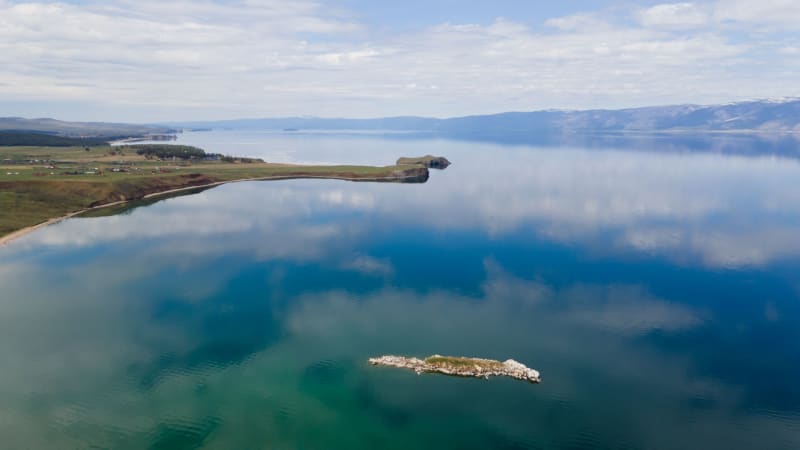 lake-baikal
 Severobaikalsk
A Soviet-era railway town at Baikal's northern tip where the BAM line ends and the wilderness begins in every direction.
Explore