Mutla Ridge
"From up here, Kuwait looks infinite. You understand why the Gulf has always been worth fighting over."
Kuwait is not supposed to have hills. It is a country defined by its flatness — the logic of its geography is horizontal, tending toward sea level, the desert floor barely rising above the Gulf it drains toward. So when the road north climbs toward the Mutla escarpment, the surprise is genuine and slightly absurd. I kept thinking: this is a hill. An actual hill. In Kuwait. The elevation is modest by any reasonable standard — maybe 145 meters at the ridge — but in a landscape where the highest points are usually construction cranes, it feels significant. And then you reach the top, and the view opens in a way that takes a moment to process.

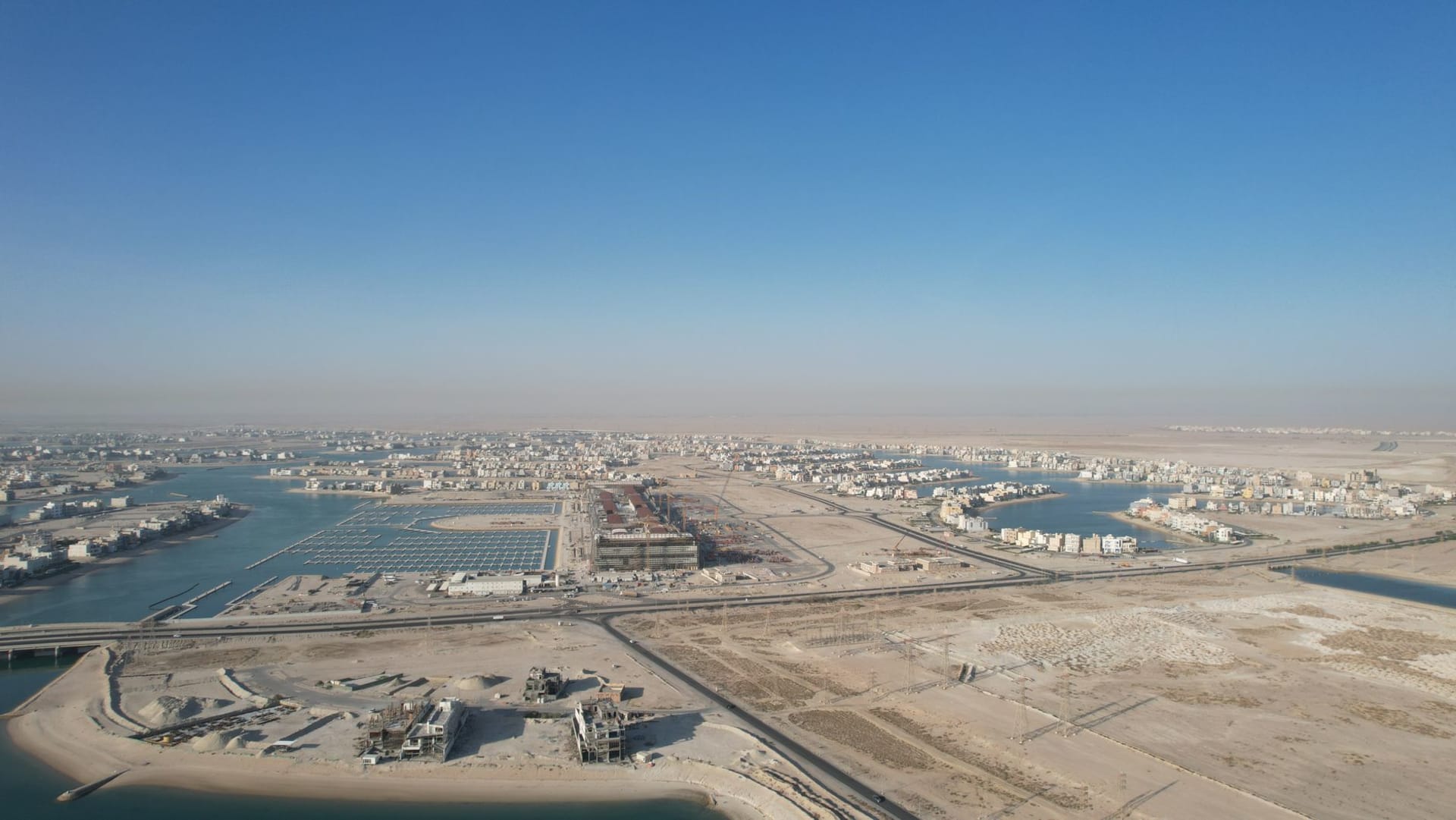
Kuwait Bay spreads below in a great arc, its water shifting from pale green near the shore to deep blue further out, the skyline of Kuwait City visible on the far southern edge. Bubiyan Island — flat, uninhabited, a strategic puzzle the country has been debating for decades — sits to the northeast. The desert extends in every other direction, interrupted only by the ribbon of Highway 80 that runs at the base of the escarpment. That road is why Mutla Ridge carries a weight that goes beyond the view.
In the last days of February 1991, Iraqi forces retreating from Kuwait City along Highway 80 were caught and destroyed by coalition aircraft in what became known as the Highway of Death. Burned-out vehicles stretched for kilometers. The photographs circulated worldwide. The military effectiveness of the attack was not really in dispute; what was contested was the morality of it — whether retreating soldiers, some reportedly also having looted the city, constituted legitimate military targets. Standing on the ridge and looking down at the highway, which today is unremarkable, just four lanes of traffic moving between Kuwait City and Basra, I found myself thinking about the gap between what you can see from up here — the totality of the landscape, the strategic logic of the position — and what was happening down there on those particular days. The view from altitude always abstracts things. That is its power and its problem.

In winter evenings, people drive up to the ridge to watch the sun set over the bay, sitting on the hoods of their SUVs with thermoses of coffee. Families set up picnic mats on the gravelly slope. Someone is always flying a kite. It is the most ordinary version of the place, and in some ways the most useful: a reminder that landscape holds history without being consumed by it, that the same view that carries the weight of 1991 also serves as somewhere to go on a Thursday evening when the air is cool and the light is doing something worth watching over the water.
When to go: November through March for comfortable temperatures and clear visibility across the bay. Sunset drives up to the ridge are best in December and January when the air is clearest and the Gulf light goes golden late in the afternoon. Avoid summer entirely — the ridge offers no shade and the heat is severe.