A 372-meter needle over Kuwait City, built through war and finished in defiance, best seen at dusk with the Gulf turning gold.
I’ll admit I got the two towers mixed up before we even landed. Lia had pulled up photos on the plane and kept flipping between them — “wait, is this the one with the balls, or the tall skinny one?” By the time we were standing at the base of Liberation Tower, craning our necks up 372 meters of concrete and steel, the confusion made sense to me: Kuwait City just has two skylines in one, the older Kuwait Towers with their sculptural, almost sci-fi silhouette a few kilometers away, and this one, older in conception but stranger in story.
Construction started before 1990, and then the Iraqi invasion stopped everything cold. I kept thinking about that while we waited for the elevator — a half-built tower sitting there through occupation and war, its future about as uncertain as it gets. It wasn’t finished until 1996, and by then it wasn’t just a telecommunications tower anymore, it was named for the liberation itself. You feel that history a little when you’re inside, even if nothing is spelled out on a plaque. It’s in the way the guides talk about it, almost proprietary, like the building earned its name rather than just wearing it.
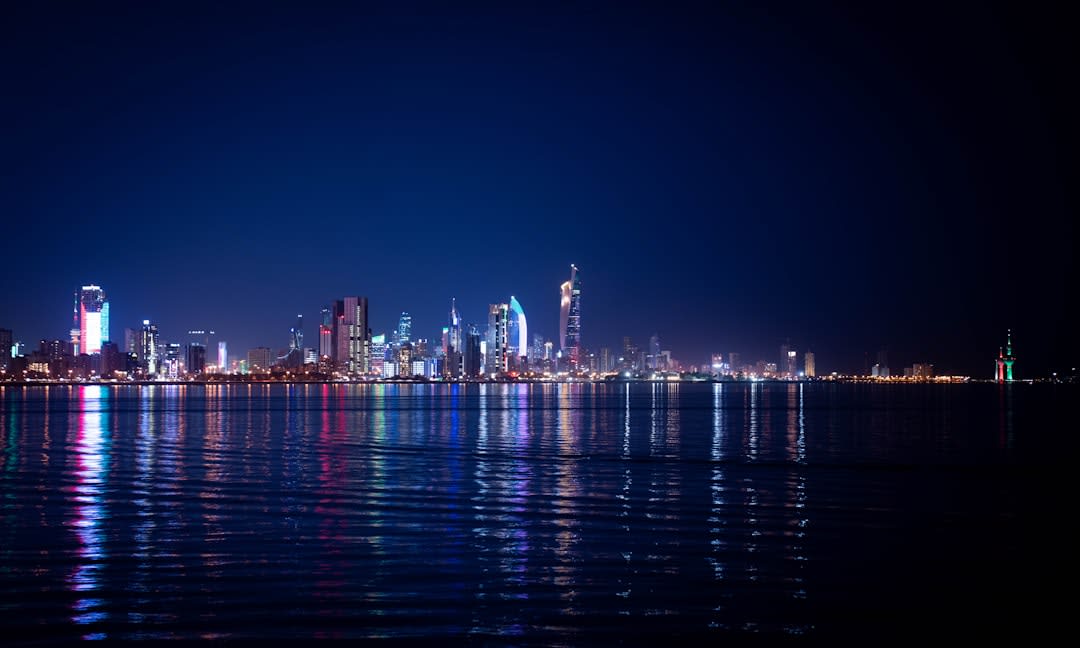
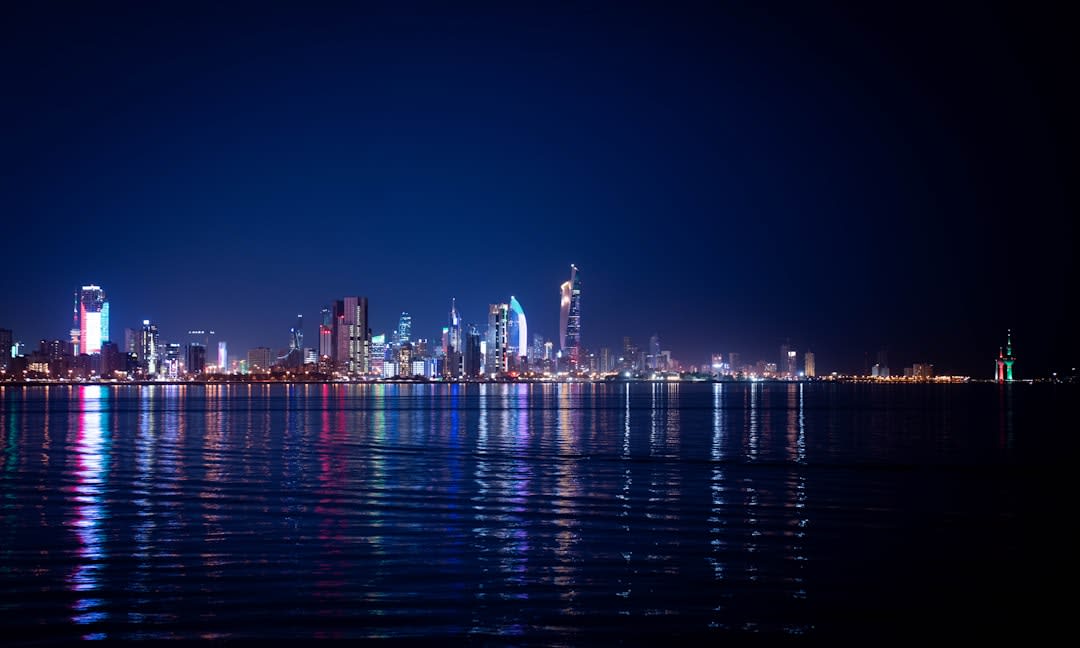
We went up in the evening, which I’d read was the move, and it absolutely was. The revolving restaurant does a full slow loop and Lia timed how long it took us to get through appetizers versus a full rotation — we lost that bet against the tower. What struck me more than the food was watching Kuwait City’s lights come up gradually against the darkening Gulf, the water still holding a strip of orange long after the sky had gone navy. From the observation deck below the restaurant, without a table or a waiter interrupting the view, you get an even wider, uncluttered stretch of the coastline and the older Kuwait Towers glowing in the distance like a punctuation mark to the skyline.
What I didn’t expect was how functional the place still feels underneath the tourism. The Ministry of Communications runs actual telecom equipment through the upper floors — this isn’t a monument dressed up as infrastructure, it’s infrastructure that happens to also be a monument. That mix is very Kuwait, I think: pragmatic and symbolic at once, nothing performative about it. We left with sore necks and Lia insisting we come back some winter evening just to eat slowly and watch the whole rotation this time, appetizer to dessert.
When to go: Aim for the cooler months between November and March, and save the visit for evening — the observation deck rewards you with a skyline that only really comes alive once the sun drops behind the Gulf.
Keep exploring
More from Kuwait
 kuwait
 Mubarakiya Souq
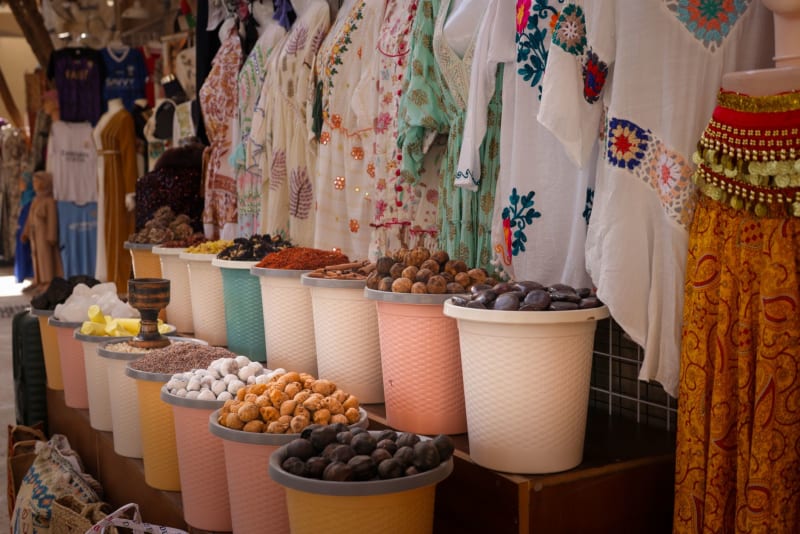
Kuwait City's oldest market, where the smell of dried lemon and oud smoke cuts through decades of relentless modernization.
Explore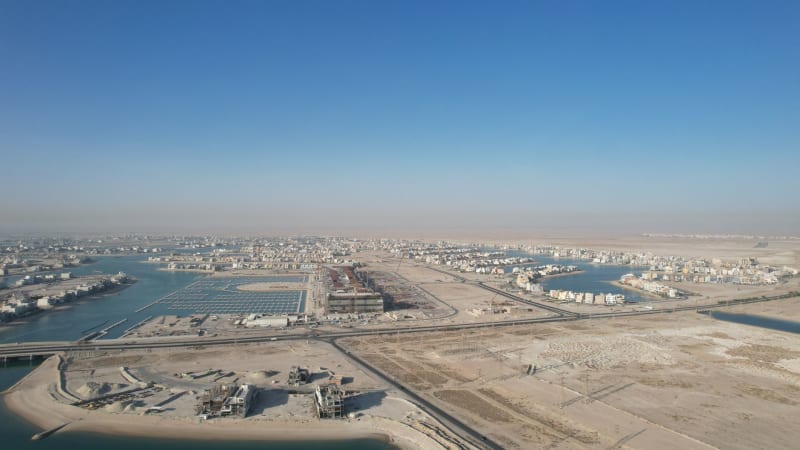 kuwait
 Mutla Ridge
Kuwait's only real hill — and from it you can see the Bay, the desert, and the ghost of a road that became infamous for the worst reasons.
Explore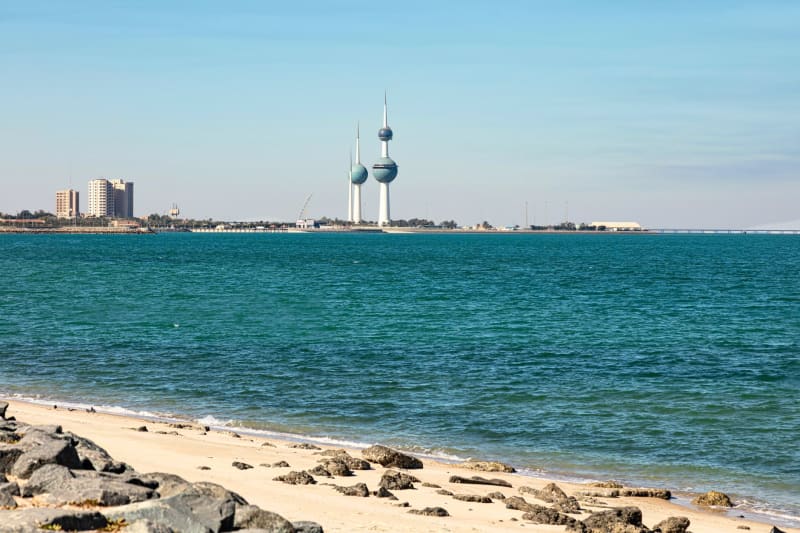 kuwait
 Rumaithiya
A residential eastern suburb where the machboos comes from a communal pot and the best seat is always already taken by someone who knows what they are doing.
Explore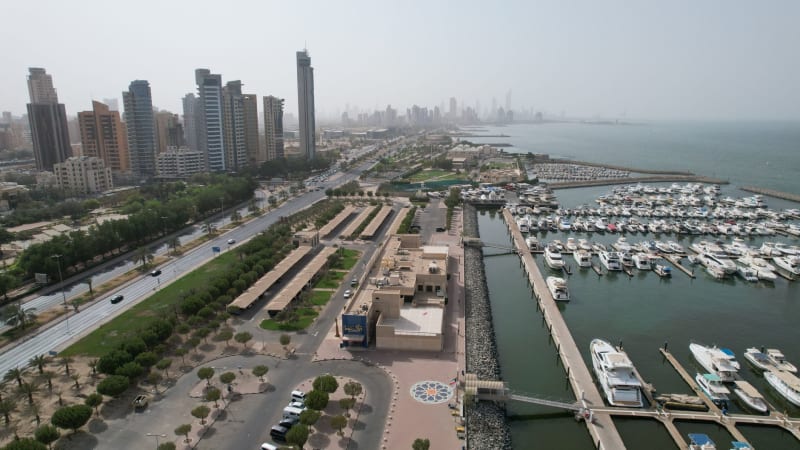 kuwait
 Salmiya
The Gulf Road neighborhood where Kuwait's immigrant majority runs the city's most honest restaurants at hours when the rest of the world is asleep.
Explore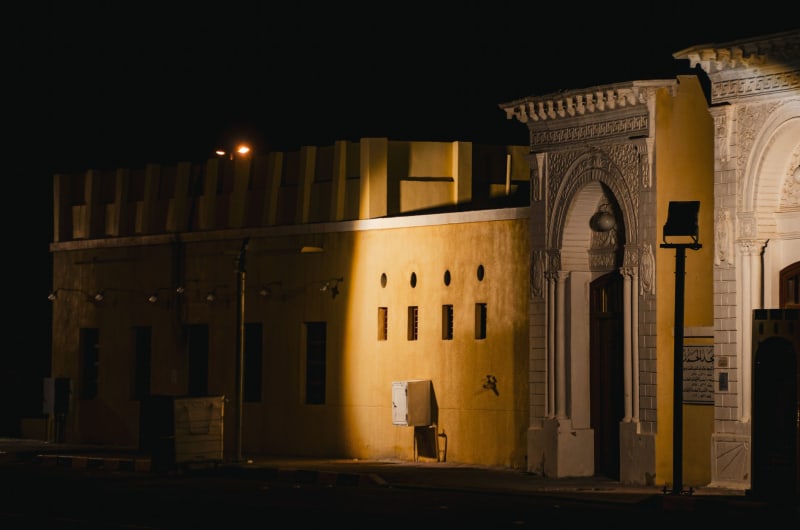 kuwait
 Al-Ahmadi
A British oil town frozen in the 1950s, where manicured lawns and bungalows sit on top of the world's largest hydrocarbon reserves.
Explore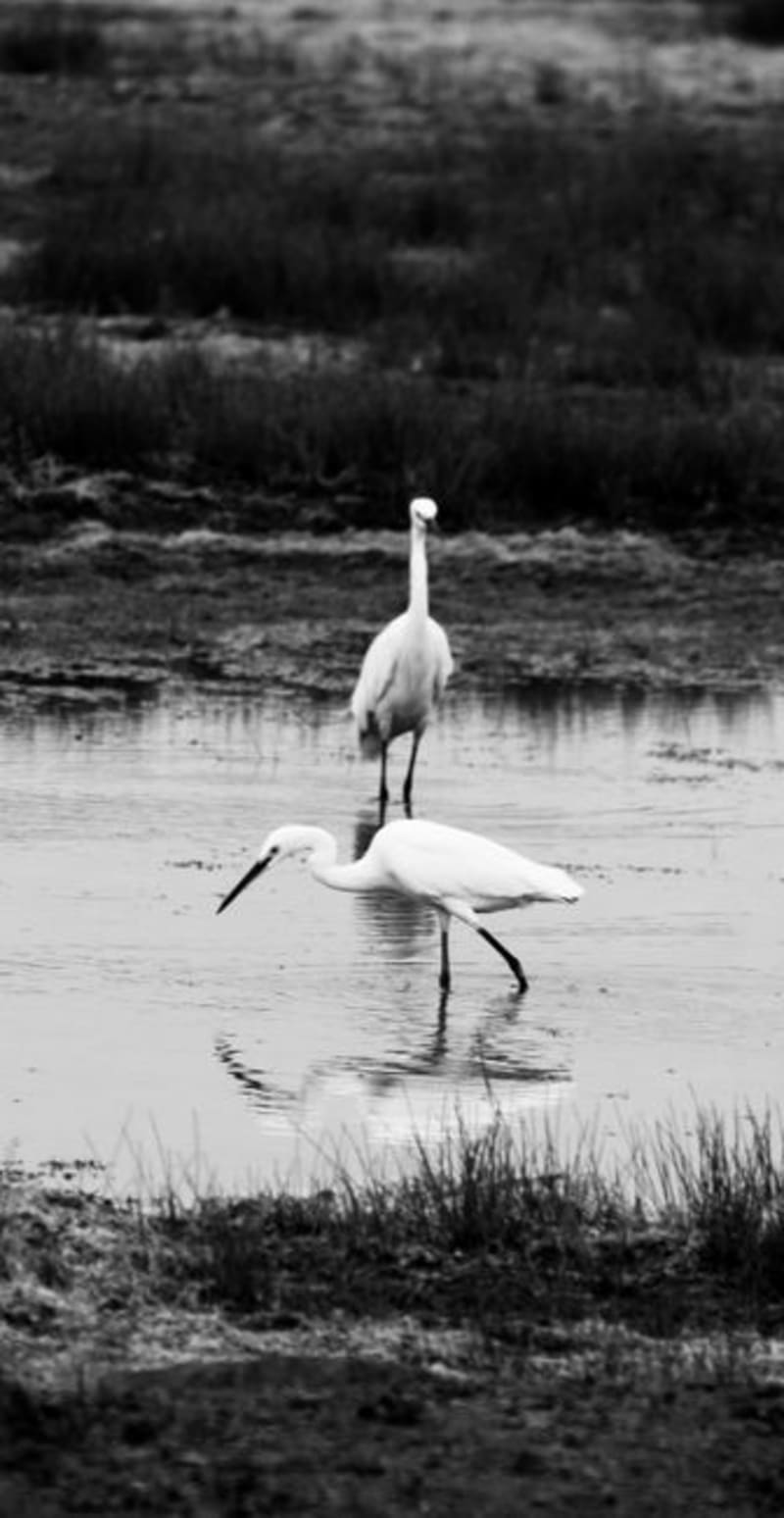 kuwait
 Bubiyan Island
A vast, uninhabited marshland at the edge of Kuwait, reachable by one of the world's longest sea bridges, ruled by tides and migrating birds.
Explore