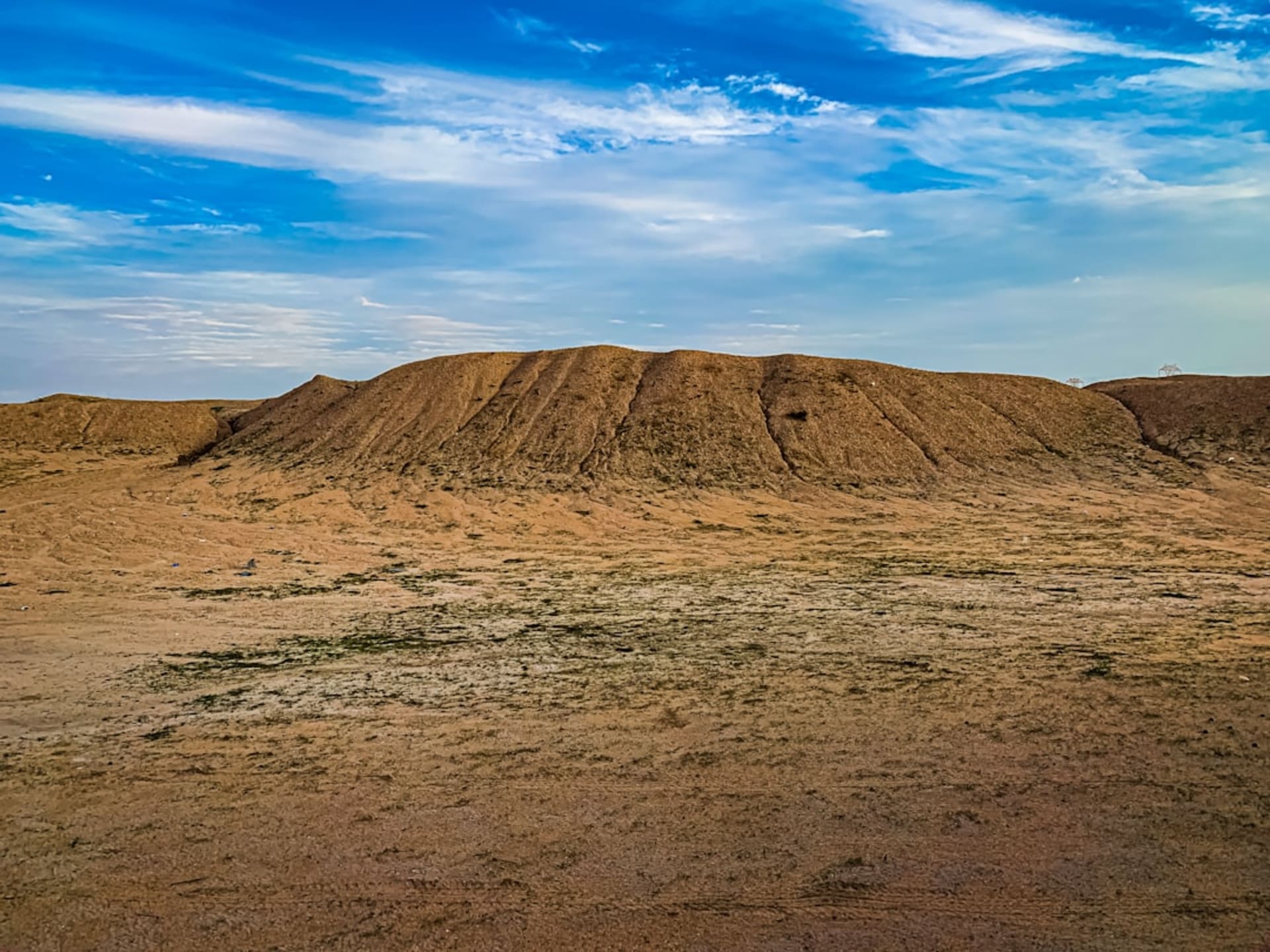
Bubiyan Island
"No hotels, no restaurants, no one waiting for you — just mud, sky, and wings."
A vast, uninhabited marshland at the edge of Kuwait, reachable by one of the world's longest sea bridges, ruled by tides and migrating birds.
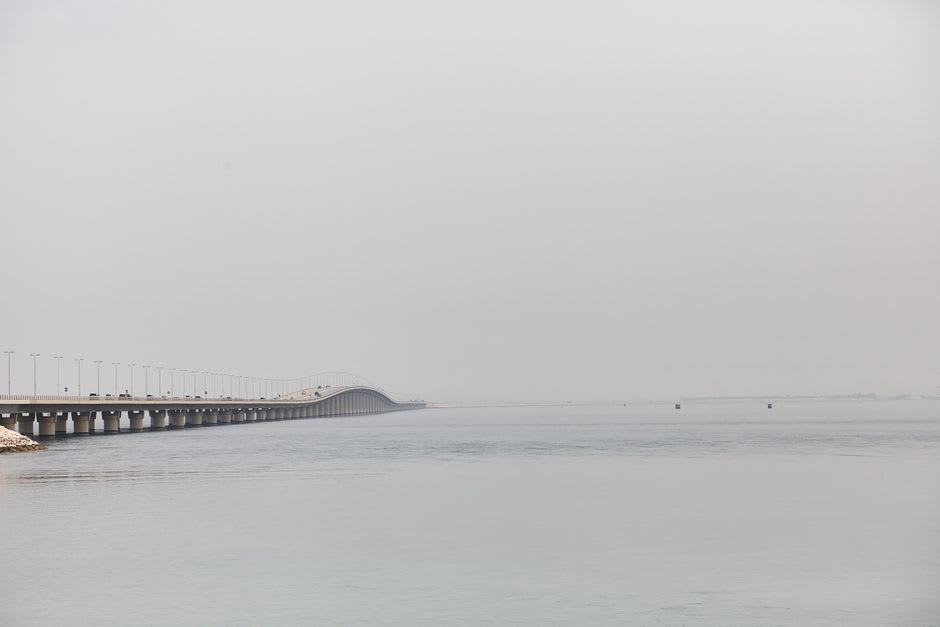
I’ll admit it took some convincing before Lia agreed this counted as a proper day trip. “You want to drive out to an island with nothing on it,” she said, not quite a question. But that’s exactly what pulled me toward Bubiyan in the first place — Kuwait’s largest island, and one where almost nobody lives. We crossed the Sheikh Jaber Al-Ahmad Al-Sabah Causeway in the early morning, windows down despite the heat already building, watching Kuwait Bay flatten out beneath us. That bridge alone is worth the drive; when it opened in 2019 it was one of the longest sea crossings anywhere, and gliding over all that water with barely another car in sight felt like crossing into somewhere the rest of the country had quietly forgotten.
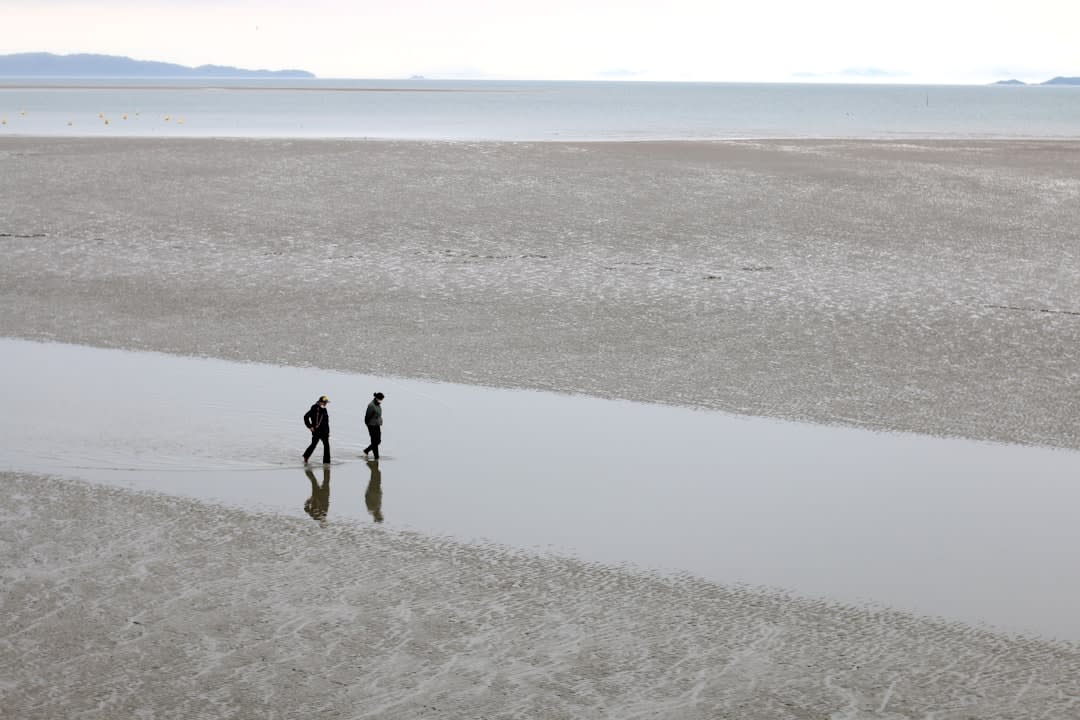
Once you’re actually on Bubiyan, there’s a strange flatness to everything — marsh, mudflat, salt flat, repeat, all the way to a horizon that never quite resolves into a landmark. We’d read that portions of the island sit near the Iraqi border and remain under military control, so we stuck to the areas we’d been told were open and didn’t push our luck trying to wander further. I liked that restraint, honestly. It made the place feel less like a sight to check off and more like something you’re a guest in.
What I wasn’t prepared for was the birds. We’d timed our visit for the tail end of the spring migration, and even from a distance you could hear it before you saw it — a low, constant murmur of waders working the tide line. Lia had brought a pair of binoculars she barely put down for two hours, calling out silhouettes faster than I could find them myself. Bubiyan sits directly on a flyway between Europe, Asia, and Africa, and standing there in the wind with mudflats stretching in every direction, it was easy to believe we were watching a fraction of something enormous passing through.
We ate lunch out of the cooler sitting on the tailgate, no shade for miles, and I remember thinking it was one of the quietest places I’d been since moving to this part of the world. No settlements, no noise, just the causeway behind us and the birds ahead. It’s not a place that gives you much to photograph in the traditional sense — no ruins, no skyline — but I’ve kept coming back to those two hours in my head since.
When to go: The spring and autumn migrations are when Bubiyan really comes alive, but this isn’t a place you show up to on a whim — access is restricted, so plan the visit and any necessary permissions well ahead of time.