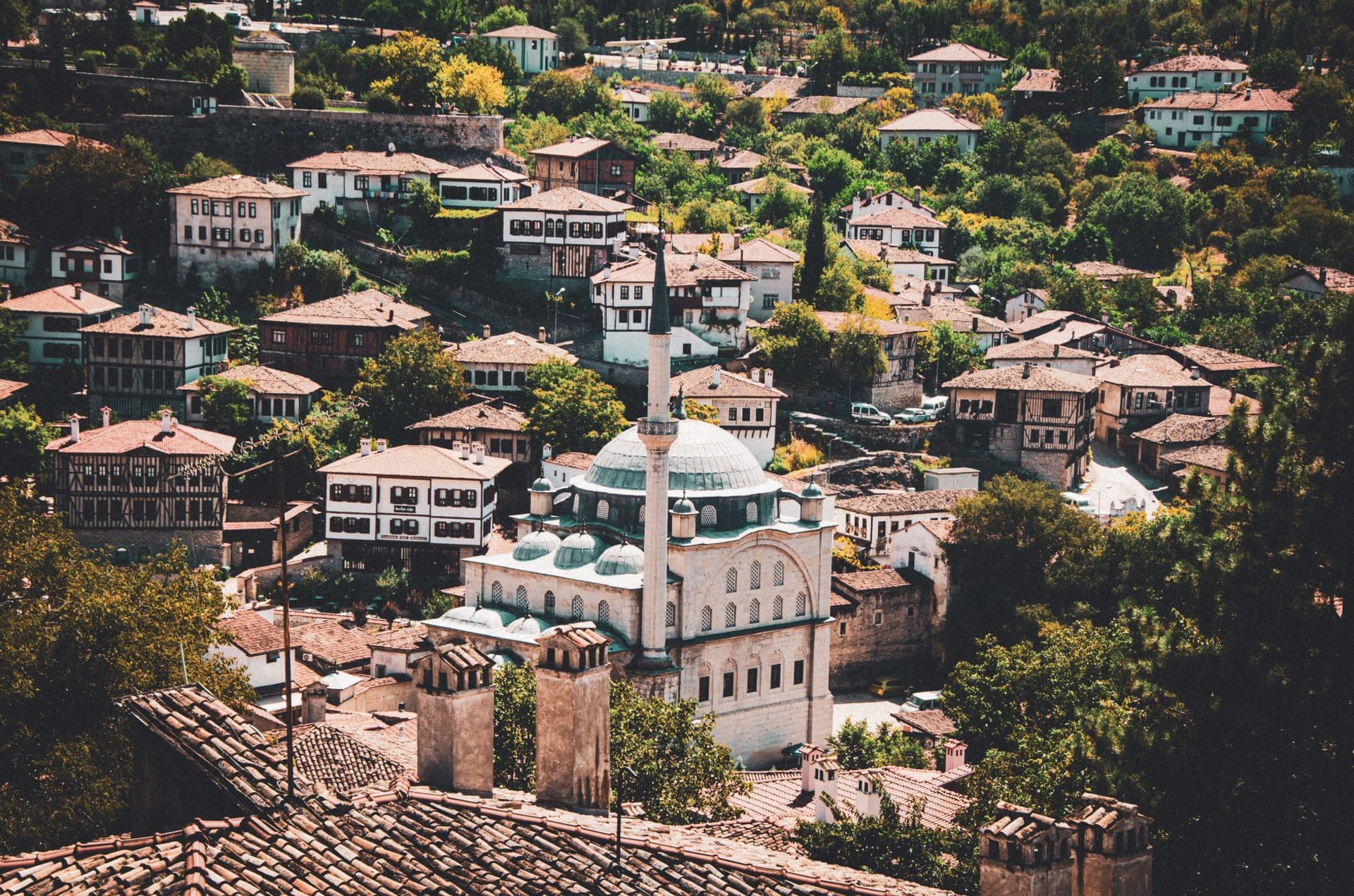
I came down from the hill in the late afternoon, the fortress ruins at my back, the whole of Prizren arranged below me like something a careful set designer had assembled over several centuries. The Bistrica River caught the light. The Sinan Pasha Mosque’s minaret drew a thin vertical line against a sky going pink and orange. Somewhere below, in the maze of the old bazaar, someone was grilling meat, and the smoke drifted up to where I stood and made it impossible to leave.
Prizren is Kosovo’s most visited city, which tells you something about what the competition looks like — or rather, what Prizren’s own quality looks like, because other places would kill for what this town has found a way to preserve. The Çarshia, the old bazaar, still functions as a bazaar: butchers and bakers and metalworkers and cafés all pressed into narrow lanes that wind uphill toward the mosque. I ate burek here three mornings in a row, the same bakery each time, stuffed with feta and spinach and still warm from the oven, eaten standing at the counter with a bottle of cold yogurt drink on the side.
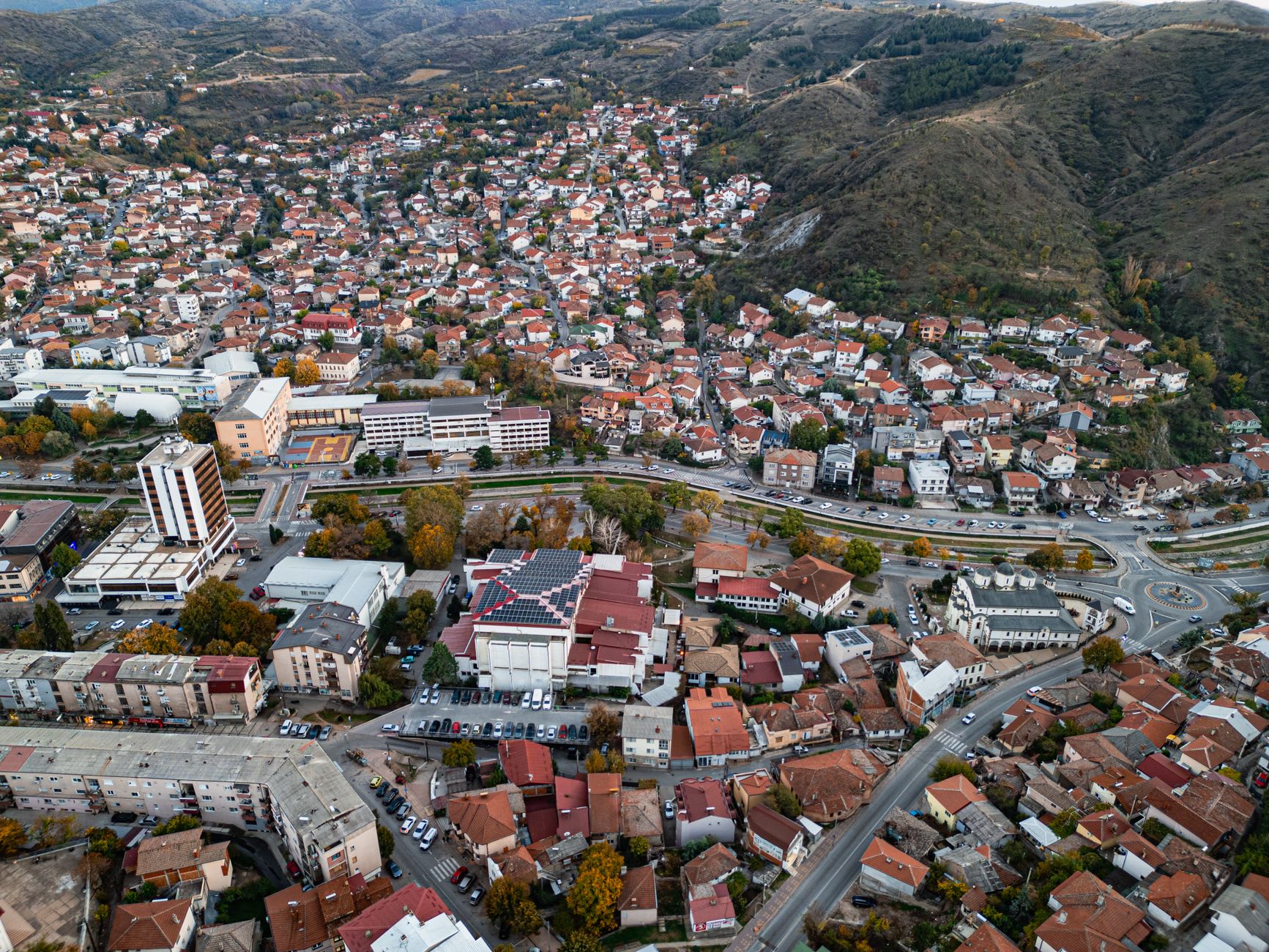
The Bistrica runs right through the heart of old Prizren, and the riverbank is where the café culture concentrates with an intensity that borders on religion. Plastic chairs face the water, espresso arrives quickly and without ceremony, and the ritual of sitting and watching and doing absolutely nothing productive is treated with appropriate seriousness. The Ottoman stone bridge — slightly irregular, worn smooth by centuries of foot traffic — connects the two halves of the bazaar and has been doing this job for so long that it no longer needs explaining. You walk across it without thinking. That is how a good bridge works.
Up at the Kalaja fortress, reached by a steep path through the old neighborhood, the reward is the panorama: red roofs, minarets, the course of the Bistrica through the city, the green hills closing in on all sides. I arrived before the day hikers and had the whole thing to myself for twenty minutes, which was enough time to understand why people who visit Prizren rarely manage to leave on schedule. The League of Prizren museum below — the 1878 Albanian national assembly that convened here — is worth an hour, small and earnest and weighted with the specific pride of a people who know this was the beginning of something.

At night, Prizren belongs to its café culture in a way that would embarrass most European cities. The Marash neighborhood, a short walk from the center, has older rhythms: stone walls, fig trees, a sense that this part of the city has been having the same slow conversation for several centuries and is in no rush to conclude it. I stayed there both evenings until the last call to prayer rolled across the rooftops and turned the air into something worth breathing slowly.
When to go: May through June and September are ideal — warm enough to sit outside all evening, cool enough to walk uphill without suffering. Dokufest in August draws documentary filmmakers from across the region and turns the town pleasantly chaotic. Winter quiets Prizren down to something intimate and local, which has its own appeal.