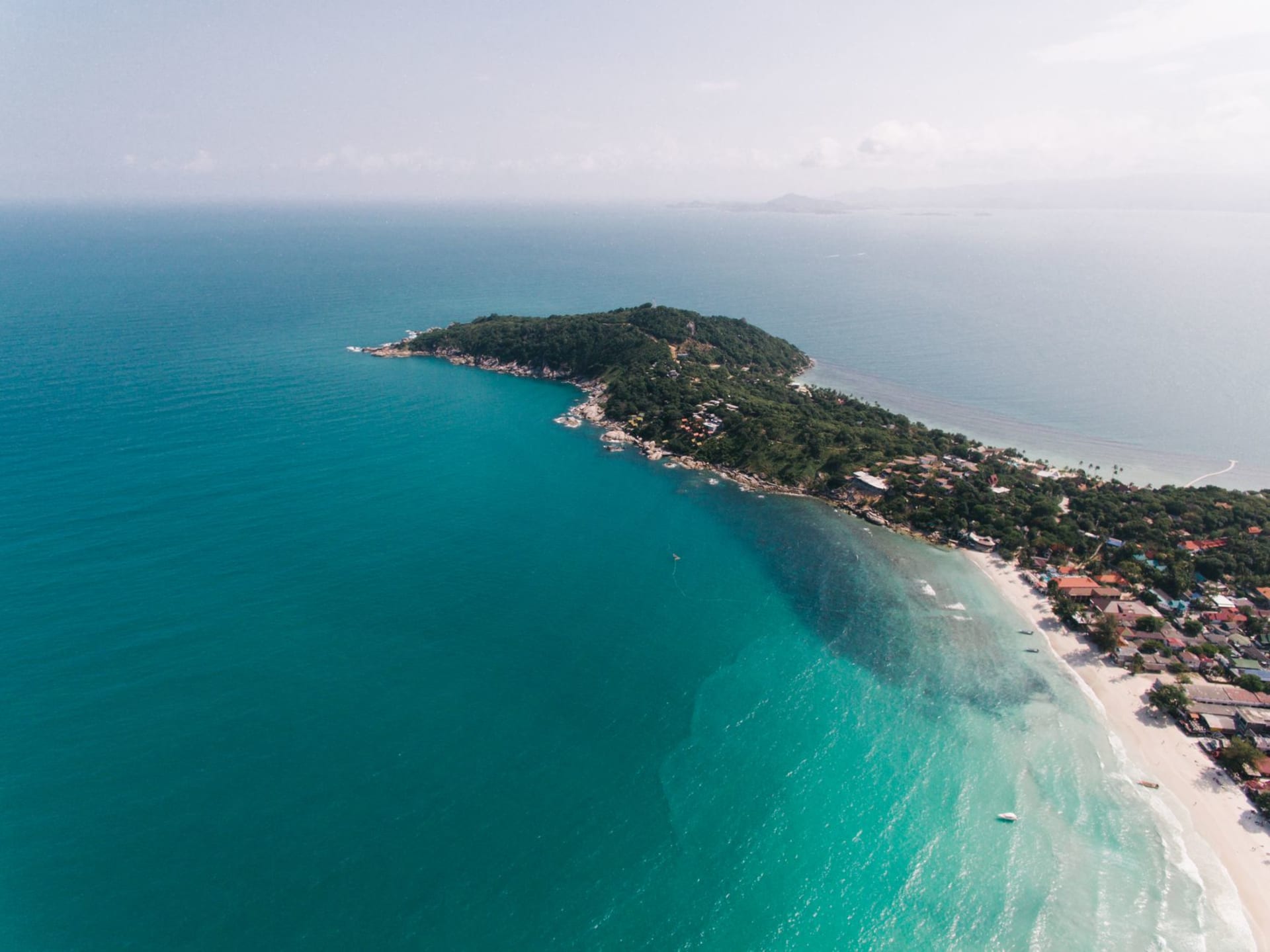
Choeng Mon Beach
"The water at Choeng Mon is so shallow at low tide that you can walk fifty metres out and it barely reaches your waist — the island in a more patient mood."
I found Choeng Mon on the third day, by riding north past the Big Buddha junction and following the coast road along the northeast tip of the island until the road narrowed and the traffic disappeared and the forest closed in on both sides. The beach appeared through a gap in the trees: a small crescent of pale sand, maybe eight hundred metres end to end, with a cluster of longtail boats pulled up on the flat tide and a pair of old men in straw hats playing checkers on a plastic table under a casuarina tree. I parked the bike and stood there for a moment, recalibrating.
Choeng Mon is what people mean when they talk about the Koh Samui that existed before the Koh Samui of infinity pools and Instagrammable pool villas. The beach is shallow — at low tide the water retreats so far that you can walk what feels like halfway to Ko Pha-ngan before it reaches your chest — and the sand is fine-grained and almost white. The three or four small resorts that line the back of the beach have the modest scale of places built in a different era, when a beach hotel was a row of bungalows facing the water and a fan and a breakfast of toast and eggs and you were already ahead of the game. I stayed two nights in one of them and both mornings I woke to the sound of birds rather than music.

The village at the northern end of the beach has a fresh market every morning — not a tourist market, an actual market, where the fishermen bring what they caught and the women from the interior bring bundles of galangal and kaffir lime leaves and lemongrass tied with rubber bands, and where you can buy a bag of sticky rice and a piece of grilled chicken wrapped in banana leaf for twenty baht and eat it on a low wall by the road with the sea visible between the houses. I ate there both mornings, both times alone, both times the only farang in sight. There was a coffee cart too, proper Thai coffee in a plastic bag with a straw, sweetened with condensed milk the way it’s meant to be.
The water is excellent for swimming in a way that more famous beaches sometimes aren’t — the shallow gradient means there’s no sudden drop, no rip current, no pounding surf. Children from the village play in it in the late afternoons, older people wade in up to the knee and stand there watching the sunset with an air of profound ownership over the moment. The bay faces northeast and catches the first light early, so if you’re an early riser the beach at six in the morning has a quality of pink and gold that the more crowded beaches, with their noise and their infrastructure, have somehow lost.

There is almost nothing to do at Choeng Mon in the conventional sense. There is no nightlife, no shopping street, no row of cocktail bars. There is the beach, there is the market, there is a seafood restaurant at the southern end run by a family who grill whatever came in that day on a charcoal fire and charge prices that belong to a different decade of Thai tourism. I ordered a whole fish with garlic and pepper one evening and it arrived on a plate with jasmine rice and a small bowl of som tam and a cold Singha, and it cost less than a bottle of wine at the Chaweng beach clubs, and tasted considerably better.
When to go: Choeng Mon’s northeast-facing position means it catches the early-season tail of the northeast monsoon more directly than the east coast. The most reliable window is December through April. February and March are ideal — the weather is settled, the market is running at full speed, and the beach has just enough visitors to feel alive without feeling crowded.