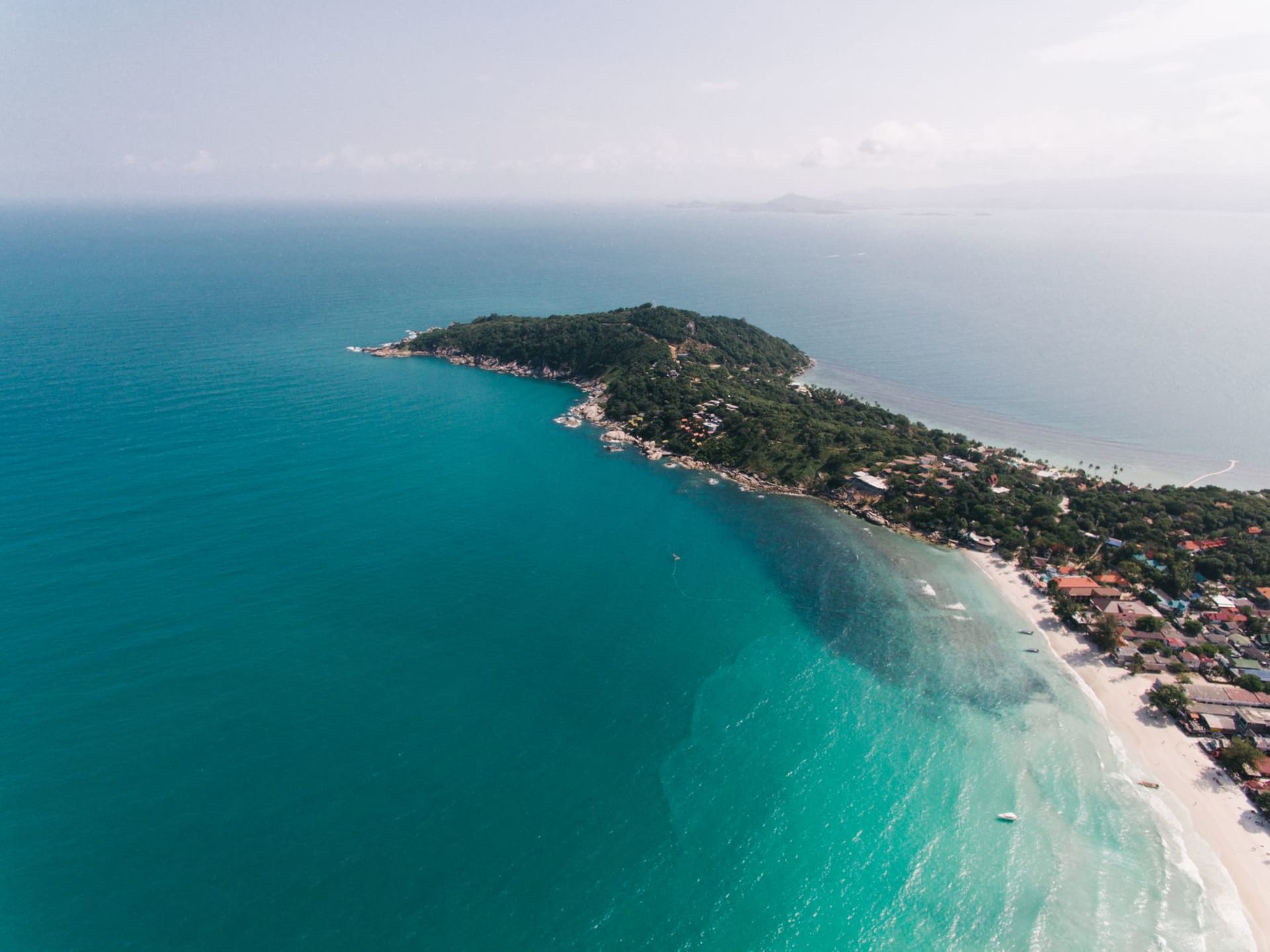
Chaweng Beach
"Everyone told me to skip Chaweng. I went anyway, at six in the morning, and found myself completely alone on the most beautiful stretch of sand on the island."
The thing about Chaweng is that it belongs to different people at different hours. By midday it belongs to the tour groups and the bucket cocktails and the jet ski touts who circle the shallows like they are conducting a territorial survey. By midnight it belongs to the open-air bars with music bleeding into each other. But at six in the morning — before any of that, before the rental shops have raised their shutters, before the massage ladies have spread their mats — Chaweng belongs to nobody, and the sand is white and fine and the water is a shade of green that makes no practical sense, and you understand immediately why people came here in the first place.
I had been warned off Chaweng by everyone I met in the north of the island. Stay in Bophut, they said, or Mae Nam. Chaweng is finished. Chaweng is the airport duty-free version of Thailand. I took their advice for four days and then drove down on the motorbike at dawn purely out of stubbornness, and I sat at the water’s edge for an hour watching the light move across the Gulf of Thailand and I thought: they were not wrong, but they were only half right. The beach itself is magnificent. The beach is not the problem.

The back of Chaweng — the grid of small streets behind the main beach road — holds a different version of the place. There is a covered market that wakes up around eight where you can eat pad kra pao with a fried egg on top for less than a dollar. There are Thai barbershops next to ageing internet cafes next to Buddhist shrines with garland offerings changed every morning. A seamstress who works from a cart has been there, by all appearances, since before the resort boom began. The locals who live and work here are not invisible, they are just competing for visual attention with a thousand neon signs, and if you slow down you start to see the neighbourhood underneath the spectacle.
The north end of Chaweng Beach tapers into a quieter cove where the large hotels have not yet planted themselves, and the water there is shallower and calmer. Kids from local families come in the late afternoon. A woman sells fresh coconuts from a cooler. The longtail boats that earlier in the day were ferrying parasailers come to rest at the sand, their drivers eating rice from styrofoam boxes in the hulls.

I ended up eating at Chaweng three times — twice at the market behind the strip, once at a small Thai restaurant where the owner was watching a football match and barely acknowledged my arrival, which I always take as a good sign. The tom yum was electric, the kind where the lemongrass is bruised hard and the galangal is not a suggestion but a declaration. There were four tables. None of the menus had photographs. These are the only credentials that matter.
When to go: December through February is the most comfortable window — dry season, manageable heat, and the sea is calm enough for swimming the whole length. Come in the shoulder months of March and April for thinner crowds without giving up the good weather. If you want the beach to yourself, set your alarm.