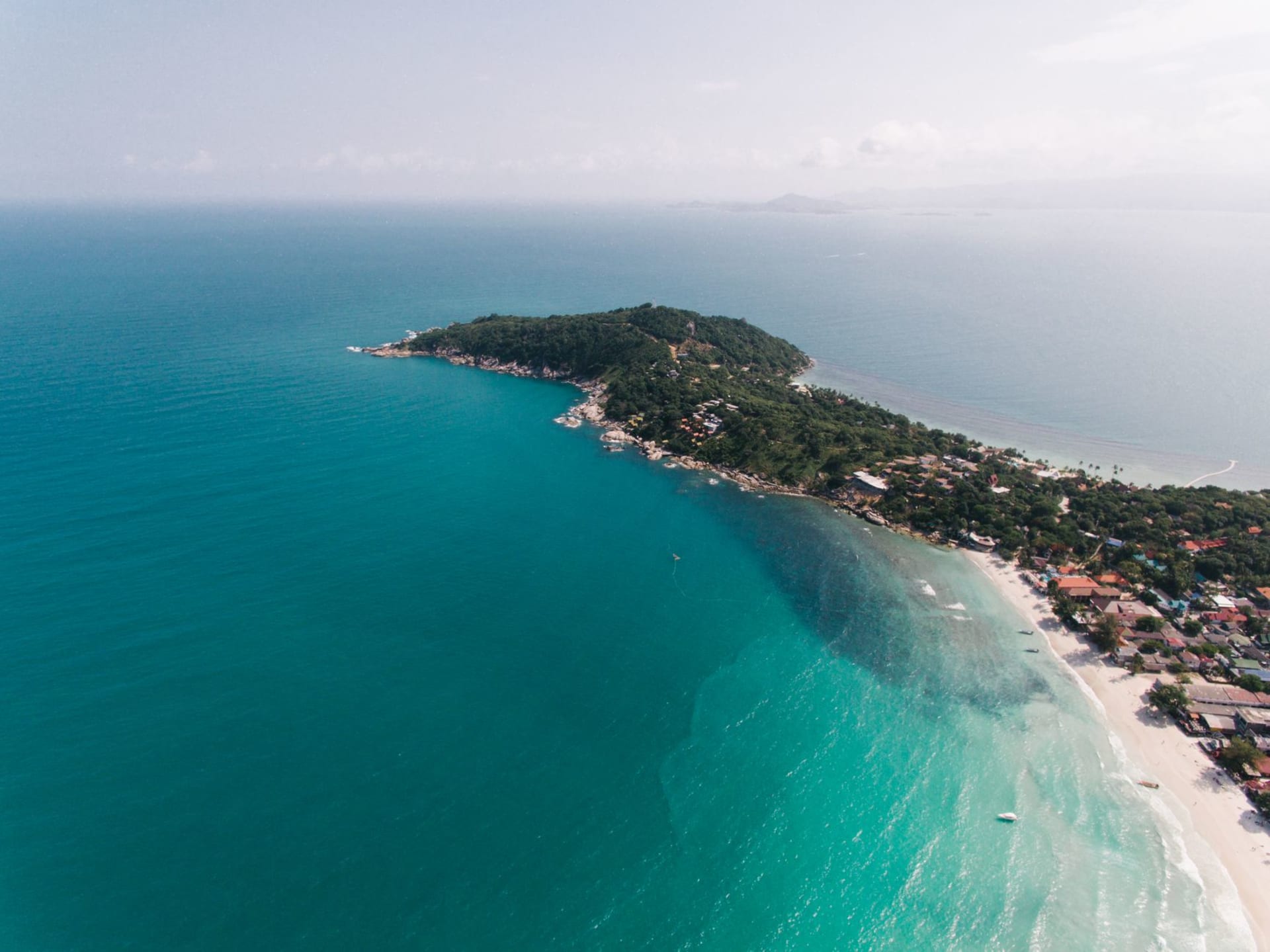
Chaweng Beach
"At six in the morning, Chaweng is the most beautiful beach in Thailand. By noon, it is something else entirely."
I made the mistake of arriving at Chaweng Beach at two in the afternoon on a Tuesday in January, and it took me three days to forgive myself. The beach strip was wall-to-wall sun loungers rented by the hour, jet skis cutting arcs through the green water, touts with laminated menus pressing them into my hands before I’d taken three steps. I retreated to the guesthouse, turned on the fan, and decided to recalibrate.
The recalibration happened at five-thirty the next morning. I was out the door before the coffee shops had opened, walking down to the sand in the grey-pink light before sunrise, and what I found was a completely different beach. The longtail boats were anchored in the shallows at oblique angles, their painted bows catching the first color from the east. A woman was walking her dog along the waterline. A monk in orange robes crossed the road behind me. The four kilometers of white sand ran in a clean arc and there was almost no one on it. The water, without the jet ski noise, made a soft sound against the shore that I hadn’t expected.

Chaweng is the commercial spine of Koh Samui and there is no pretending otherwise. The main strip behind the beach is a corridor of 7-Elevens, tattoo parlors, Irish bars, seafood restaurants with live tanks out front and tuk-tuk drivers who know every shortcut and every overpriced shortcut simultaneously. There is a genuine energy to it, the kind of compressed tourism infrastructure that only works when everything is moving at speed. The night market that sets up along the road toward the southern end is worth the chaos — grilled corn rubbed with chili butter, mango sticky rice in plastic cups, a row of fried chicken stalls where the queue is entirely Thai school kids and that is always the best possible sign.
The beach itself, separated from this machinery by a narrow strip of resort gardens and beach bars, is longer and wider than it looks in photographs. Walk north past the main cluster of sun-lounger territory and the beach opens up, the crowds thin, and you find stretches where the sand is firm and pale and the coconut palms lean over the water at the specific angle that makes you feel like you are inside a postcard. I swam there most evenings just before sunset, the water still warm from the day’s heat, and for twenty minutes at a time I could remember why people had been coming to this beach for fifty years.

The eating around Chaweng rewards patience. The obvious restaurants along the strip are expensive and unremarkable. Walk two streets back from the beach into the residential blocks and you find the places where the staff from all those resorts go on their days off — proper southern Thai food, the kind with the turmeric-yellow curries and the fish fried crisp with garlic and the green papaya salad that comes with a side of fermented crab if you ask and know to ask. A bowl of boat noodles from the lunch stall near the roundabout runs about forty baht and tastes like it took all morning to make, because it did.
When to go: December through February is peak season at Chaweng for good reason — clear water, reliable sun, and the island at its most vivid. Come in the first week of December before the Christmas crush and you get the best of both: good weather and manageable crowds. Avoid October and November entirely; the northeast monsoon hits this coast hard.