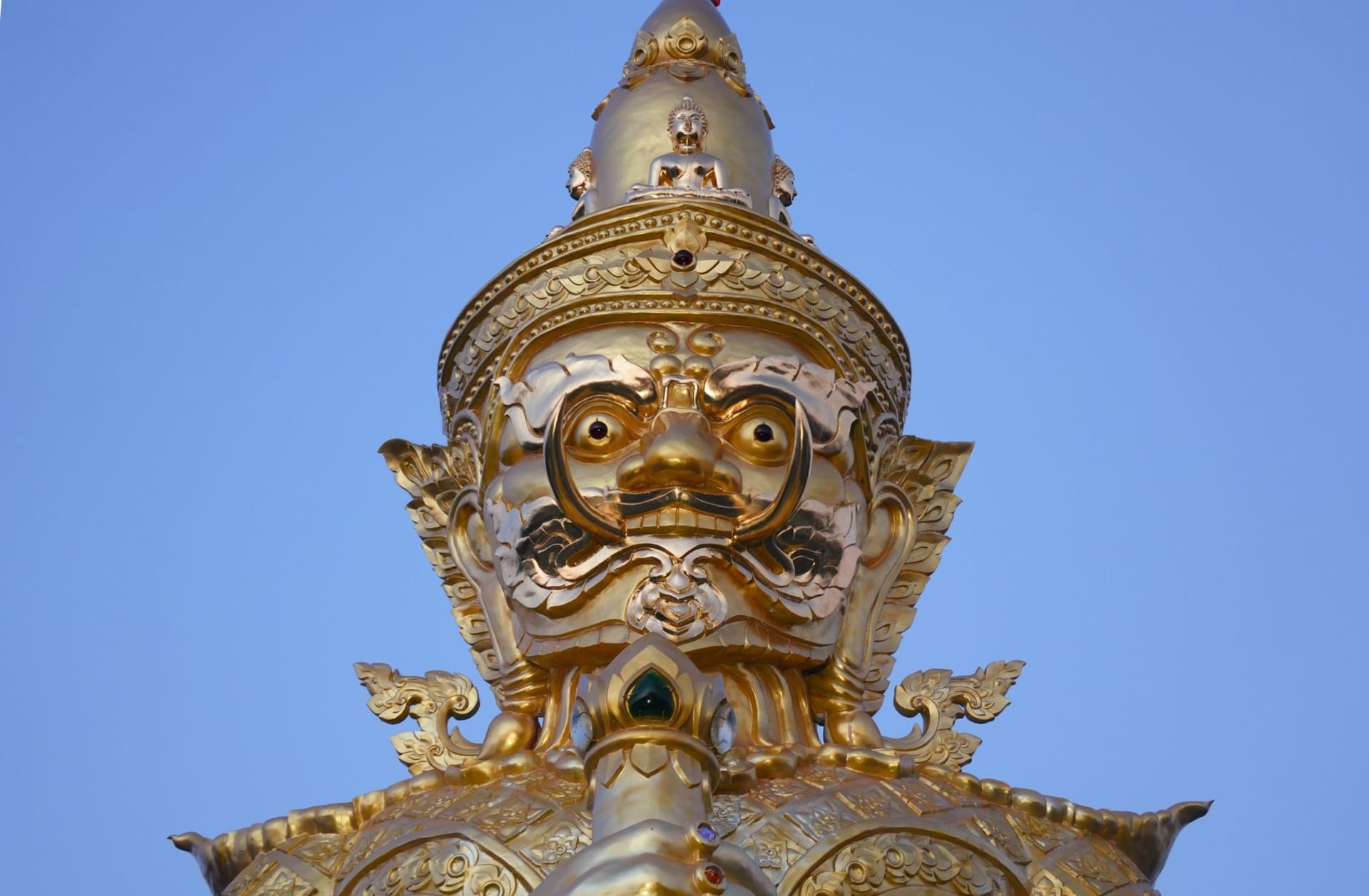
Big Buddha Temple (Wat Phra Yai)
"At six in the morning, just the monks and the incense and the Gulf of Thailand laid out below — that statue earns its size."
The Big Buddha is connected to the northeast corner of Koh Samui by a short causeway, and you can see it from the coastal road long before you arrive — a golden figure seated in the lotus position on top of a white stepped platform, rising about twelve metres above the small island it occupies. On any day between ten in the morning and four in the afternoon, the causeway and the stairs leading up to the temple are crowded enough that you experience it primarily as a logistics problem. At six in the morning, when the monks are finishing their chanting and the first light is coming off the Gulf, you understand what the thing is actually about.
I went twice: once at the wrong time, mid-morning on a Tuesday, when the vendors selling garlands and incense and miniature Buddha statues occupied every inch of the approach and a tour group from Chaweng was making its way up the stairs with the focused enthusiasm of people who have scheduled forty-five minutes for this. And once at dawn, after sleeping badly in a guesthouse in Bophut and deciding to drive north on the motorbike before breakfast rather than lie there being awake. The second visit was a completely different place.

The temple complex around the base of the statue is more interesting than first impressions suggest. There are smaller shrines set into the platform walls, each with its own set of offerings — jasmine garlands going brown at the edges, incense sticks burned to stubs, small figurines of varying religious coherence. A donation box that has been there long enough to have its own worn path in the tiles in front of it. Behind the main platform there is a meditation hall with no tour group presence, cool and dim, where a monk was sitting in complete stillness when I passed through. I stood in the doorway for a moment longer than was probably polite.
The view from the upper platform is the practical argument for coming. The Gulf of Thailand extends north from the temple’s feet, flat and silver in the morning and deepening to blue by nine. You can see the profile of Ko Pha Ngan on clear days. On the beach below the causeway, fishing boats return with the night’s catch while their catch is transferred to motorbike-mounted coolers and distributed before the town wakes up. All of this is visible from the same vantage point that the Buddha has been occupying since 1972.

The stalls along the causeway, which feel invasive mid-morning, take on a different quality in the early light. The vendors are setting up — arranging their garlands, lighting incense to start their own day — and the smell of fresh jasmine and sandalwood is clean and deliberate rather than commercial. One woman was making garlands from scratch: a long green thread, white flowers threaded one by one, her hands moving with a speed that made the whole process look meditative. I bought one and left it at the offering table, which felt like the right thing to do.
When to go: Arrive between sunrise and eight in the morning if you want the temple to yourself — or something close to it. The standard tourist hours of ten to four are genuinely crowded. Dress modestly: shoulders and knees covered, which the garland vendors will remind you of in the unlikely event you forget. The temple is open year-round.