Nonouti
"The maneaba at Nonouti has posts that were set before any living person can remember. The building thinks longer than we do."
Getting to Nonouti requires a form of patience that I had to consciously practice. The boat from Tarawa — the MV Nei Matangare, a government inter-island vessel whose schedule is a set of intentions rather than a timetable — was delayed by two days for reasons that were explained to me in I-Kiribati and that I understood to mean something had broken and would shortly be fixed. I spent those two days in Betio near the port, eating at a canteen, watching the harbor, and learning how to stop looking at my phone every twenty minutes when there was nothing on it worth checking. By the time the boat left, on a blue evening with the western sky doing something spectacular over the lagoon, I had already started to let go of the schedule I’d arrived with.
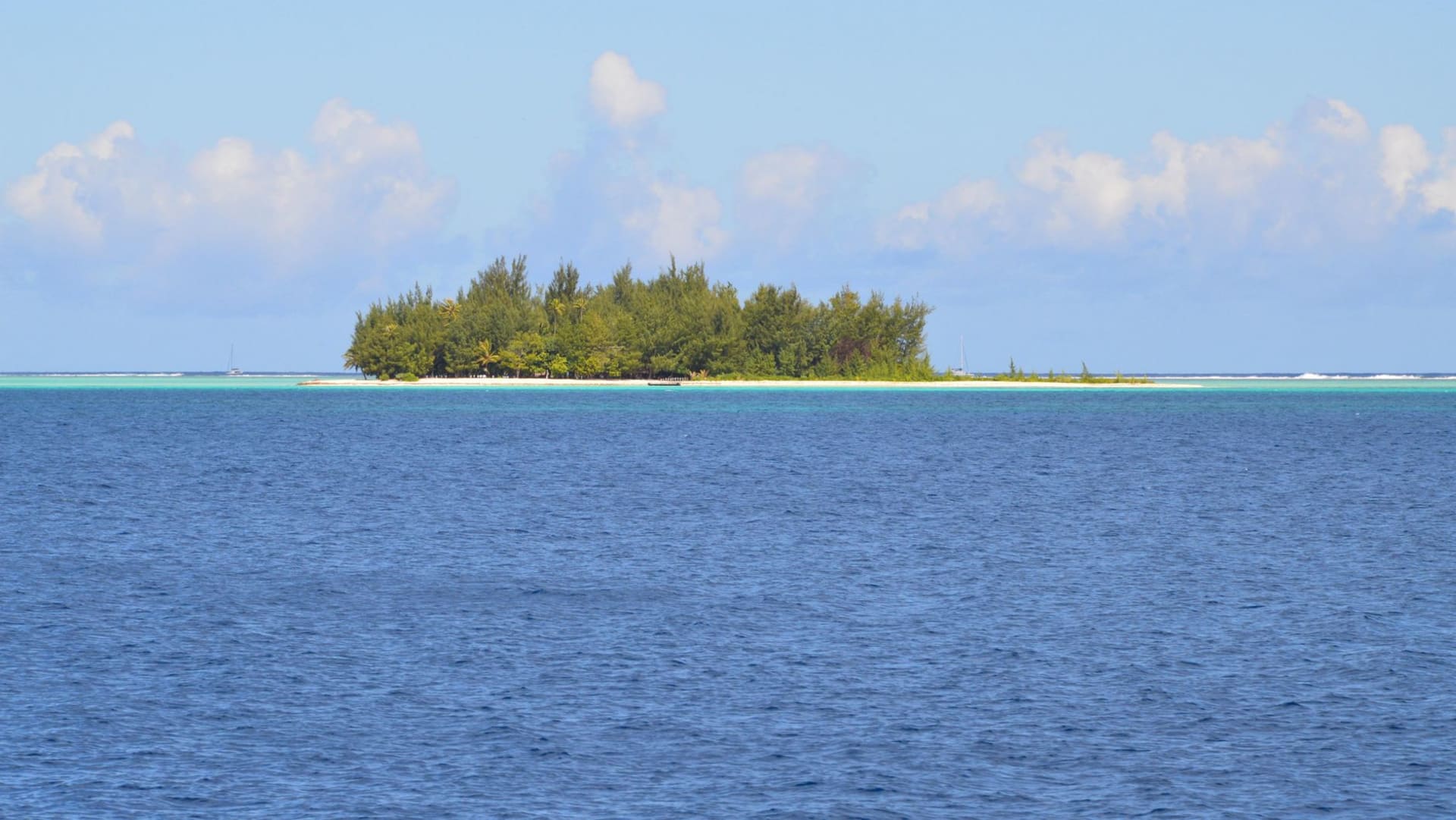
Nonouti is in the central Gilbert Islands, roughly two hundred kilometers south of Tarawa, and it is the kind of atoll that travel writing tends to describe as “unspoiled” in a way that flattens what is actually a specific and complex culture into a backdrop. What I found there was a community organized through the te maneaba system — the maneaba being not just a building but an institution of governance, conflict resolution, and social memory — in a way that felt entirely self-sufficient. The island does not need visitors to validate it. It has its own order.

The main maneaba at Benuaroa village has posts that are decades old at minimum and possibly much older — the wood darkened and smoothed by generations of hands and smoke, set into the coral floor in a pattern that maps the island’s clan structure. A man named Tienata, whose role in the community I understood to be something between a historian and a keeper of protocol, spent an afternoon explaining the seating plan to me through a nephew who translated. Each section of the maneaba belongs to a specific kin group, who have specific responsibilities in specific circumstances — who speaks when, who organizes food, who mediates disputes. The system is intricate enough that it took several hours of explanation to begin to sketch, and I left knowing I had understood perhaps one layer of something that went much deeper.
The fishing at Nonouti is artisanal in a way that the word barely captures — traditional fish traps built from coral and woven material, maintained over generations at specific points on the reef flat, worked at specific tidal states. I watched a group of men tend a trap one morning at low tide, extracting fish with careful hands and returning undersized individuals to the water with the matter-of-fact conservation of people who understand that the reef’s productivity is directly related to their restraint.

At night on Nonouti, the darkness is complete in a way that cities make you forget is possible. The Milky Way is not a smear but a structure, dense and three-dimensional, and the bioluminescence in the lagoon — visible when you stir the water at the shoreline — adds a second sky at your feet. I sat on the beach on my last night and watched phosphorescence pulse in the small waves, green-white and brief, and felt the extravagance of being somewhere that light had not yet erased the dark.
When to go: April through October for calmer seas and more reliable boat service. The inter-island vessel schedule is genuinely unpredictable — build extra days into your itinerary on both sides of the visit. Nonouti has basic accommodation through community arrangements; bring sufficient food supplies as the island’s shop has limited and irregular stock.