Butaritari
"Makin Island, they called it in 1942. The Marines landed here and everything that followed followed."
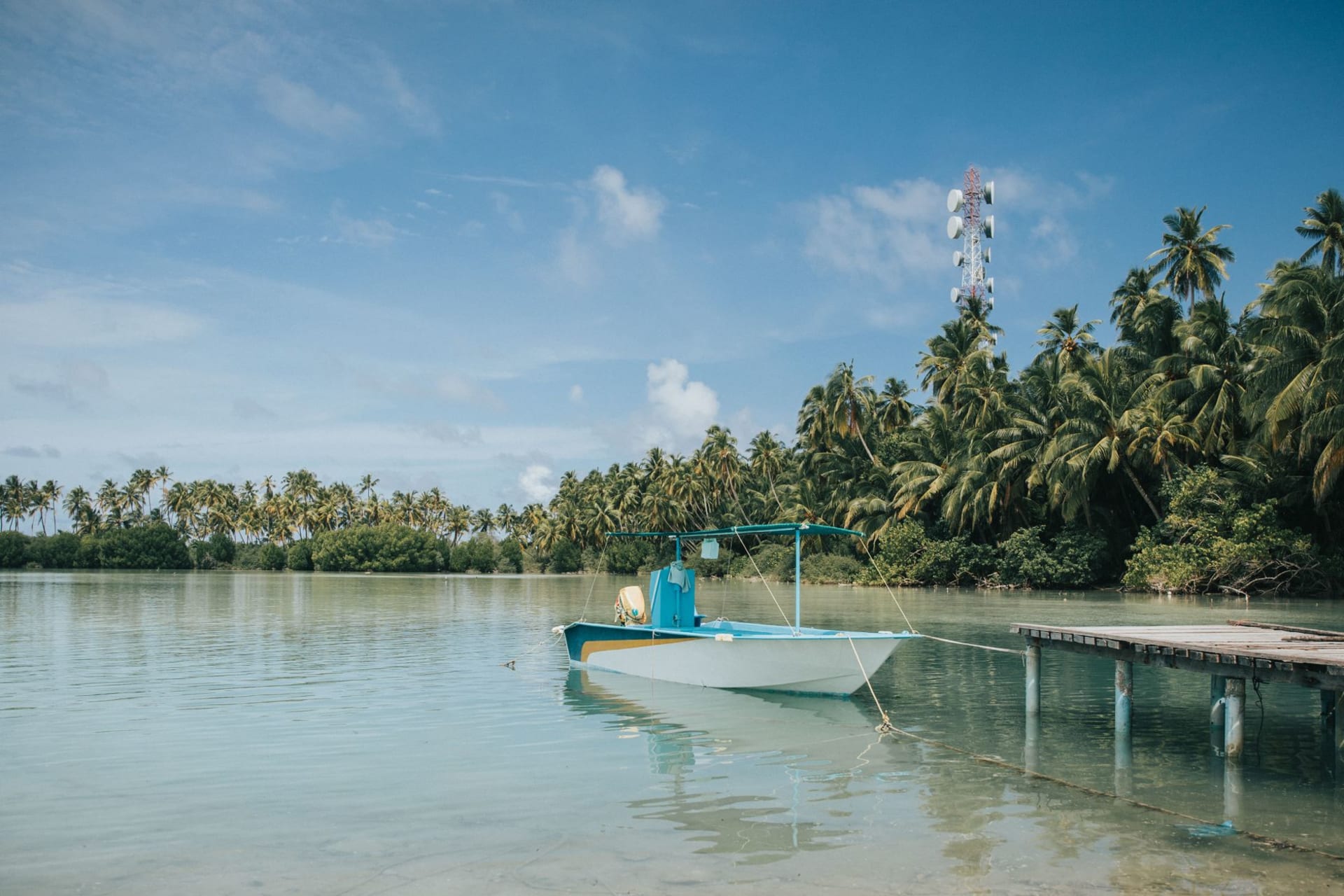
The first thing you notice about Butaritari is the green. After the bleached coral and scrubby vegetation of Tarawa, the lushness here is startling — banana palms, breadfruit trees, taro patches that fill the interior, coconut groves so dense the ground underneath stays dark at noon. Butaritari sits in the north of the Gilbert Islands group where slightly more rainfall reaches the atoll each year, and the land responds to it visibly. Arriving by boat, the island looks almost tropical in the way that word implies abundance rather than just heat, and for a moment you can understand why early explorers moving through the Pacific would have noted it with something like relief.
The island was called Makin by the outside world for most of the twentieth century, and under that name it entered the history of the Second World War in August 1942 when a Marine Raider battalion arrived by submarine and attacked the Japanese garrison in what became known as the Makin Raid. The operation was militarily mixed — the objective was achieved, but the Raiders left behind prisoners who were subsequently executed by the Japanese, a fact that haunted the raid’s commander for the rest of his life. Near the village of Ukiangong, there are remnants of the Japanese fortifications in the vegetation, and a small monument to the men who died here. I found it in the early morning, before the heat arrived, and stood among the palms trying to connect the quiet — the dripping of dew from banana leaves, a rooster somewhere, the lagoon visible in flashes through the trees — with what had happened in this same place eighty years before.

The contemporary life of Butaritari is organized around water in its more benign moods — fishing, outrigger travel between villages, the cultivation of the island’s famous taro in pits dug below the fresh water lens that sits beneath the atoll. The taro here is considered the best in Kiribati, grown in flooded pits that look nothing like the dry-land root crops I was used to elsewhere. A farmer named Titabu showed me his taro plot one morning — a flooded depression in the interior filled with enormous leaves and rooted stalks standing in murky water — and explained, through gestures and a few words of shared English, the system of channels that irrigated and drained it. The taro takes months to mature and requires constant attention to water level. It is precise agriculture practiced on a swamp, and it produces a corm that cooks into something starchy and satisfying with a taste that is genuinely its own.

The lagoon on Butaritari’s western side is broad and protected, and in the late afternoon it turns a sequence of colors — jade, then amber, then a violet that has no name I know — as the sun descends into the palms. I sat on the jetty in the village of Butaritari itself on my last evening and watched a fleet of outrigger canoes return from the afternoon’s fishing, men stepping out with ease into knee-deep water and pulling the hulls up the beach with the casual precision of people who have done this ten thousand times. The fish went into baskets. The canoes went above the tide line. The dogs gathered hopefully. The light did its last extraordinary thing and then it was dark, with a speed that equatorial nights have and higher latitudes don’t.
When to go: April through October, when rainfall is lower and the lagoon sea state permits comfortable travel. The wet season brings more vegetation and some flooding of low-lying taro pits. Domestic flights from Tarawa serve Butaritari; the schedule is irregular but generally more reliable than the boat service.