Same
"Everyone is going somewhere else. Same is where you stop and notice what you were missing."
Same — pronounced SAH-may — sits at the southern end of the Kilimanjaro region, where the volcanic plains give way to the older, more deeply eroded topography of the Pare Mountains. Most travellers encounter it as the town where the bus stops for twenty minutes on the road between Moshi and Dar es Salaam. I made the mistake of treating it that way on my first pass, and then I came back and spent three days, and it turned out to be the Kilimanjaro region’s most unexpected gift.
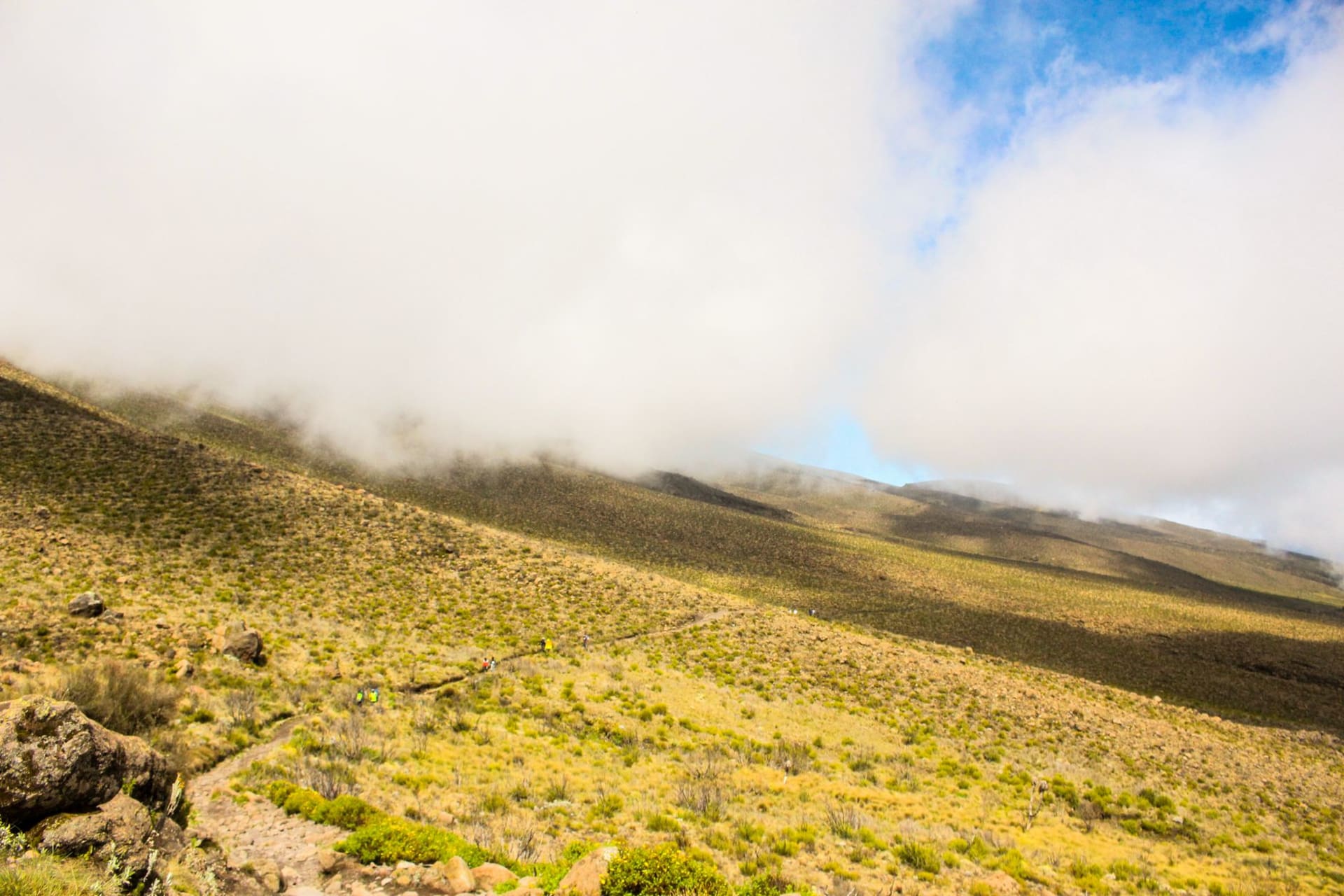
The town itself is functional rather than picturesque — a market, a fuel station, a line of dukas selling hardware and phone credit and boiled eggs, a guesthouse with a courtyard where chickens negotiate with the guests over the best shade. What surrounds it, though, is extraordinary. The Pare Mountains — the South Pare, specifically — rise directly west of the town in a wall of dark green and grey that looks almost pre-Cambrian in its drama, a corrugated escarpment that holds a different world above: cooler, wetter, forested with species found nowhere else on the Tanzanian mainland. The West Kilimanjaro plains extend to the north, and on clear mornings Kilimanjaro itself is visible as a white mass above the intervening hills.

The Mkomazi National Park begins thirty kilometres east of Same, and while most of its visitors organise from Arusha, Same is the closest town and the one where the rangers and park staff live. Mkomazi holds one of Africa’s most significant black rhino sanctuaries and a reintroduced wild dog population, and it carries the emptiness of a park that has not yet been discovered by mainstream safari operators — which means game drives here still feel like what game drives are supposed to feel like, before the Land Cruisers discovered coordinated viewing spots. I drove through in a shared vehicle with two rangers and we did not see another tourist vehicle the entire afternoon. We did see a cheetah, sitting in the long grass with the studied indifference of a cat that has never needed to perform for an audience.
The Pare Mountains require a separate excursion: a matatu ride west to Mbaga takes ninety minutes on an increasingly vertical road and delivers you into villages where the air is fifteen degrees cooler than Same and the tea grows on terraced hillsides and the inhabitants speak a Bantu language unrelated to Swahili. I spent a night in Mbaga at a small guesthouse and woke to mist pooling in the valleys and the sound of the mountain’s particular birdsong — different species at different altitudes, so precisely calibrated that experienced ornithologists use altitude as a field guide.

There is a woman at the Same market who sells dried fish from Lake Jipe — a flatland lake on the Kenya-Tanzania border to the west — and she has been doing so for thirty years from the same spot. The fish are small and intensely flavoured, dried hard and sold by the heap. She told me they were best rehydrated in the sauce of a slow-cooked bean stew and served with ugali, which is the advice of someone who knows exactly what she is selling and to whom. I took her advice that evening at a local restaurant and ate the most satisfying meal of my Kilimanjaro region stay.
When to go: Same is most pleasant in the dry seasons (January–March and June–October). The road to the Pare Mountains becomes difficult in heavy rain. Mkomazi National Park visits are best June–October, when dry conditions concentrate wildlife around the remaining water sources. The weekly market draws the best variety of traders on Saturdays.