
Fort Kochi
"Every civilization that touched the Indian Ocean seems to have left something in this one small neighborhood."
Fort Kochi does not announce itself. You arrive by ferry from Ernakulam, the boat carrying a press of commuters and the occasional confused tourist, and step onto a jetty into what looks at first like any other port town. Then the Chinese fishing nets appear — those enormous cantilevered contraptions, each one a spider’s web of ropes and timber balanced over the harbor, lowered into the water and hauled up again — and you understand that this is not a place that works according to normal rules of geography or time.
The nets were brought here by traders from the court of Kublai Khan in the fourteenth century. They still work. At dawn, when the light is still soft and the harbor smells of salt and yesterday’s catch, the fishermen operate them with a system of counterweights — stones wrapped in canvas swinging as the net rises, the whole apparatus creaking in a way that makes it sound alive. The fish caught this way — small silver things, mostly — are auctioned on the quay immediately afterward to restaurant owners and housewives who arrive with plastic bags.
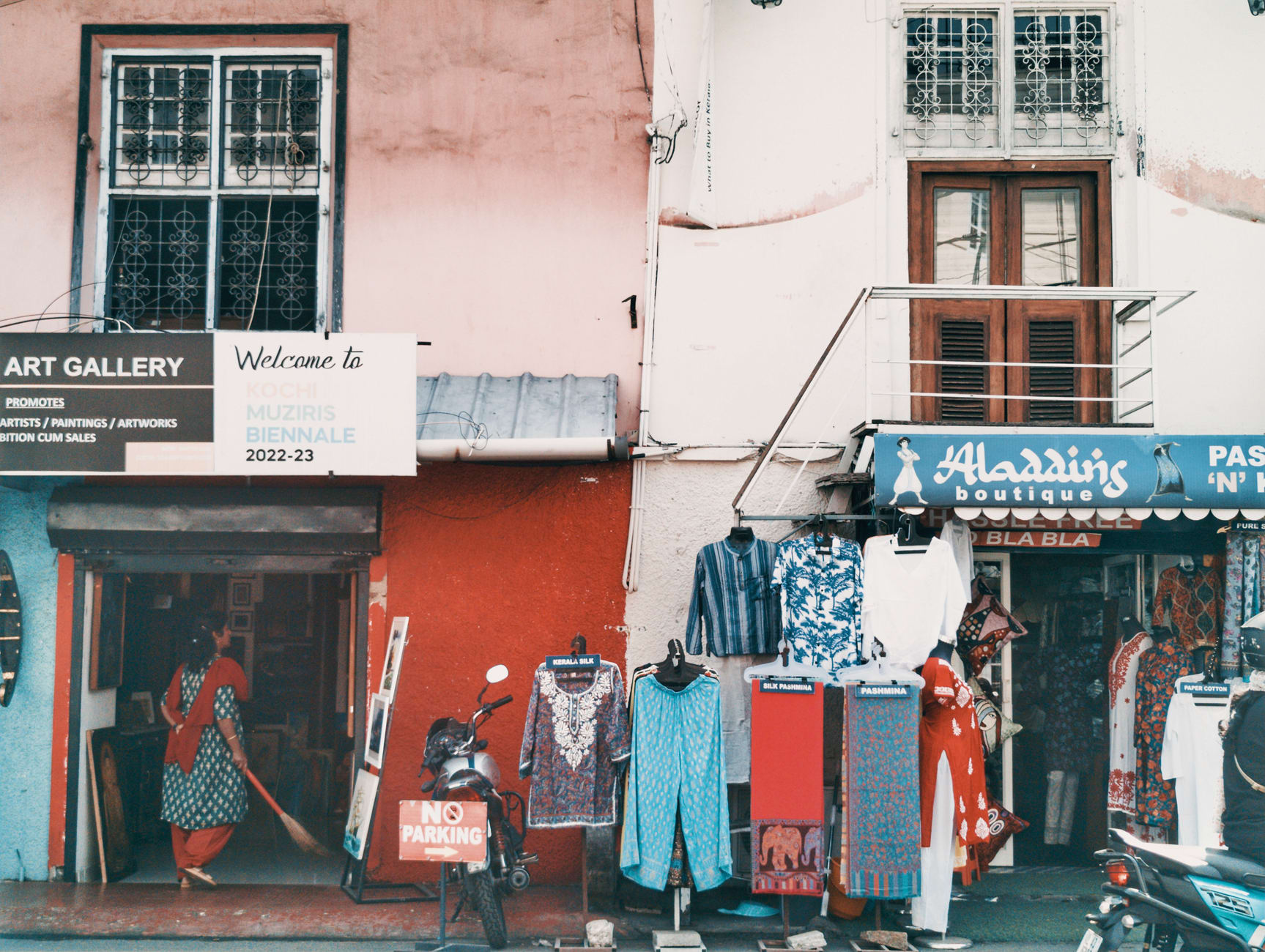
Fort Kochi’s streets hold more history per square meter than almost anywhere I have been in India. The Mattancherry district, a short walk from the nets, contains a synagogue built in 1568 that has Dutch chandelier tiles on the floor and Chinese blue-and-white tiles on the walls — a layering of influences so improbable it feels like satire. The spice warehouses nearby still deal in pepper, cardamom, cinnamon, and cloves, and walking past their open doors on a hot afternoon delivers a smell so dense you half expect to sneeze. Kerala’s spice trade moved through this port for five hundred years, and you can still feel that weight in the streets.
The contemporary art scene in Fort Kochi is real and serious. The Kochi-Muziris Biennale — held every two years from December — brings international artists into the old warehouses and colonial buildings, and the work engages with South Asian history, colonialism, and the sea in ways that feel genuinely urgent. Even outside Biennale years, cafés in the Heritage District have swapped their walls with local painters’ canvases, and the rooftop bars that overlook the harbor at dusk fill with a young, educated crowd arguing about things.
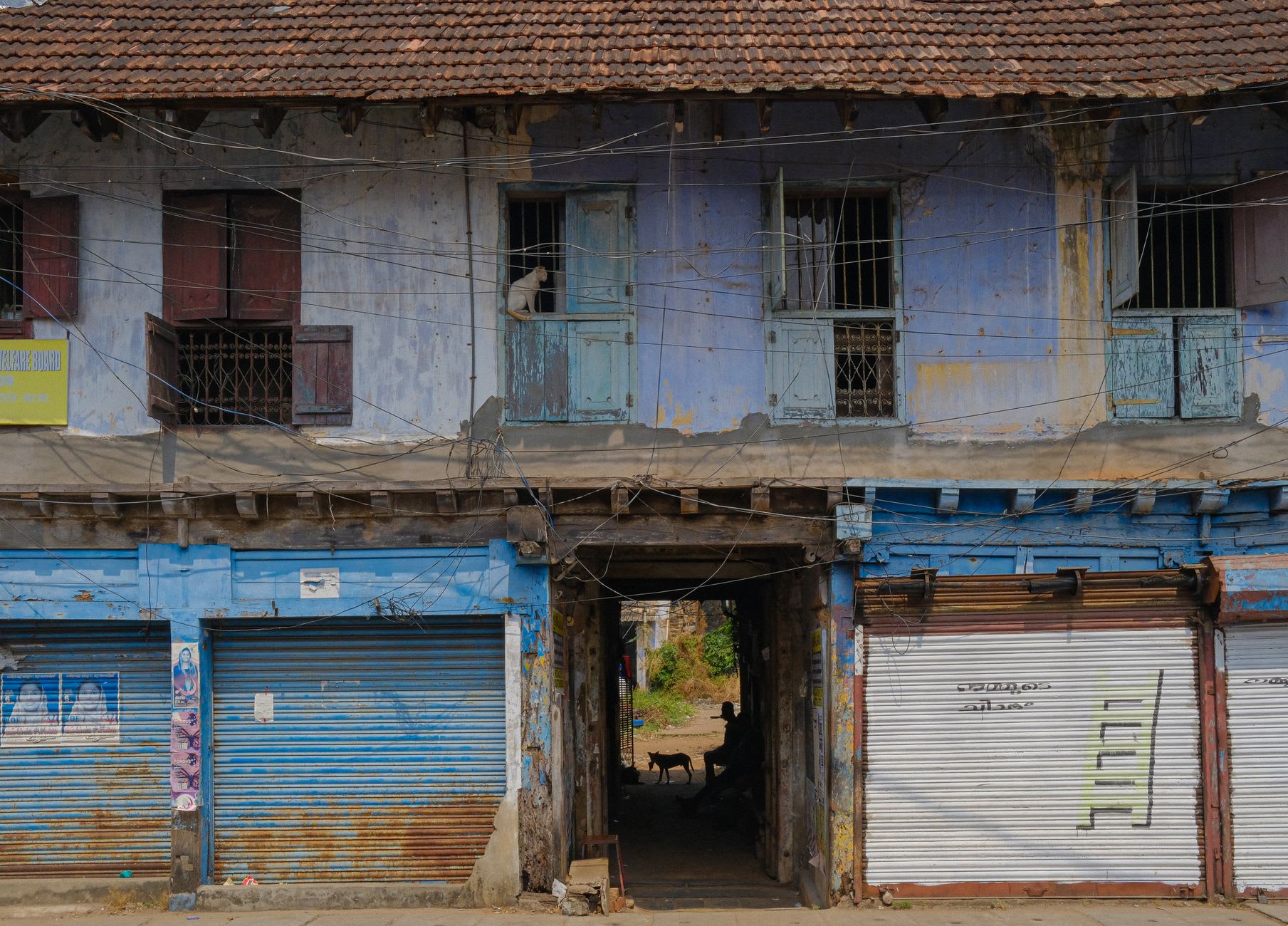
Breakfast here deserves its own paragraph. The small cafés on Princess Street serve appam — those lacy fermented rice crepes — with a coconut-milk stew that is barely spiced but deeply flavorful, or with a pat of butter and a glass of milky chai. I sat in one of these places for an hour most mornings, reading nothing, listening to the ceiling fans and the street outside, entirely content in the way a specific, slow morning can make you.
When to go: October to February is ideal — the harbor breezes keep the temperature bearable and the morning light is exceptional. The Kochi-Muziris Biennale opens in December in even-numbered years and transforms the already-interesting neighborhood into something extraordinary. Book accommodation far ahead during the Biennale.