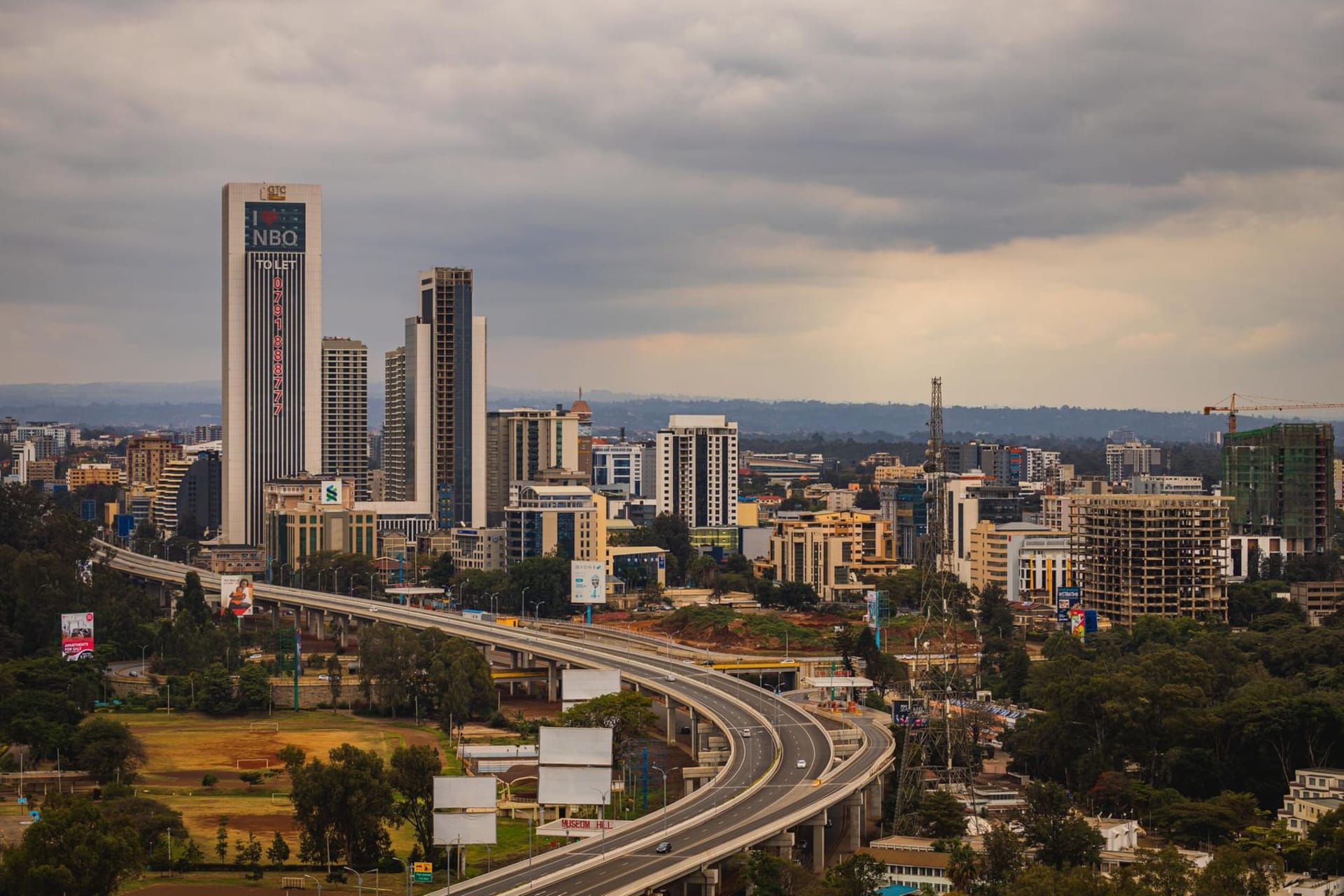
Africa's most electric capital — where giraffes peer over national park fences at the CBD at rush hour.
I arrived at Jomo Kenyatta in the blue-grey hour before sunrise, when the highway into town smells of red dust, diesel, and something floral I still can’t name. The matatus were already out in force — those careening minibuses plastered in gospel slogans and Premier League crests — and by the time we hit Mombasa Road, Nairobi had already decided it wasn’t going to ease me in gently.
The City That Shouldn’t Work
Nairobi operates at a frequency that should be overwhelming and somehow isn’t. Westlands at noon: a Swahili hip-hop track leaking from a barbershop, the charcoal smoke of nyama choma drifting over the pavement, a woman in a tailored blazer arguing into two phones at once. The CBD stacks Victorian-era brick against glass towers that catch the equatorial light and throw it back at you hard. On Kenyatta Avenue, the jacarandas are either in full purple riot or entirely bare — there is no in-between.
What I didn’t expect was the quiet. Not silence, but the specific pocket of stillness you find at the Karen Blixen Museum in the late afternoon, when the tour groups have gone and the long Ngong Hills roll blue in the distance behind the old farmhouse. Lia sat on a bench in the garden for a long time without speaking, which is the highest compliment she pays a place.
The Park at the Edge of Everything
The thing about Nairobi National Park is that no photograph prepares you for the cognitive rupture of it. We drove through the Langata Gate at seven in the morning and within twenty minutes were watching a black rhino move through tall grass, the Nairobi skyline — the KICC tower, the pension fund buildings, a construction crane — framed perfectly behind it. Lions have been photographed here with the CBD as backdrop. The park is not a metaphor. It is literally fenced on three sides by a city of five million people.
The unexpected discovery came on the way back: we stopped at the Carnivore restaurant on Langata Road, expecting a tourist trap, and found instead a decades-old institution where waiters still arrive with swords of roasted game and a system of small flags — yours stays up as long as you want more meat. We raised flags for an embarrassing length of time.
Nyama, Chai, and the Long Evenings
Evenings in Nairobi belong to the rooftop bars of Westlands and the quiet restaurants of Kilimani. Order the pilau — the spiced rice that arrived here from the Swahili coast and never left — or a bowl of githeri, the simple maize-and-bean stew that tastes of nothing particular and everything necessary. The Kenyan chai, boiled hard with milk and cardamom, is the best argument I know for slowing down.
When to go: The dry seasons — January to March and July to October — offer the clearest skies and best game-viewing in the national park. Avoid the long rains of April and May if you plan to spend time on unpaved roads.