East Africa's oldest living town — no cars, only donkeys, dhows, and a Swahili culture unchanged by centuries.
The ferry from the mainland docks with a thud against wood pilings black from salt and years, and the first thing that reaches me before I even step off is the smell — low tide, cardamom, and something charred, like someone has been grilling fish over coconut husk since before sunrise. Which, as it turns out, they have.
Lamu Old Town has no roads. Not in the sense of lanes narrowed by bad urban planning — there are simply none. The town was built around its donkeys and its people, and it has stayed that way. The alleys of Usita wa Mui are barely wide enough for two people to pass sideways. I pressed myself against carved coral-stone walls while a donkey loaded with plastic jerry cans plodded past, its owner walking behind in a white kanzu, phone to his ear. The medieval and the contemporary, sharing a corridor two feet wide.
The Weight of the Old Town
The architecture alone earns the UNESCO designation. Every door tells something: carved mangrove frames in geometric patterns, brass studs the size of fists, lintels etched with Quranic script. The houses were built by Swahili merchants who were wealthy enough to import Indian joinery and coral to carve, and they faced inward — cool inner courtyards with carved wooden screens filtering sea light into the rooms behind. I spent an entire morning in one such courtyard at the Lamu Museum, off Kenyatta Road, reading nothing, just watching the light shift.
Lia found a woman selling mahamri from a basket near the fort — fried coconut bread, a little sweet, dense in the way that means it was made that morning. We ate standing in an alley, mango juice running down our wrists.
What the Harbor Taught Me
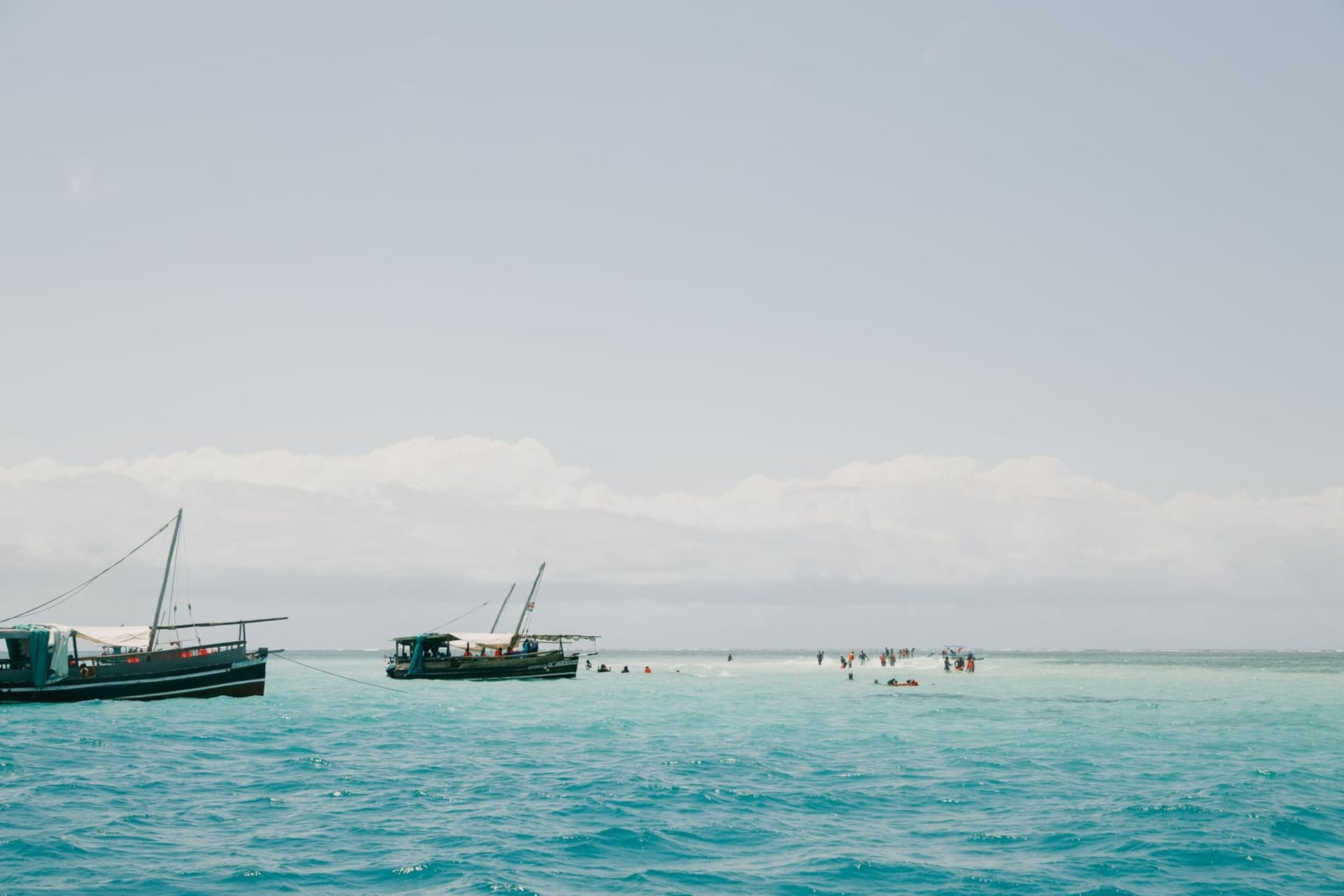
I had expected the dhows. What I had not expected was the quiet. The harbor front in the late afternoon is perhaps the most unhurried stretch of waterfront I have encountered anywhere. Old men play bao on stone benches. Boys dive from the jetty. Fishermen mend nets with a patience that looks inherited. A dhow captain named Abubakar took us out for two hours at sunset, and the only sounds were the boom of the sail, the slap of water against the hull, and a muezzin call drifting across from the mosque on the hill.
That evening we ate grilled kingfish at one of the small restaurants along the waterfront — pilipili sauce, coconut rice, and a lime quarter that smelled like all of East Africa in one squeeze.
When to go: The dry seasons run from December to March and July to August, when the northeast or southeast trade winds fill the dhow sails and the humidity sits at a tolerable level. Avoid April and May, when the long rains make the coral alleys flood and the ferries run uncertain schedules.