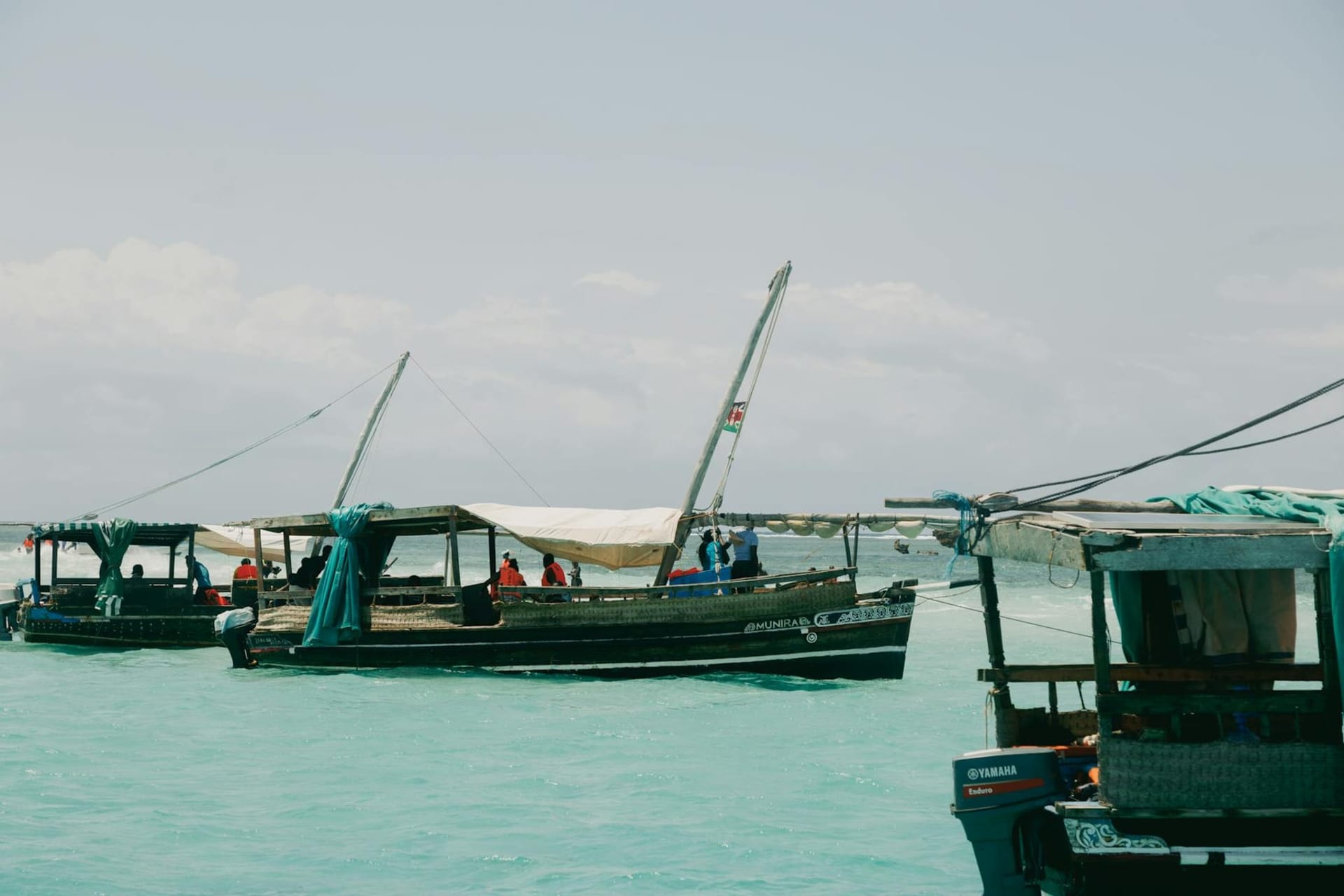
East Africa's oldest Swahili settlement on an island accessible only by boat, where donkeys outnumber cars by a thousand to none.
The ferry from the mainland drops you at a wooden jetty and the first thing that hits is the silence where an engine should be. No traffic, no horns, no diesel groan. Just the slap of water against the hull and, somewhere deep in the warren of lanes, the unhurried clop of hooves on packed earth.
Lamu Old Town has been here since the fourteenth century. That is not a tourist board number — it is something you feel in the grain of the buildings, the way the coral-stone walls breathe cool air into the alleys even at noon when the Indian Ocean sun is punishing.
The Lanes and the Light
Lamu’s streets are genuinely narrow. Not charming-narrow in the way old European quarters advertise themselves, but narrow enough that two loaded donkeys cannot pass without one of them pressing into a doorway. Lia and I spent the better part of a morning getting lost between the Riyadha Mosque and the seafront, following lanes that dead-ended into someone’s courtyard, backing out, trying again. The navigational failure was the point. Every wrong turn opened onto a carved wooden door or a shaft of light falling through a mashrabiya lattice onto worn stone steps.
The light in Lamu does something particular in the late afternoon — it goes amber in a way that makes the whitewash look almost orange, and the shadows in the lanes turn a deep blue-grey. I kept stopping to photograph nothing in particular and everything at once.
What I Ate and Where
At a small open-fronted kitchen near the main square I ordered biryani — Lamu’s version, cooked with ghee and spiced with pilipili, served with a bowl of coconut-braised beef that had been going since morning. It was the kind of meal that makes you sit very still afterward. Later, following the smell of cardamom toward the waterfront, I found a chai stall run by a man who poured from a height, thin stream of spiced milk tea aerating into the glass. I went back three times.
The unexpected moment came my last evening. Walking the Corniche after dark, I heard Taraab music floating out of a second-floor window — the Swahili coastal sound, oud and violin and a woman’s voice threading through all of it. No venue, no sign. Just music falling into the street as if it had always been there.
When to go: The best months are January through March and July through October, when the kaskazi and kusi trade winds keep the heat manageable and the dhow sailing conditions are at their finest.